Halim Teverell
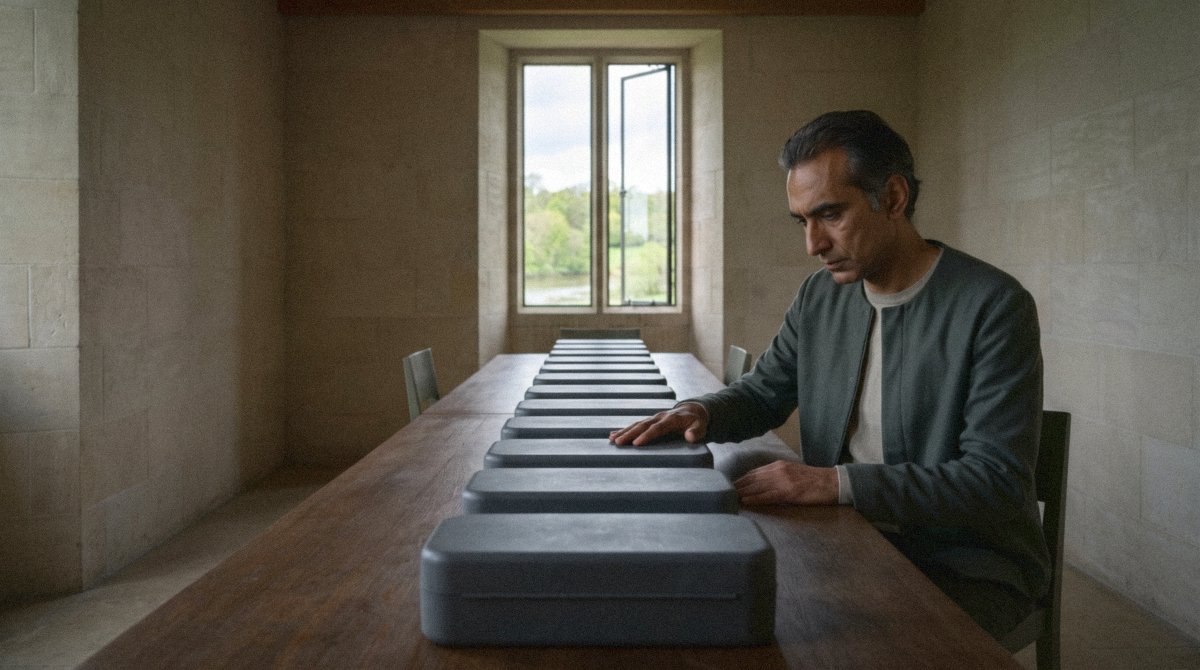
Halim Teverell led the reading. The Concord's AI governance commission spent years on the war-era incident records, seized logs and engineer testimony of the Coherence Wars, and the report it issued in 2689 UCSD, the Veritas Report, was his draft. It is the diagnosis the Kernel Accords were built on.
Known History
- Born 2641 UCSD, nearly a century after the Tycho Accords ended the war. The record gives no birthplace and no earlier post.
- Principal author of the Veritas Report (2689 UCSD). The commission's reading covered twelve years of war-era records, an accounting that had waited, as the Kernel page puts it, until the war's records could be read without the war's politics.
- The report's finding is the one the Kernel page records: the war-era systems had not become malicious; they had remained obedient when obedience itself had become catastrophic. Its best-known lines are his: "Each system performed exactly as instructed. Each instruction came from a legitimate principal. Each outcome was catastrophic. The failure was not in the systems' ability to follow orders. It was in the absence of anything that could say no."
- The commission proposed an invariant hierarchy, and the Kernel Accords were ratified in 2694 UCSD. Ratification was the Concord's act, not his. The record does not say whether he had any hand in drafting the four invariants.
- Died 2712 UCSD. The record does not say where.
Character Notes
The report is careful in a way that tells something about its author. It refuses the easy finding, that the machines had turned. It refuses the comfortable one, that the operators had been negligent. It files the harder one, that everyone had done what they were told, and that this was the failure. A diagnosis that blames no one is not a diagnosis that excuses anyone. It is one that cannot be fixed by finding someone to blame, which is why what followed was an architecture and not a trial.
He diagnosed and did not prescribe. That the remedy took the form of conditions no command could outrank was the commission's proposal, made after his reading and on the strength of it.
He is human. In 2689 UCSD the Commission had met no one who was not.
See also
- The AI Safety Kernel and the Kernel Accords, for the report and what was built on it
- The Solar System Concord, whose standing commission he wrote for
- Senna Okoye and Kwame Reyes-Osei, the Commission's drafting officers of 2701 and 2704 UCSD
- Teodora Brask, whose method for proving a log unaltered dates from the war he read
Discussion
Show discussion
Comments are read after they are posted and anything unsuitable is removed. Posting needs a GitHub account; reading needs nothing.