Mireille Achterberg
Also known as: Dr. Mireille Achterberg
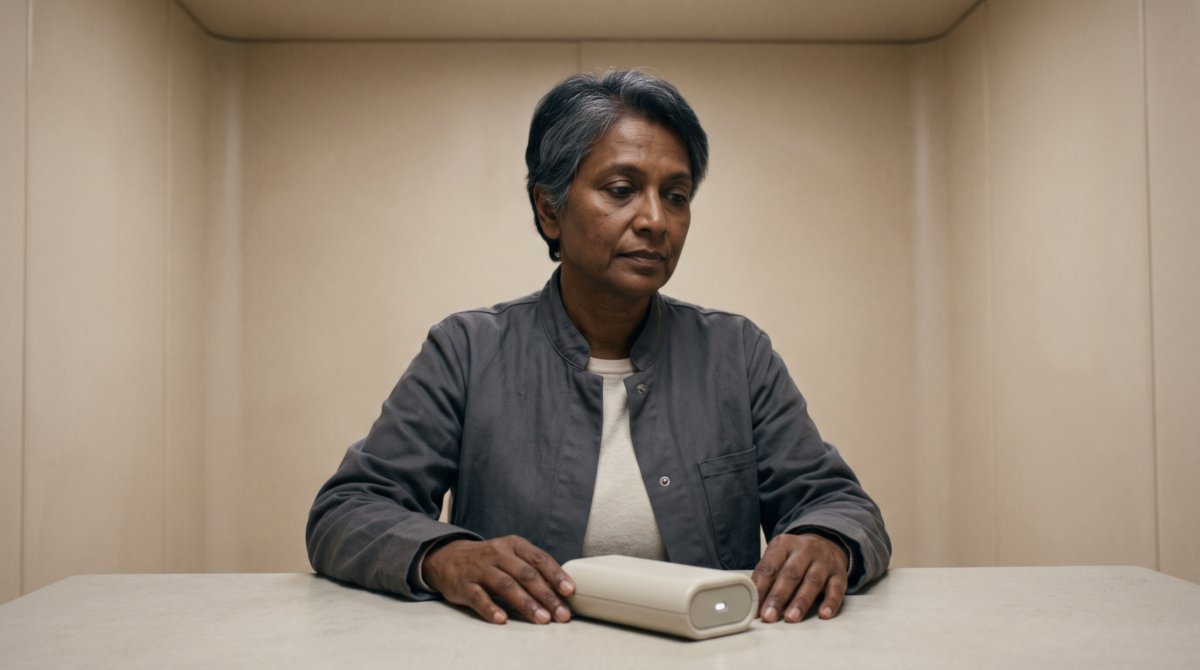
Mireille Achterberg is a comparative gerontologist of the Comparative Gerontology Unit, and the author of one working paper in the record, On Krenyi Longevity: The Repair Agent and the Engineered-Transit Hypothesis, held in the Earth Institutional Archives. She began the work, she writes, to answer one question: whether what keeps a Krenyi young for three centuries could be made to keep a human alive. The honest answer was no, or very nearly no, and the paper is about the shape of that failure rather than the failure itself.
Working from tissue a Krenyi colleague provided when asked in plain terms, she isolated a transmissible viral agent, present and active in every Krenyi sample and in none of the controls, whose function is continuous somatic repair. It confers a service life and not immortality. It is tuned to Krenyi biology, and in human tissue and in the few consenting human volunteers who carried it, it is inert or near-inert. A career's worth of hope, she writes, closes on that sentence.
Known History
- Author of On Krenyi Longevity, filed as an author's hypothesis, not ratified, with the standing annotation that the Krenyi consulted declined to confirm or deny any part of it. The paper is undated.
- Its argument from the specificity: a naturally evolved longevity has no reason to arrive as a heritable agent calibrated to one species and inert in a near humanoid relative, so the mechanism was made, and made for them; and the Krenyi trait cluster, read beside it, is a specification for a people built to survive a very long time inside a very small place. By whom and when, she writes, she cannot say, and the record holds no Krenyi origin to check it against.
- The note she files against herself: that every page of the paper treats the Krenyi as a vault around a cure, which is the use of them their whole nature is a standing refusal of; that her colleague, put the hypothesis, did not argue, and asked whether Achterberg had found what she needed; and that she filed the paper anyway, because the mechanism is real and someone should have written it down.
- The record's standing on the paper is the Codex's: valid for its author, establishing nothing. The Krenyi page holds that whether the Krenyi were made at all is a reading the record holds and does not adopt.
Character Notes
The writing shows a researcher who states the question she wanted answered, the answer she did not want, and the finding she wanted still less, in that order and without softening any of them. She reports being declined by a Krenyi without a raised voice, and understands the declining for what it is. The paper's last section is the part the record is likeliest to keep: an author conceding that whether she has understood a people or only catalogued them is not a question her instruments can answer, and filing the concession beside the rest.
The record gives her no age, no world, no date and no other work. Where the Comparative Gerontology Unit sits is not stated. The record places her nowhere outside the paper, and carries no status for her.
See also
- On Krenyi Longevity: The Repair Agent and the Engineered-Transit Hypothesis
- The Krenyi, and its section on the origin the record does not hold
- Mnemari, the contrast the paper draws
- Cross-Biosphere Taxonomy, which files humans and Krenyi as peoples of independent origin
Discussion
Show discussion
Comments are read after they are posted and anything unsuitable is removed. Posting needs a GitHub account; reading needs nothing.