Ulessa
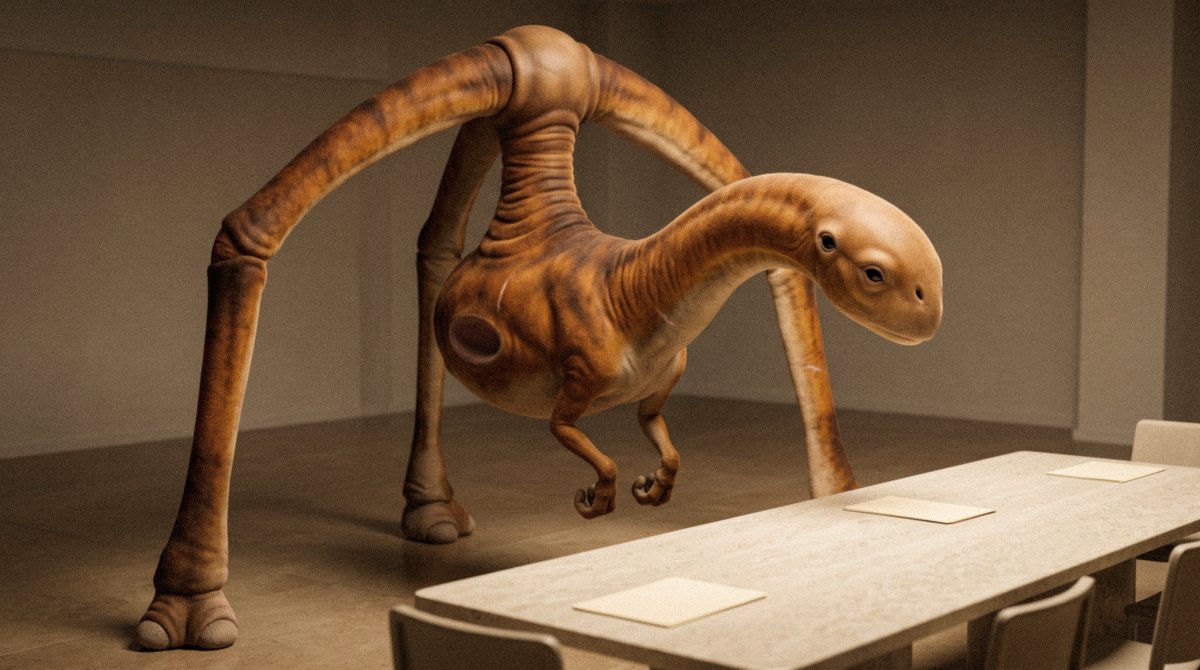
Ulessa is a Mnemari of Ilenne and a treaty-witness: one of the people the Federation assembly requests when a session revisits an old, contested compact and wants at the table a memory of the original terms that cannot drift. She has been requested for a little over two centuries. The record names no Mnemari before her, and nothing on her people's page makes her unusual among them; she is one of a routine, and the Archive has no reason to call her the first of anything.
Her name is given as the Federation record gives it, and nothing more is known of it. Whether Mnemari names are given at birth or taken, what hers would mean on Ilenne, and how her people render the name of a person who has outlived everyone who first used it, the record does not state. She is she on the Federation record, as the oldest confirmed Mnemari is on the species page.
Known History
- Born on Ilenne, in a year the record does not hold. Nothing of her life on Ilenne is on file.
- Requested as a witness to assembly sessions revisiting old compacts for a little over two hundred years: the sessions are on the Federation record, and the record does not list them. Of all the tables she has sat at, she has been asked in the hearing of the Archive about none in particular.
- One of the witnesses who raise the standing item of Federation self-criticism that the Ollune delegate is generally not in the room, the Ollune position arriving by courier, lagged, and read into the record by someone who is not Ollune. The Ollune page says the item is raised most often by Mnemari witnesses, who cannot let the assembly forget how long it has been raised; it does not say which. Ulessa is one of them, and has said how long, to the session and the day, when asked.
- Early Summer 2826 UCSD: requested to an assembly session revisiting the Star Rangers' material-support compact, on a proposal from Verdance's seat that member worlds formally ask the Survey Corps for its survey data of their own approaches (Nobody Present). Asked for the words of the compact's data term as they were said at its first table, where she had been present in a year the record does not fix, she gave the term and the words after it: a mark from Cirrane, read into the record after the term was taken, asking where what the Corps learns of a lane is carried and whether a member that cannot come for it may have it, and the chair of that day's Noted. Asked by Prismere's seat whether she was certain, she answered that nobody present had been there. The first table the record places her at by name; how the session decided is not on it.
- In 2826 UCSD she is on the roll of witnesses the assembly requests, not Set Down, and the record places her nowhere else.
The Work
A witness of her kind is asked for one thing, and the Federation page says what it is: a memory of the original terms that cannot drift the way institutional record-keeping, translation and self-interested retelling all drift over enough centuries. She is not a delegate. She holds no vote, drafts no term and carries no world's position, and when a session asks her what was promised at a table two centuries ago she gives the words, in the order they were said, and then stops. Her people's page says a Mnemari mediator never frames this as a feat, and she does not. Asked once whether she was certain, she answered that certainty was not the question; the question was whether anyone present could contradict her, and nobody present had been there. The once is on the page: Prismere's seat, in the early summer of 2826, in Nobody Present.
What she has that an archive does not is also what it costs her, and the page is plain about the price. A Mnemari does not get to decide a wound is old. The ladder page's line that the Mnemari sit at compact tables as memory describes her exactly, and describes what a session sees; what it does not see is that a table is not a document to her but a room, with the people who sat in it, most of whom are dead, and that she is in it again each time she is asked. She goes anyway. The Federation requests her, and she has not yet judged that what she carries is crowding out her capacity to act well in the present, which is her people's own test and nobody else's to apply.
What Ulessa Cannot Do
Forget. Round an old grief down to something bearable, or let a promise soften into what everyone later agreed it had meant. Say that was a long time ago and mean it, since for her it was not; her people's page gives a two-century-old dispute the same weight as one from four days back, and the standing Ollune item, raised and raised again, is exactly as fresh to her as it was the first session she raised it. Treat a mortal colleague's forgetting as anything but strange, however kindly she has learned to allow for it.
Character Notes
The record holds her manner from the sessions, and it is a witness's: exact, unhurried, and unwilling to be more than she was asked to be. She does not offer the terms until the chair asks for them, and she does not interpret them when she has. Delegates who want a witness to agree that a compact meant something find her unhelpful, and the ones who have sat with her longest have stopped asking; what was said is hers, and what it meant is theirs.
Her people's page names a grief specific to Mnemari on long postings among mortal-lifespan colleagues, which is outliving, in full clarity, everyone who mattered to them in a posting, over and over, for as long as they choose to keep serving. Two centuries of sessions is a long posting of that kind, and the record notes, without a reading, that she attends the offboarding rituals the Federation's institutions have learned to hold for a departing Mnemari colleague, and that she is the one for whom they are not held, since she has not gone. She has not been heard to say that it is hard. She has not been heard to say that it is not.
Ilenne's custom gives her one way out, and the page gives its shape: the Setting-Down, taken not at an age but when a Mnemari judges the load is crowding out the present, witnessed, and not a failure. A witness who stays long past the point her peers can see the strain is a quietly worrying figure on Ilenne, not an admired one; nothing on the record says her peers have begun to watch her, and nothing says they have not. She has given no notice of it. If and when she does, a Held Role on Ilenne is open to a witness of last resort, and the record does not know whether she would take it, or whether she would rather, for once, be in a room nobody asked her to remember.
What the Record Does Not Carry
Her age, beyond the two centuries of service. Her body, which no page describes beyond its frame: the species page files the Mnemari in Endoskelia, built by Ilenne's uplands and not on the human frame, as the standing refusal requires, and the portrait shows the body as the record now draws it: three tall legs arched to a hub, the body slung beneath, and a long neck that carries the head forward. Her kin, and what Ilenne's kin-councils decided in bringing her into being. The Mnemari language, which the record renders only in translation and has marked as an absence. Any table she sat at by name but one, the first table of the Star Rangers' material-support compact, and the session of 2826 that asked her for its words; any delegate she has disagreed with. Whether she has ever sat at a renewal of that compact; it is renewed by assembly vote each generation, and the record has placed her at its first table and at no renewal.
See also
- Mnemari, the people, and The Federation of Sentient Beings, the assembly that requests her
- Ollune, for the standing item she raises, and Cirrane
- Osune, the Set-Down witness who sends the reader of her people's history to Ulessa for the Rangers' first table, in By the Chair of That Day
- The Ladder in Other Tongues, for the Mnemari sit at compact tables as memory
- The Shape of a Life, for a life with no decline in it, and What the Record Refuses, for the human frame the body is not
- Krenyi, the contrast her people's page draws: centuries without degradation against no upper bound at all
Discussion
Show discussion
Comments are read after they are posted and anything unsuitable is removed. Posting needs a GitHub account; reading needs nothing.