Detective Marisol Achebe (Human)
- Time
- 2827 UCSD, Spring
- Location
- Eden Space Habitat, Deck 7 Galley and Dry Stores
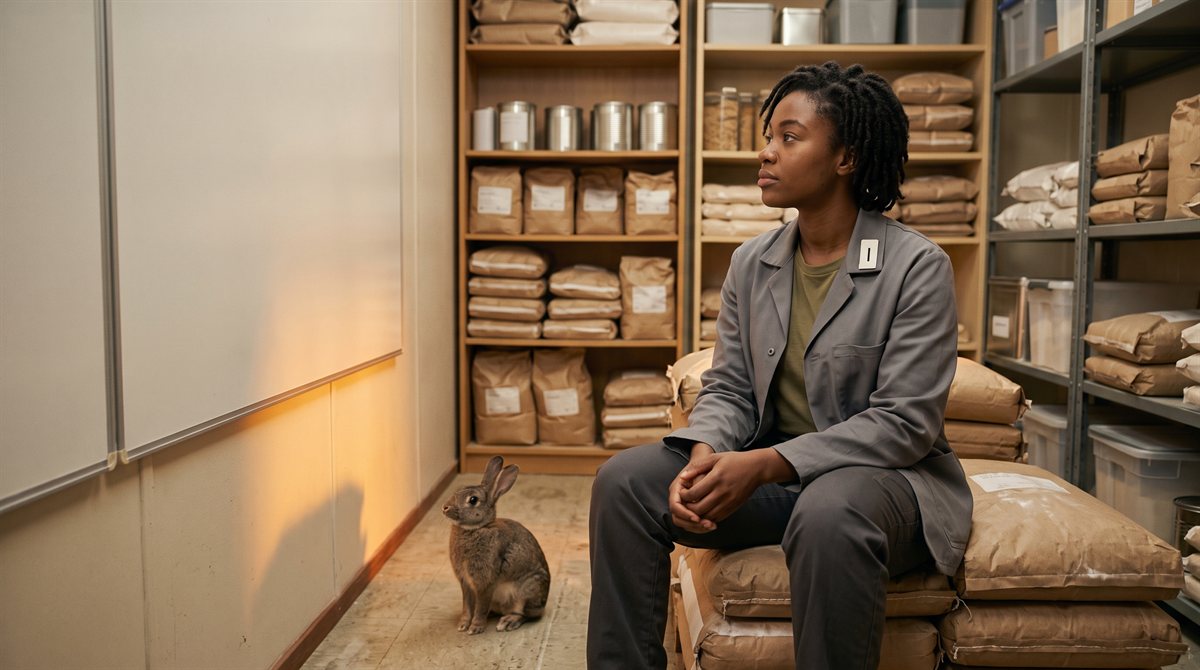
The bureau's experimental record on her rabbit stood at: noticed lunch, every time; noticed nothing else, ever. Achebe had defended that record to three colleagues as a perfect detection rate on a narrow instrument, and she stood in dry stores watching the instrument point at a blank wall, and did the arithmetic. If Knopka said there was food behind that wall, then there was food behind that wall. The warm patch she was sitting against settled the second question, which was whether it was anybody's leftovers or an appliance somebody was running.
The panel behind the flour shelving came away by hand — maintained hinges, renewed seals, the housekeeping of a person who intended no harm and expected no company. Behind it, a proofing pantry from the galley's last refit but one, absent from the current register the way old rooms on Eden sometimes are; and in the pantry, a warming cabinet, clean as a clinic, holding two covered meals.
She did not call it in. She put the panel back, sat down on a sack of the flour that kept not being stolen, and practised her interview technique on the room until the junior cook came at end of shift to collect the meals and found a detective and a rabbit waiting, one of them asleep.
The story came out the way true stories do, all at once and in the wrong order. A grandmother, moved aboard two years ago when her old habitat closed its berths. A ration category misfiled somewhere in transit — a code for visitor, temporary where a code for resident, dependent should have been, feeding her at half-entitlement ever since. A correction form that could not be filed without triggering the one thing the family feared, a residency review for an old woman with nowhere to be reviewed back to. And a steward who had worked out most of it months ago and had been quietly revising his own reports downward ever since, trying to shrink the question until it fit inside nothing.
Theft requires someone to have taken something the record says existed. The record was the crime scene, and the record was wrong. Achebe spent a day and a half walking the correction through the ration registry herself — the category code, the berth-transfer paperwork, a residency confirmation that confirmed instead of reviewed — and on the way she checked, because Eden teaches you to check, whether any of it touched the famous manifest business the task force had ridden out of the habitat on. It did not. It was four kilograms of flour a week, going where rations go: to a resident. Her closure report was one page long and recommended no charges, on the grounds that there was no longer anything on the station's books for a charge to be about.
It would not make her name. By every metric the bureau kept, it was still not a case worth remembering. She remembered it. She remembered, too, passing the evidence shelf on her way to file it and finding the station cat sitting on the cabinet top with the settled air of an auditor closing a satisfactory year — he looked at the report, and at the rabbit in the carrier, and filed whatever he filed wherever he files it, and volunteered, as ever, nothing.
Knopka got the better carrot. Fair is fair; of the two of them, only one had found anything by trying.
Discussion
Show discussion
Comments are read after they are posted and anything unsuitable is removed. Posting needs a GitHub account; reading needs nothing.