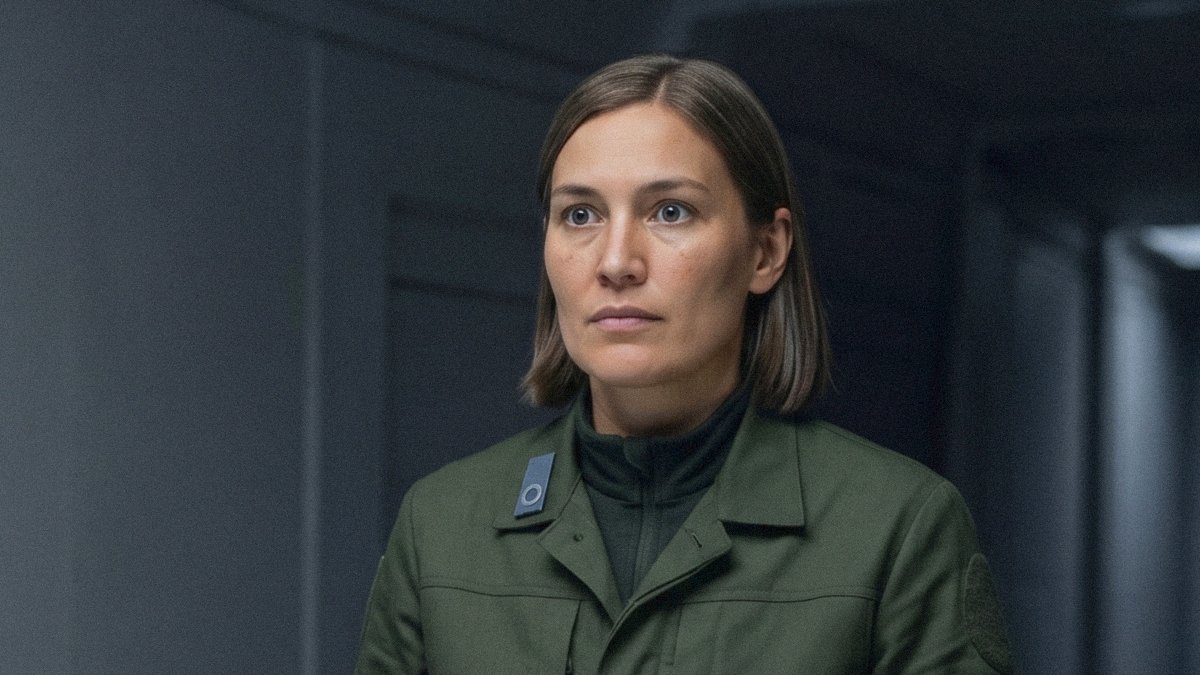
Chief Ranger Arashobal (Krenyi, Quiet-Built)
- Time
- 2828 UCSD, Early Summer, The First Day Back
- Location
- Threshold Station — the Chief Ranger's office; Dock Seven, the general operations watch
The officer's file was shorter than her rotation. Arashobal had read it twice, once for what it held and once for the length, and the length was the more informative reading.
Most files from a Survey rotation were longer than the rotation. A human on a liaison posting at the edge of someone else's jurisdiction filed what happened and then filed what it had meant, and the second half was where the drift lived: a reading becoming a finding between one page and the next, a resemblance becoming a connection, a council's thanks becoming an endorsement. This one had filed what happened. A reclassification, and the chamber that ratified it. A method, documented, four paragraphs, requested by a reef-city and sent. An assessment that said the officer has no finding on authorship and enters none, which was a sentence Arashobal's own people would have written and almost no human did. Then two lines in an Administrator-Voice's office, and the transport. Where the file could have said what the officer had thought the pulse was, it said nothing, and the nothing was not an omission. It had edges. A Krenyi could read the edges of a thing left out as plainly as the thing, and what these edges said was that the officer had held an opinion for one winter and one spring and had declined, every time she was asked, to let it onto a record.
Arashobal would have let the Sentinel go; the Survey kept it, and she held the division correct. What she kept was the shape of the officer who had not let it go and had not claimed it either, because that shape was going to run a section of hers by the end of the afternoon.
The human came in, and stood, and did not fill the room with herself. Seven bars on the collar, new enough that the cloth under the magnet still lay flat. The kit bag was set down against the wall and not in the way. She did not look about the office. She looked at Arashobal, and then at the desk, where the section's roster lay, and then at Arashobal again, and waited to be told what she had come for, which she already knew, and which Arashobal told her anyway, at the speed a human two years off this station and one hour off a transport could take it.
"The section is the department's watch on the outer docks," Arashobal said. "Dock Seven and the docks inboard of it, as far in as the department's watch runs. The watches on it are yours to set. The Rangers on the watches are yours to answer for. The transit windows through the boundary are stated from your desk, and the pilot department flies what you state." She let that stand long enough to be read. "The readings are the boundary desk's, the Survey's own. The window is yours. You will be asked for it by people who would rather have it from the Survey, and the Survey will not give it, because stating a window is not a reading and they do not make claims that are not readings. Neither will you. That is the material part."
The officer said, "Yes, Chief."
"The section had a Lead until the spring. It has had its Principals since. They have kept it; they have not stated a window, because a Principal does not. There is a window due in the summer traffic plan and the plan was written before anyone asked the readings." Arashobal did not add what she thought of the plan. It was not hers to state, and a Chief who stated a Section Lead's window for her had made the window the Chief's. "You will read the readings before you state it."
"All of them, Chief."
"All of them." That was not drift. It was the opposite of drift: a stated term and the conduct that would match it, offered before anyone had asked for the match. Arashobal registered it and filed it under nothing, because the Krenyi did not keep a human's good habit until the habit had shown its use, and the habit had the week to show it in.
The human asked one question. She asked it in the form that could be answered in one sentence, which was the form the file had taught Arashobal to expect from her. "What does the section answer for that its Principals do not."
"Who is on the watch," Arashobal said. "A Principal answers for a watch. You answer for who you put on it, and for what it costs them, and for noticing that before they report it, because they will report it late."
The officer did not say yes, Chief to that. She nodded, once, in the manner of a person entering a line she had already been carrying, and Arashobal, who could not un-notice anything, noticed that the nod was the first thing in the interview that had not been offered to her. It had been taken.
She gave her the roster. The human read it standing, all of it, which took some minutes, while Arashobal went on with the department's own work and did not watch her read it. There was no need to. A body that was its own instrument did not have to look at a thing to know it was still.
The officer thanked her and took up her kit and went. The door closed. Arashobal, who had known the outer docks were thin since the hour she had first stood on them, and had nothing to file about it, and would have nothing to file about it tomorrow, filed the section as handed over and returned to the summer traffic plan, which was going to be rewritten, and which she would not be the one to say so.
Discussion
Show discussion
Comments are read after they are posted and anything unsuitable is removed. Posting needs a GitHub account; reading needs nothing.