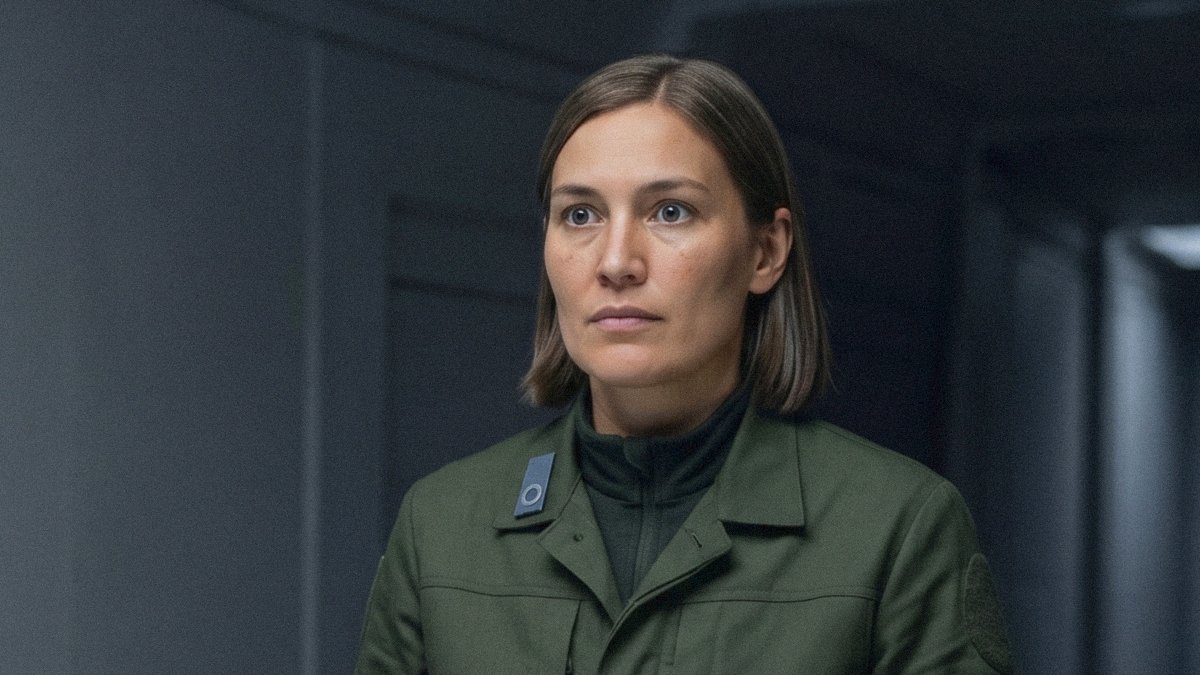
Chief Ranger Arashobal (Krenyi, Quiet-Built)
- Time
- 2829 UCSD, Autumn — the week a post fell open on the outward frontier
- Location
- The Chief Ranger's desk at Threshold Station, and a Line Captain's office nine hours by relay from the post
The question came up with the morning's papers, and Arashobal read it for its length, as she read everything.
It was shorter than the papers around it. Post: fold approach, outward frontier, Starwarden. Falling open. Lists carry Shepherd, T., Chief, general operations, no department since late spring. A word is asked of the last Chief the officer answered to. No form under it. A form would have made it an assessment, and an assessment went to a board, and above Chief there was no board for it to go to. A word went to a desk and stopped there. It was not kept. The Corps had settled that long before Arashobal's time, and she held it correct: a command posting was a judgement about judgement, and the one thing that could not be written down without becoming something else was the reason a particular officer had been thought fit to exercise it. The desk that kept the lists asked, and was answered, and the posting list that came out of the asking carried a name and nothing under the name, and nobody who read the list afterwards could tell from it who had said so.
So the paper asked her for the one thing she did not keep.
She looked at that for a moment. The Quiet-Built kept no fact whose use was not yet shown; it was the plainest thing about her people and the one humans found hardest, since humans kept everything and called the keeping memory. A year ago, on an evening in the early autumn, a watch log had come up to this desk with one initial on it where there might have been two, and she had read the absence for its edges and kept it, which the Quiet-Built do not. She had told herself at the time that its use had been shown twice on the same sill. That was true, and it had also been a way of keeping a thing against a use not yet come, which was a human habit, and it had sat in her a year the way a human habit sits in a Krenyi, noticeably.
The use had come. She found that she had known it would, which was the other half of why she had kept it.
She wrote the material part. The section, one summer: the watches set; thirteen years of readings read before a window was stated; the window stated as a band and left standing when the room pushed, a Starwarden presiding. One Principal's cost noticed, and the watch moved, nine days before the Principal reported it. The department she had not seen, and did not write; the desk had the Archive for that, and a Krenyi does not vouch for a floor she did not stand on. The board had examined the summer. The paper on the desk could have read the board's one line for itself and had asked her instead, because the board had examined whether the officer could answer for people, and the question now was whether she could answer for a post, which was a different question, and the difference was the whole of the command ladder.
Then the fifth thing, which the board had not had.
On the evening of her order to Chief, the officer went down to a dock she no longer answered for, at an hour no roster set, and read the watch log standing, and stood where her initial went, and did not write it. The log came up with the cadet's initial alone. I have kept this a year against its use. Its use is a post.
She read the four lines back. They were so. A Krenyi did not write what was not, and a Krenyi did not write what was and then decline to say why it mattered when the why was material, and the why was material: a Chief who could stand at the place her hand had gone for a summer and not put it there, because the dock was no longer hers to vouch for, was an officer who knew where a signature stopped. Fold approach was a stretch of boundary and a post the size of a modest ship and a crew a long relay from anyone who could share a judgement with them. What a Starwarden answered for out there was mostly what she did not sign. The desk could make of that what it liked. Arashobal had given it the fact, which was hers to give, and the fact's use, which was why she had been asked, and she stopped.
The paper had a second line, under a rule, which she had read first and answered last, as she answered anything that concerned herself.
Lists carry Arashobal, Chief, general operations, Threshold, marked by the officer's own hand: not at present. Renewed yearly. The desk asks whether the mark stands.
It asked every year. It was asking now, in the same paper, because a desk that had been handed a Chief's word for a junior Chief's readiness for the usual road would, being a desk, set the word beside the road's being open to the one who gave it, and would ask, as it did, without asking why. Nobody had ever asked her why. She had been a Chief on the general operations track for longer than the officer had been in the Corps, and the road from a department to a post had been open to her for most of that time, and every year she had put her hand to the same three words, and every year the desk had taken them, and nobody at any desk had asked her for the reason, which was material, and which she would have given in the material form if asked, and declined the rest.
She wrote: The mark stands. Then, since the paper had set the two things side by side and a Krenyi does not leave a thing set beside another to be read as agreeing with it: The officer's readiness and my mark are two facts. Neither is a reason for the other. That was the declined elaboration, declined in words, so that what followed could not be mistaken for anything.
Nothing followed. She filed the paper where such papers went, which was nowhere; the desk had its word and would not keep it either. The thing she had kept a year had gone out of her with the four lines, and she registered its going the way she registered a reading settle: not the number, whether it stopped. It stopped. What she noticed, and had not expected to, was that it had weighed something while she kept it, and that she had not known the weight until it was off her, which was a thing humans said about keeping and which she had taken for a figure of speech.
The outer docks' log came up at the turn of the station's day, as it did, with a Lead's initial under the cadet's. She read it for its length and sent it down, and the department went on with its work, which had not stopped for any of this.
Discussion
Show discussion
Comments are read after they are posted and anything unsuitable is removed. Posting needs a GitHub account; reading needs nothing.