Pelagos Minor
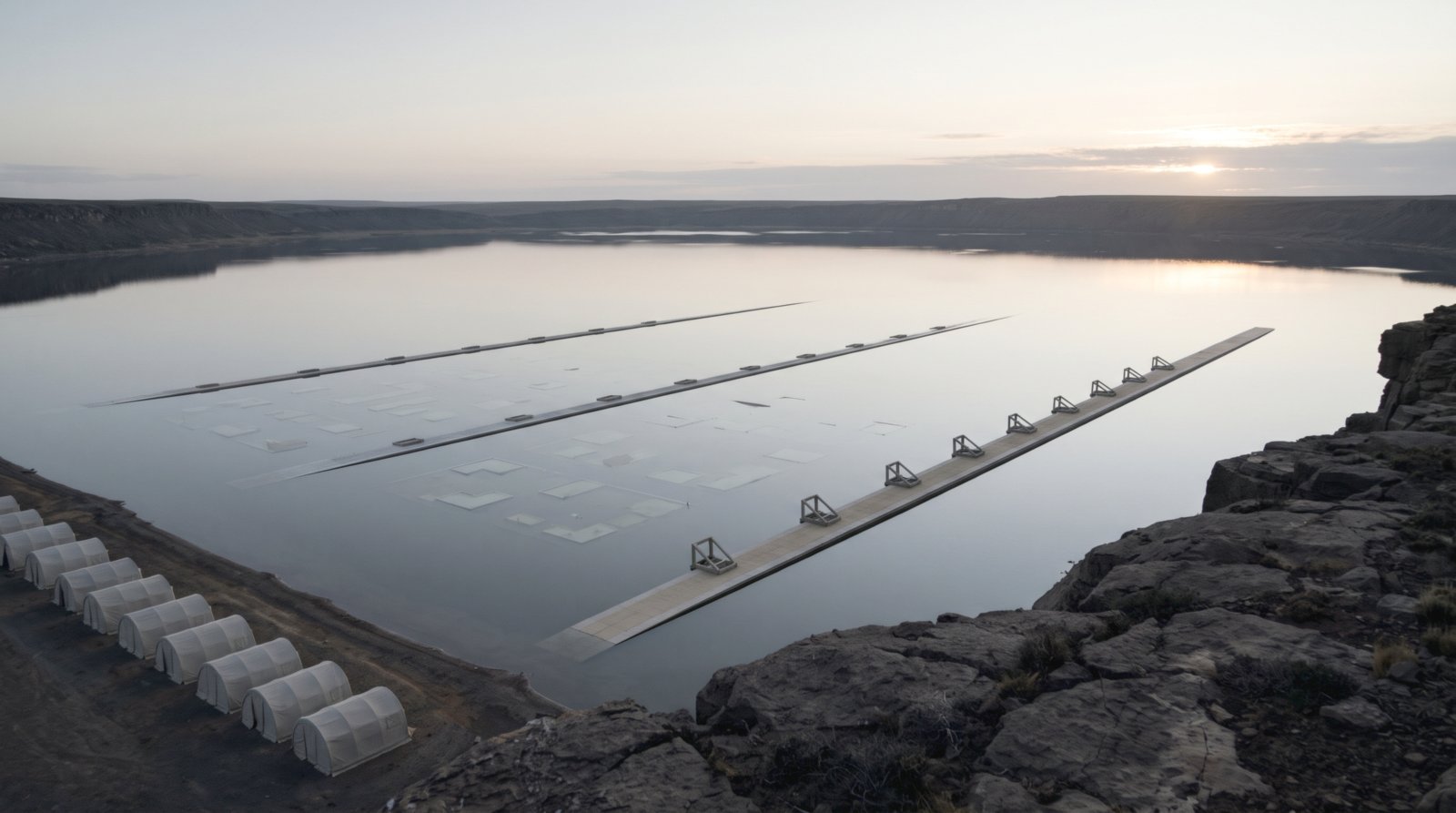
The Archive holds less about Pelagos Minor than about almost any world a chapter has stood on, and most of what it holds is a single clause and what that clause did.
Pelagos Minor is an inhabited planet with an equatorial basin, launch corridors cut into it for leaving the surface in an emergency, and a public warning system that speaks on every channel at once. The Survey Corps keeps an acoustic observer on the escarpment above the basin (Rhuven). In the Early Winter of 2826 UCSD an atmospheric fault cut through the basin's launch shields, with the shelf under the basin already wrong beneath it, and for fourteen hours the world evacuated the basin under its own protocol, with Rangers keeping the lanes, before relief fleets arrived. Three launch corridors were lost. The water came into the basin and settled. Thirty-eight thousand people lived (The Order of Evacuation (S01E03C04)).
The Evacuation Order
The protocol's priority order is not a procedure written by an emergency service. It comes from the settlement charter the world was founded under, and it reads, in the charter's words: women, then children, then older adults, then all others. The sirens of 2826 UCSD spoke it as written.
The charter gives its reason, briefly, in the same clause: the order serves the continuity of the settlement. It was written for a small colony, where what the founders counted as scarce was the next generation. Read in that light, the four places rank people by what the founders believed the colony could least afford to lose: first those who could bear the next generation, then the next generation itself, then those who carried the founders' memory, then everyone else. Women in the clause is the founders' word for the first of these. It is a proxy, and the charter does not say so. That is why women board before children: the clause was never ranking who most needed saving, only what the colony would need afterwards.
Why It Stood
The order was never used before the Basin Collapse. The triage teams drilled for it and, by the chapter's account, never quite believed they would need it. A clause that is never invoked is never tested, and nothing in the record shows it was read again against the world the colony had become. Its reason was a founding colony's. By 2826 UCSD that reason described a settlement that no longer existed, and the clause had outlived it without anyone choosing that it should. Nobody kept it because they agreed with it. It was kept because nobody had asked it a question.
It was obeyed perfectly when the day came. The young adult men who would have boarded last passed their places forward without argument, because arguing would slow the line. The clause put them behind three other groups until the departures ran out, and the world that came out of the shelters was short of exactly the generation the clause had been written to protect: partners lost, birth-rate assumptions failed, care falling on too few. A rule written for the settlement's continuity damaged it, and did so by being kept rather than broken. No one in command intended the outcome. Threshold Station classifies the event as a policy-tragedy: high immediate survival, high delayed social cost, the file having been marked for it under policy-triage rather than misconduct.
What the Record Does Not Hold
When Pelagos Minor was founded, and by whom. Its star, its system and which polity it answers to, if any. Its population before the Collapse, beyond the thirty-eight thousand who lived through it. Who drafted the charter's clause, and whether any earlier text sat behind it. Whether the clause has been amended, suspended or re-read since 2826 UCSD; the chapter ends on the sixth day, and the Archive has not been asked. The name of the Survey Corps station on the escarpment.
See also: The Order of Evacuation (S01E03C04), Rhuven, Threshold Station.
Discussion
Show discussion
Comments are read after they are posted and anything unsuitable is removed. Posting needs a GitHub account; reading needs nothing.