Threshold Station
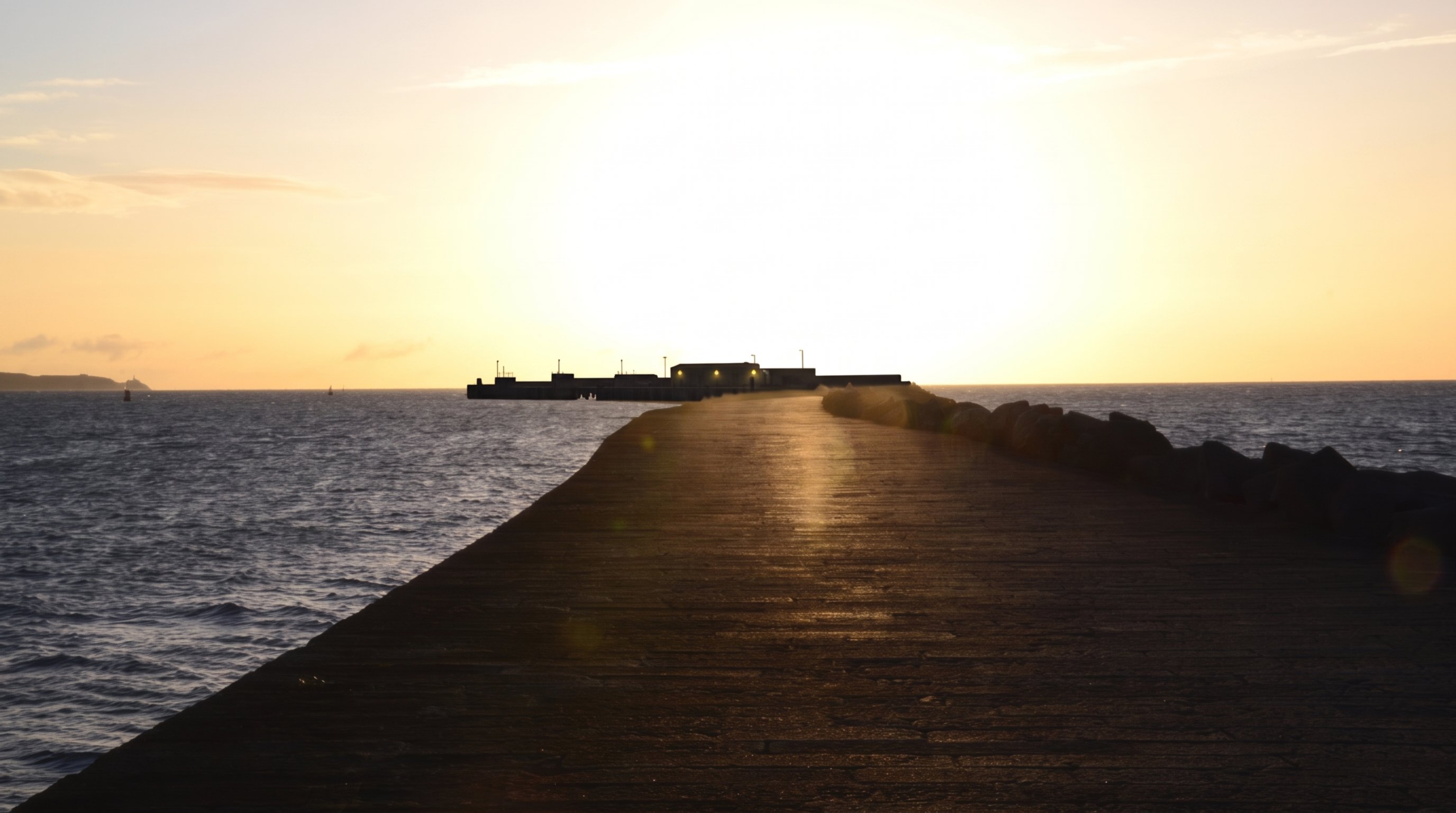
Sometimes little details turn out to be much more important than anyone would ever have expected. Threshold Station is perhaps the most famous example, so far, in the history of the Star Rangers organisation.
Threshold Station is a shore station on Earth, built on a coast where the Interval between two universes narrows over the water off its docks. Its vocabulary is a harbour's: hulls, cutters, docks, and the thin water off Dock Seven meant literally. It did not arrive at the boundary. It was built there, about 2813 UCSD, and stayed: a Survey Corps post with a Starwarden answering for it and a crew drawn from several peoples. The Marsh Causeway is a short walk down the same shore, the only other boundary in the Solar System that can be stood on, and that the two are neighbours says nothing about where boundaries are and a great deal about where the instruments are.
The boundary is a flexure, a standing bend in this membrane that carries a patch of it toward a neighbour, and the station sits inside that condition rather than at any distance from it. How far it is to the boundary is a question with no answer. The air carries the answer it does have: trace ozone a fraction above station standard, which the crews call Threshold Stink.
The Forty Seconds
Two chronometers hang on the wall of Dock Seven, one above the pressure seal and one above the inner hatch. In 2815 UCSD, Late Summer, a reporting officer filed the station's first instrument drift report: both instruments individually calibrated and confirmed accurate, and forty seconds apart when compared. The station administration classified it as a calibration issue and closed the report. Within forty-eight hours the discrepancy returned, and it has returned after every recalibration since, at the same forty seconds. The Archive files it as the best-documented Type II boundary reading on the books and as the plainest case of what Type II looks like from inside: not an alarm, but a number that will not go away, carried for most of eleven years as a hardware fault because nobody on the establishment held the certification that would have read it as anything else. The station's lack of a certified boundary analyst is why the discrepancy kept being re-diagnosed as the instruments.
Nothing about the forty seconds was found by alarm. A reporting officer compared two instruments that each read true and filed the difference, and kept filing it after it had been closed. Eleven years later a boundary analyst walked down to the shore and read two centuries of a lighthouse keeper's clock corrections, one entry at a time, and found the same forty seconds growing in them. The station's own incident record is only as old as the station. The shore is older. The Sceir Light, the navigational light below the station, has kept its Lights Board register since long before the first hull was laid, and the growth of its corrections places the discrepancy well before the first drift report. Threshold Station did not cause the forty seconds. It found them, by slow and methodical patience, against a record kept on the same shore by people who had never been asked to look for anything.
The survey team that arrived through Dock Seven in Early Autumn 2826 UCSD, Sir Galahad Thorne, Syra and Rook-7, did not resolve it. The grove intervention of that autumn left the discrepancy unchanged, a two-source model was withdrawn, and the cause stood unidentified again. What the discrepancy meant was established only in 2831 UCSD, and the record files that under the dock it was measured on.
Dock Seven
Dock Seven is the furthest point out, where the instruments never quite agree, and the station's watch logs are kept in station time read from its left-hand chronometer, the right-hand instrument's reading being outside the log by standing practice. Its outer gallery has a viewport and no instrumentation at all, which is where the dock crews watched from in Mid-Autumn 2831 UCSD, when the narrowed Interval the forty seconds had been marking for sixteen years was found to have been located and worked industrially, off this dock, by a licensed commercial concern for four months before any Survey Corps classification caught up with it. The record calls what followed the Last Stand, and since then it is the event most people mean by the Wrath of the Dragons. Evacuation from the boundary off Dock Seven was completed by shuttle and contracted courier before the failure point. Every person aboard survived. The vessel was not recovered, and Threshold Station logged Line Captain Shepherd's position at the failure point at the moment of closure. The Archive holds three irreconcilable accounts of what did it and adjudicates none of them; the Oversight Council's inquiry record was opened on the station, and the address at the funeral the Council held a year later is filed in the Codex as delivered here.
What the Station Holds
The record names the station's rooms by what happened in them rather than by any plan, and no plan is published. The Survey Office sits on the east wall, boundary-side, in a corner nobody had bothered to give a window, on the side of the station where a window shows the boundary shimmer on bad days. A Boundary Operations Room runs the monitoring; a boundary desk sits inside it, and a Gravimetry Desk is named in the Codex. The Transit Ring handles teleportation, drawing on a local ring reserve, and a Clinical Debrief Room beside it is where the station's transit safety officer, Dr. Iona Vale, holds final medical authority on jump clearance; since late autumn 2826 the station has required mandatory post-jump screening. Section G's corridor runs beside the boundary-proximate zone along the inner hull, with an emergency inspection port that six years of maintenance logs had recorded as decorative. The station's own management architecture holds more state than any analyst will, and the standard Threshold-class arrangement pairs it with an embodied analyst who can be sent to see one thing properly.
The Survey Archive is on the station, under its Senior Archivist, Sen Lovax: the general holdings, the doctrinal working-paper series, the verification case files, and the reconciliation binders beside the Dock Seven incident file. It is the working library of the record a reader is holding, which is why so much of the record is dated from here.
Who Is Here
A station of this grade carries several chains at once, and they do not answer to each other. The Survey Corps detachment holds the boundary desk; Syra ran it in 2831, and Toval, the second Krenyi in the record to serve at Threshold, is its Cadet. The general operations watch on Dock Seven is where Tissadelle Shepherd stood her first cadet watches from the summer of 2826, under a supervising Principal, and where she was a Section Lead two years later; the pilot department was Karla Wender's as Chief Pilot in the same years, and by 2831 the High Captain's office was on the station too. The Threshold Station Constabulary is a civil force and not a Ranger branch, with Detective Inspector Bertram Ashcombe, his investigative intelligence Reeves, and Rook-7 as its field analyst. Hull-fitters keep Section G, and the Codex's own filings name a Maintenance Division, an Operations Desk, Traffic Control, a Records Vault and a Celtic Union chaplain serving the station. On the shore below, the Sceir Light's attendant keeps the Lights Board's register and is nobody's staff but the Board's.
What Is Not Established
The record gives no year of founding beyond the station being thirteen years old in 2826, no name for its Starwarden, and no plan: how many docks it has, how many decks, and what it looks like from the water are not on file. Its complement is given in different places in figures the Archive does not reconcile. The membrane on the far side of the flexure is not named, as the Causeway's neighbour is not. The cause of the forty seconds remains where the grove intervention left it, unidentified; what the discrepancy marked is established, and what produces it is not. None of these is a gap in the station's standing, which is exactly what the charter made it: a post the Survey Corps keeps, a Starwarden answers for, and the Oversight Council may ask about.
See also
- Boundary Zones — the flexure, the Interval, and the Type II reading in the numbers
- Instrument Drift — the forty seconds as a glossary entry
- The Archive — the Survey Archive as the record's working library
- Arrival at the Threshold Station (S01E01C01) — the station as a place people live and work
- The Forty-Second Discrepancy (S01E01C02) — the clock, read three ways
- Dock Seven, the Last Stand (S05E02C03) — the thin water off the dock, 2831
Discussion
Show discussion
Comments are read after they are posted and anything unsuitable is removed. Posting needs a GitHub account; reading needs nothing.