Elvira
- Time
- 2826 UCSD, Late Autumn, Before Dawn
- Location
- Marsh Causeway, Dryadic Grove
She stayed at the grove until it was properly light, because there was no reason to and she wanted to.
The reeds had come back. Not grown back — there had been reeds all along — but come back to being the kind of thing a person walks past without checking. She had not known she had been checking. Three years is long enough to stop being able to tell the difference between a landscape and a habit.
Thorne came to find her at about eight, with a cup of something from the outpost stove and the survey slate under his arm, and asked, in the careful way he asked everything now, whether she wanted the morning's numbers.
"The station drift didn't move," she said.
"No."
"Good."
He looked at her.
"Not good that it didn't move," she said. "Good that you told me at eight in the morning instead of in a report I would have read in three years." She took the cup. "Say the rest of it."
So he said the rest of it: the model withdrawn, the discrepancy back to being an open question, the honest sentence that the thing they had fixed and the thing that was wrong with Threshold Station appeared, on this morning's evidence, to have nothing to do with each other.
"That's worse," she said.
"That's worse," he agreed.
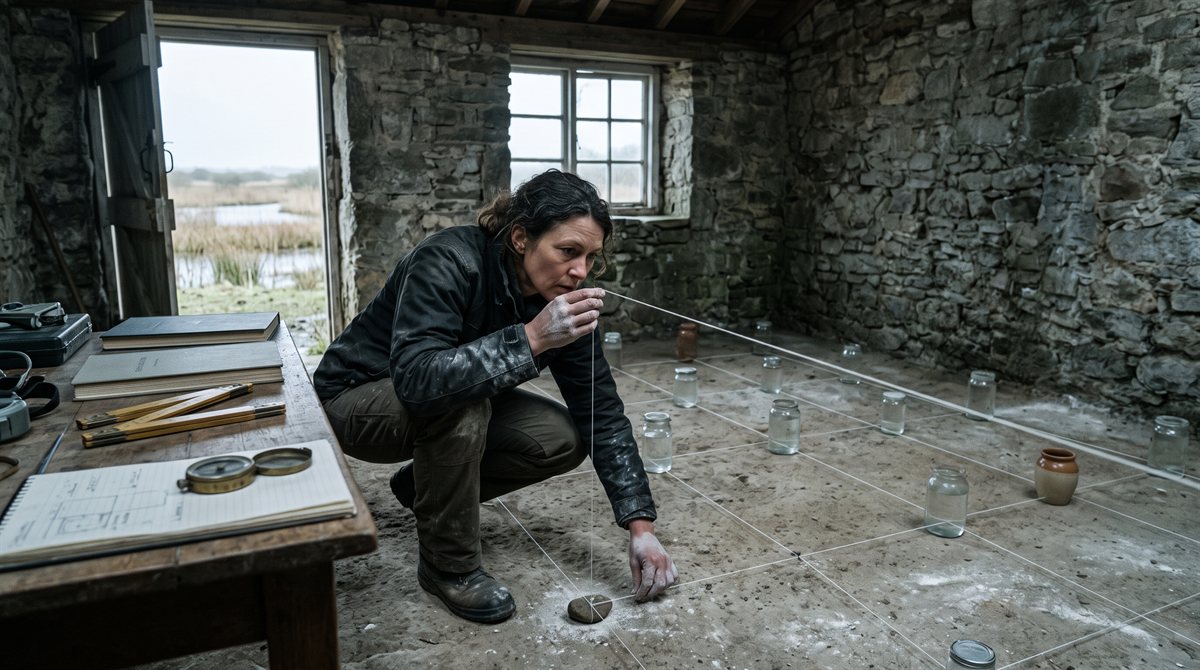
She drank the tea. Out on the root plate the chalk was already going grey at the edges where the dew had taken it, and by evening there would be no sign that anyone had knelt there at all, which was correct — a working that needed a monument was a working that had not finished.
Three years of circles on the causeway, every one of them correctly rejected, and this one had held — and it had held because a man read out a classification and a cat answered a question she had waited three years to be asked. He had called it an Obliger, in the committee's word; she had called it a Court-Fae for three years and would go on doing so, because the word had never been what was wrong. Elvira had done the part with her hands. She was clear about which part that was.
What she was not clear about, and noted in her own record that evening in the plain vocabulary she insisted on, was the question underneath all of it, which nobody had asked yet and which the night's work had not touched.
Something had hooked itself into a joint that seven trees made together, and it had held there for three centuries, and a self-taught practitioner with chalk and thread had taken it out in one attempt.
She wrote: That should have been harder. Find out why it wasn't.
Discussion
Show discussion
Comments are read after they are posted and anything unsuitable is removed. Posting needs a GitHub account; reading needs nothing.