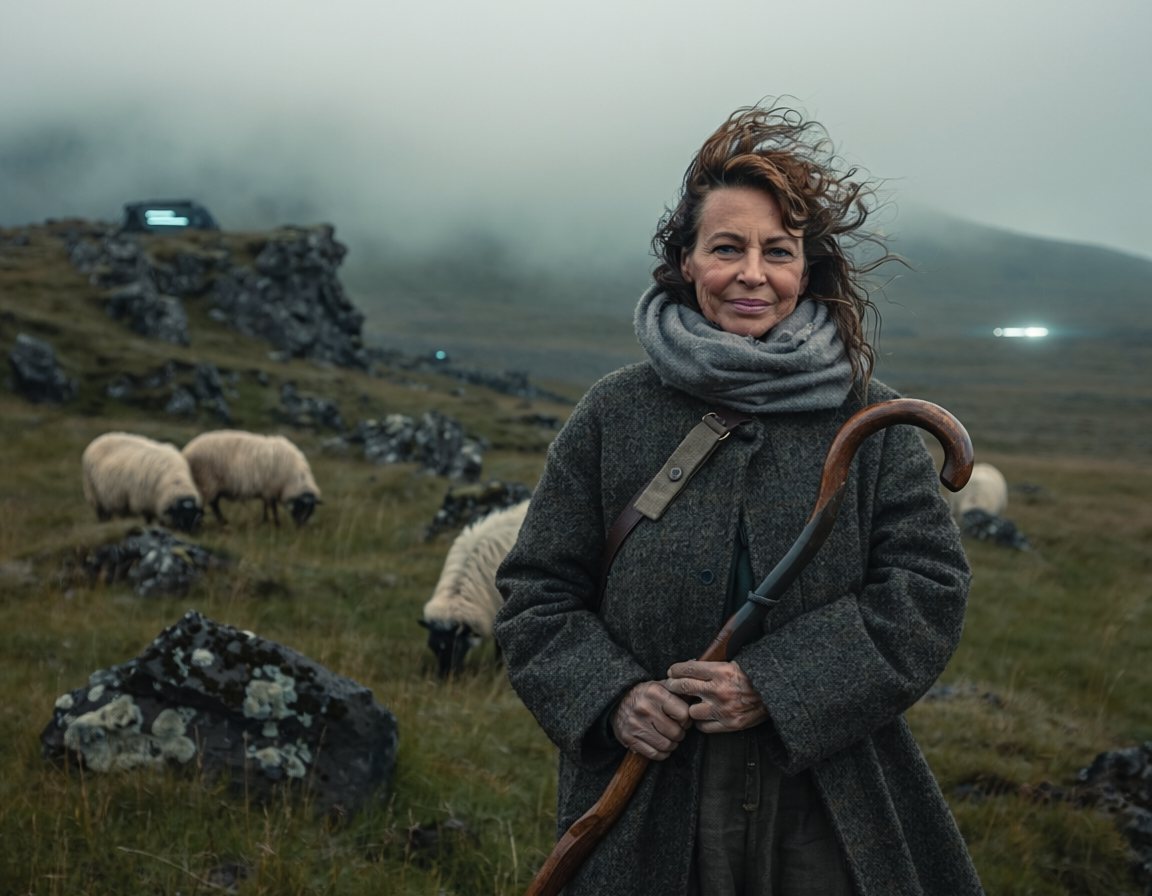
Órla Shepherd, as remembered (Human)
- Time
- 2831 UCSD — or no time she can hold onto
- Location
- The Boirinn Uplands, as remembered
Órla Shepherd had buried three generations from that doorstep and expected, in the ordinary way of things, to be buried from it herself. She was not a woman given to visions. The land did not talk to her; it only kept, the way land keeps, and the women of the holding had always known the difference between a place that held something and a place that spoke, and had never once confused the two.
So when her daughter came down the hill to her that morning, Órla knew two things at the same time and did not let either one show, because showing them would have been a way of deciding which was true before she had the right to.
The first: this was her daughter. The set of her, the way she came down a slope she had come down ten thousand times, favouring the same ankle she'd turned at nine. No one else moved like that. No copy would think to.
The second: her daughter was not here. Tiss was off with the Rangers, had been for years, would send word before she came, always did, had never once in her life appeared on the hill unannounced at first light with the look of someone who had walked a long way in the dark and come out somewhere she recognised.
Órla had spent a lifetime declining to smooth over the things that did not fit. It was, though she would never have said it in these words, the family's oldest work — older than the flock, older than the name. You kept the rule about the Hollow and you did not invent a reason for it, because the reason you invented would be a lie, and a lie kept on the land was worse than a silence kept on it. So she looked at the girl who was and was not her daughter, and she did the hardest thing the holding had ever taught anyone to do.
She let both be true. She put the kettle on. And she said, in the voice she'd have used any ordinary morning, "You're up early," and watched to see whether the answer came back the way an answer comes from a person, or the way it comes from a room that has been waiting to be asked.
It came back like her daughter. That was the part that frightened her, later, when she was able to be frightened. Not that the thing on her step was a stranger.
That it wasn't.
Discussion
Show discussion
Comments are read after they are posted and anything unsuitable is removed. Posting needs a GitHub account; reading needs nothing.