Galen Kane
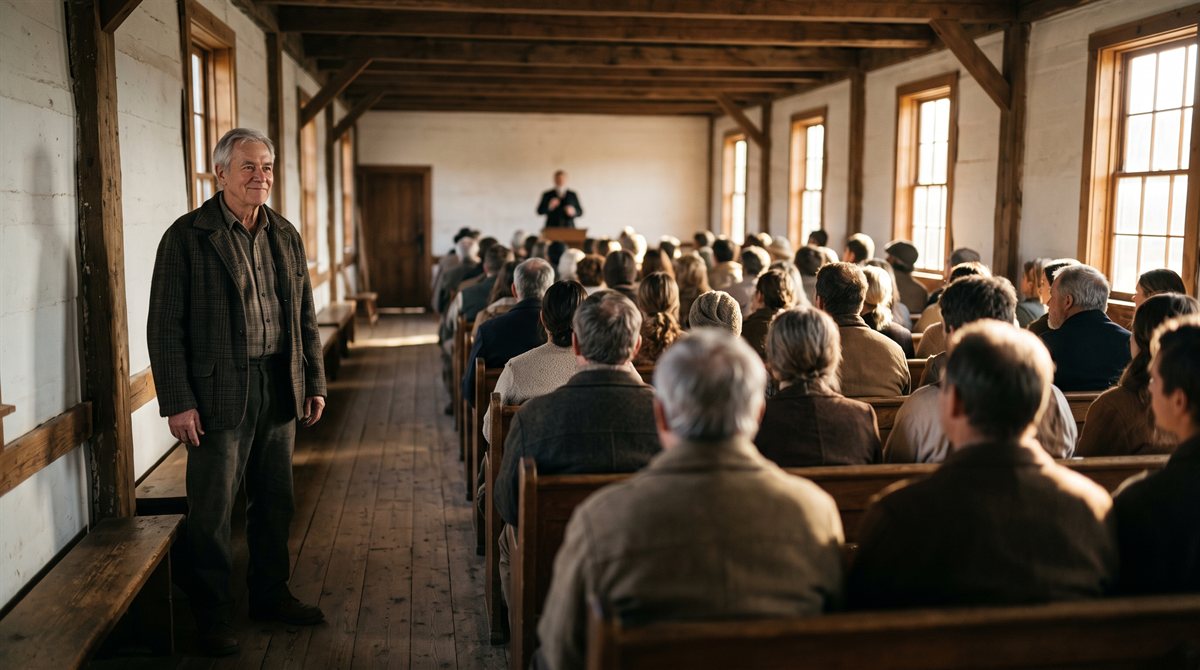
Most peace officers count what they caught. The Frontier Corps counts how soon it could leave, and Galen Kane, who has served in it his whole career, counts departures. He holds the rank of Chief — the top of the certification ladder — and carries the duty title Chief Ranger, commanding the operational section that sets the Corps' circuit rosters across a frontier region: which Ranger rides which passage, alone or paired, serving which handful of young worlds, and for how long before rotation.
He earned the desk the only way the Corps respects, by decades on the other side of it. A circuit Ranger's work is what any honest peace officer's work is — answer violence, hold the accused safely, settle a water claim under the colony's own compact, find the missing — done alone, eleven light-hours from anyone who could be called for backup, under a mandate built to end. Kane's discipline on circuit was the doctrine's discipline: he stood where standing was the job, wrote down what he saw to Safety Corps evidentiary standard, and left as early as leaving was honest. Three frontier worlds' founding dockets have opened with cases Kane sealed years before their courts existed. He was present, as a spectator, for two of the verdicts. He appealed neither, because neither was his to appeal — the Corps holds a case for the jurisdiction that does not exist yet; it does not keep an opinion about what that jurisdiction should do with it.
The entries in his record he is known to value are not the cases. They are the closures: the mornings a world he had served swore in its first sheriff or seated its first council, the mandate self-terminated mid-ceremony, and Kane attended in civilian clothes, unarmed, at the back of the room, as the Corps' tradition asks of the departing Ranger. He has stood at the back of more of those ceremonies than most Frontier Rangers see in a career, and the tally is the nearest thing to a service philosophy anyone has gotten out of him: every one of them is a world that no longer needs him, which is the only outcome the caretaker clause was written to produce.
One passage in his record runs four months where every other runs weeks. It belongs to a world whose government did not fail to arrive but failed after arriving, far enough out that "nearby authority" meant no one within a season's transit — the residue case the Corps' second-landing doctrine names and declines to resolve. The file is complete, reviewed, and closed, with the dissents attached in the ordinary way. Kane has never taught from it, and the Corps, which teaches its hard files in pairs precisely so that no Frontier Ranger finds either of them comfortable, has never asked him to.
Kane is what the certification ladder's technical ceiling was designed to produce: a Chief who spent thirty years getting better at one thing and never crossed into the command track, not because a Starwarden's post never opened but because the thing he spent thirty years on does not improve from orbit. His own chapter has returned him as chapter leader more than once, and he is scrupulous — some say ceremonious — about which of his two hats is speaking: the roster is a command decision and his to make; what good frontier practice is belongs to the chapter and the corps president, and he defers to it in the minutes even when the practice being settled is one he wrote.
Shepherd
Tissadelle Shepherd's early-career certification rotation through the Frontier Corps rode as the second of a pair on one of Kane's last circuit passages — the corps' oldest training arrangement: one Ranger who has done the work for decades, one who has to learn what it costs, several young worlds between them. His assessment went into her file in his usual register, and reads now like the rest of her early record: methodical past the point her cohort found comfortable, unwilling to volunteer a conclusion she could not support, and — the line Kane meant as the corps' highest compliment, because his corps counts departures — not one we will keep.
The mentorship never formally closed; it reversed direction. When Shepherd entered the command ranks — Starwarden, a vessel's second, then Line Captain — the calls began going the other way, and Kane became the advisor she trusts most. The value is precisely what he is not. He sits nowhere in her chain of command, holds no boundary certification, has no stake in any roster she controls and no career left that her favour could advance — she is surrounded by people whose answers she outranks, and Kane's she cannot, because he owes her nothing. What he checks is not the boundary science, which he would be the first to say he cannot read. It is the part of command he spent thirty years doing alone with no one to check it: whether the record of a decision is complete or merely defensible, whether standing is still the job or has quietly become the habit, and when leaving — the discipline his whole corps is built on — is the correct order that nobody on a command deck wants to be first to say aloud.
Character Notes
Kane's authority on a lawless world was never on his belt, and he has the retired-circuit habit of proving it: he takes notes in meetings that are being recorded anyway, longhand, and the people across the table watch him do it with more unease than any armed escort has ever produced.
He is patient in the way of a man whose institution defines success as its own departure. Rangers posted under him learn his one non-negotiable early: the record goes down complete, especially the parts that make the Corps look slow, because a Frontier Ranger's file is read most closely by a court that has not been founded yet.
Distinct from Catherine Galen, the Ranger Liaison Officer at the Tír na nÓg gateway. The resemblance is narrower than it looks: Galen is his given name and her family one, so the two share four letters, a corps, and nothing else on the record.
Discussion
Show discussion
Comments are read after they are posted and anything unsuitable is removed. Posting needs a GitHub account; reading needs nothing.