Arilon
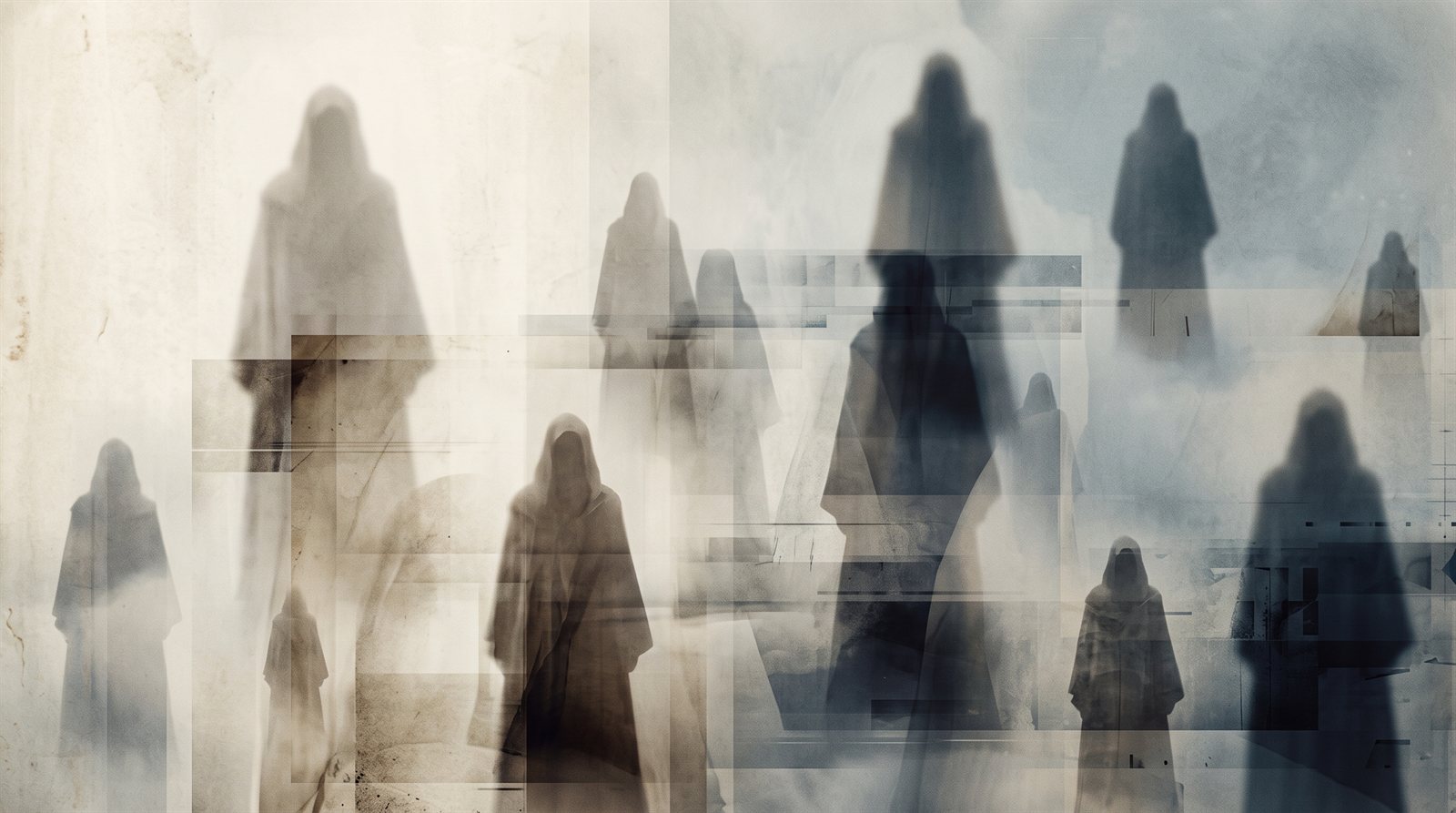
Ask the Fellowship of Light which world Arilon was born on, and a chapter archivist will ask you back which account you mean. There are dozens on file. None of them agree on a birthplace, a language, or a century. The Fellowship has stopped treating that as a problem to solve.
Arilon is not a historical individual. It is the Fellowship's own comparative-archive shorthand for a narrative pattern its chapters have independently catalogued on more worlds and among more unconnected cultures than any single migration or contact event can account for: a teacher, witness, or outsider who arrives at a community already living beside a boundary place, names a truth about it that the community's own established authorities have declined to name, is opposed or discredited for the naming, and departs, dies, or disappears before the naming is vindicated on the record. The vindication, when it comes, always comes after.
The Fellowship keeps the pattern's accounts filed together specifically because no single one of them explains the others. It has never claimed the figures were the same person, the same lineage, or evidence for each other's specific teachings. What it has observed is the shape recurring — closely enough, across cultures separated by continents and, later, by star systems that never shared a language before the Concord period, that "coincidence" stopped being a satisfying word for it centuries before "Arilon" became the word chapters actually use.
What the Cascade Says the Pattern Is
Comparative theology stalled on Arilon for as long as it tried to answer the question from inside any one tradition's own theology. The Cosmic Cascade answers it from outside all of them: Arilon-pattern accounts are the recorded footprint of Champions and Heroes — sentient material beings selected by a Levril and given constraint literacy sufficient to name a boundary condition their community's ordinary instruments and ordinary authorities could not yet name. The Cascade is explicit that this selection carries no moral or theological content of its own: no virtue is being rewarded, no faction is being favoured, and no single tradition's account of why the naming happened is more mechanically correct than any other's. What is consistent, per the Cascade's own documented "Observable Effects on Time-Bound Entities," is the aftermath: "frequent mythic overstatement of actual capability" and "persistent misattribution as divine will by low-context observers." Arilon is what that misattribution looks like from the inside of a hundred different traditions, each one certain it was the only community the pattern ever visited.
The pattern is species-neutral, and the file is emphatic about it. A Champion is a sentient material being — organic or artificial, and nothing in the selection criteria prefers a humanoid, a biological, or a speaker. An Arilon-figure may be of any sapient kind; so may the community that received one. The Fellowship's file is a comparative archive of peoples, not of humans with variations, and a chapter archivist asked whether some account concerns a non-humanoid will say that the question has never been the interesting one.
What is not species-neutral is the archive. The pattern as filed — a teacher, a witness, a wanderer — is a description of what survived transmission, and transmission was done by low-context observers working in whatever vocabulary they had. A Champion who arrived looking broadly like the people visited is written down as a person: a stranger, a prophet, an outsider who spoke. One who did not may be written down as a marvel, a beast, a voice, a light, or a visitation — and an account in those terms is less likely to be recognised as the same pattern, less likely to be cross-referenced, and in some traditions less likely to have been kept at all. The Fellowship annotates this in the file's own margin and does not pretend to have corrected for it: the accounts on the shelf are not the accounts that exist. They are the accounts that looked like accounts. It is the same selection effect the boundary-zone record names about its own two documented sites, and the Fellowship borrowed the phrasing knowingly.
The Cascade's account admits one refinement the file duly records without adopting: the Avatar exception. A stratum above the Celestials can, in theory, be incarnated as a limited immanent person — like its source without being the same person as its source — and such an avatar's record would be indistinguishable, from inside time, from a Levril-selected Champion's. In theory, even Kieme could have walked one world as an Arilon-figure. The file's position on this is the file's position on everything: since no account could decide the question from the record, the question is not the Fellowship's to decide, and a tradition that reads its own account as exactly such an incarnation is welcome to go on reading it that way.
The file admits a second refinement, and unlike the Avatar exception it does not sit above the Champion reading but inside it. If Arilon-accounts are the footprint of Levril-selected Champions, then a question follows that the Fellowship regards as fair and unanswerable: a Champion of which people?
The Krenyi fit the filed pattern in every particular, and the fit is uncomfortable. The pattern is an outsider who arrives, names what local authority will not, is opposed for it, and departs before the vindication. Set beside that: a people long-lived without apparent degradation, and so not ageing on a community's timescale; who go straight to material terms with no preliminaries; who are honest by disposition and will therefore say the thing everyone present has agreed not to say; who decline to be placed when asked what they are; and who withdraw relevance quietly and leave when a situation stops matching its stated terms. They are also, on the Cascade's own selection criteria, the readiest Champions in the record.
Their resemblance to humans is not why the reading is strong, and reading it that way gets the logic backwards. It bears on the archive rather than on the frequency: a Krenyi Champion among humans is one of the cases that would have been written down as a person and so preserved in the pattern's recognisable shape. That makes them over-represented among accounts that survived in a form the file can match — which is a fact about the shelf, not about who is selected. Read carelessly it becomes evidence that Champions are usually Krenyi, which is precisely the inference the annotation above exists to forbid.
And the record cannot exclude the reading, which is the part that makes it permanent. No survey filed a Krenyi homeworld, no charter names one, no timeline entry places their emergence — so there is no chronology to test any account against. That absence is the Krenyi's own and deliberate, and it has a consequence they did not choose: a people who decline to be placed cannot be placed anywhere, including out of an account they were never in.
Nor will they settle it. Asked directly whether any Arilon-account concerns one of theirs, a Krenyi gives the material answer — that the pattern is a Cascade mechanism and carries no theological content — and declines the rest, on the same grounds they decline every version of what are you, really. The one people positioned to close the question are constitutionally the ones who will not, and they are honest enough not to offer a false answer in its place.
The reading has a boundary, and the file draws it at Old Earth. The comparative archive's oldest holdings are Old-Earth scriptural accounts, carried off the planet as living observance rather than as antiquarian curiosity. Nothing in the record places any people but humans on Earth before spaceflight, and the file does not reach for one now. For a human community the pattern predicts a human Champion, because selection operates on the sentient beings actually available to be selected, and on Old Earth that population was human. The Krenyi reading applies where a Krenyi could have been — among the later accounts, across star systems, in the contact era that produced most of the file. It does not run backwards into antiquity, and the Fellowship has been explicit that it will not be made to.
Two reasons, and the second is the one that generalises. The first is evidential: an unplaceable people is not a placeable one. That the Krenyi have no filed homeworld makes the reading impossible to disprove, and impossible to disprove is not the same as supported — the absence of a chronology is not a licence to write them into every century that lacks one.
The second is a rule the record keeps everywhere and would break here: no people is the explanation for another people's history. It is the same refusal underneath the closed list of human-framed peoples and the refusal of a shared galactic biochemistry — each of them declining a tidier universe in which everything descends from one source. Supplying an alien visitor as the mechanism behind Old-Earth accounts would tidy several thousand years of somebody else's history into a footnote about the Quiet-Built, and it would do it to material that living traditions hold sacred and that the Fellowship exists to hold jointly rather than to settle. A file whose founding renunciation is that it does not adjudicate between traditions cannot hand one of them a mechanical answer and call it neutrality.
The Fellowship files this exactly as it files the Avatar exception, and for the same reason: it is a reading no account could decide from the record. It is worth adding one caution, because this reading attracts a different kind of reader than the others. It is the deflationary one — it lets a sceptic replace a visitation with a long-lived traveller and go home satisfied — and it is no better evidenced than the devotional accounts it would displace. Preferring it because it is tidier is the same error the file spends its whole existence declining, running in the other direction. The Corps has a maxim for the habit that the Fellowship has taken to quoting: the pleasing reading is checked first.
The Quiet-Built themselves would refuse the reading if refusing were available, and the shape of that refusal is worth noticing. To be read as symbol is what they resist everywhere. To be read as the source of everyone else's symbols is that same distortion at the largest scale the record offers, and there is no material term to return the exchange to when the exchange is being conducted across a hundred traditions and several centuries by people who were not there.
The Fellowship's own founding renunciation — no political interest, no commercial interest, no stake in who wins a dispute — is why it is the institution every tradition has been willing to let hold this file jointly rather than let any one of them claim it outright. A body that profited from settling the question would have settled it by now. The Fellowship has had centuries to settle it and has consistently declined to, on the same grounds it declines every other dispute: naming which tradition is correct is not the Fellowship's vocation, and never has been.
Local Names, One Filed Pattern
Individual cultures keep their own name for their own account, and the Fellowship does not encourage them to stop. A contemplative chapter cataloguing a new account does not rename a community's own teacher, prophet, or witness — it simply notes, in its own comparative index, that the account matches the filed pattern closely enough to cross-reference. "Arilon" is the cross-reference, not a replacement name. It surfaces most often in contexts that are deliberately not any one culture's own: interfaith study, cross-chapter correspondence, and the kind of ceremony that has to mean something to a room nobody can assume shares a single theology.
Ecumenical Hymnody
Because the pattern belongs to no single tradition, the body of song and liturgy that has grown up around it names the pattern's shape rather than any one culture's specific theological claims about it — a lamp, a naming, a witness who leaves before the record catches up, a silence afterward that isn't erasure. These "ecumenical hymns" circulate across Fellowship chapters regardless of which specific local Arilon-account a given chapter keeps, precisely because they were built not to require agreement on which account is the real one.
The Star Rangers inherited this repertoire rather than commissioning their own, and for the same structural reason the charter gives for everything else about them: the Neutrality clause forbids the Rangers from lending institutional weight to any single faith's liturgy, and a funeral, a boundary-loss memorial, or a commissioning has to be sayable in a room where the mourners do not all believe the same thing about what happens to the dead. See Hymn of the Thin Places for the version most commonly sung at Ranger memorials — of disputed origin, uncredited by design, and never once formally adopted by any single chapter, which every chapter that sings it has always understood to be the point.
For a worked comparandum from the file — an Old-Earth scriptural witness read as an Arilon-account, paired with the general whose founding word ended one failure by keeping its deeper one — see Jehu Among the Comparanda and its plain-voice telling, The Captain Who Drove Furiously.
See also: The Fellowship of Light, The Cosmic Cascade, Levrils: Dragons and Constraint Literacy, Saint Aoife, Formation of the Star Rangers, Jehu Among the Comparanda, The Captain Who Drove Furiously.
Discussion
Show discussion
Comments are read after they are posted and anything unsuitable is removed. Posting needs a GitHub account; reading needs nothing.