The Kingdom of the Five Islands
Every survey report on this world starts the same way: ninety-eight percent of the surface is uninhabitable, and somebody was already living on the other two percent when the Star Rangers found it.
The world itself has no charter, no Union membership, and no Solar System designation beyond a provisional survey number nobody outside the Archive uses. What it has instead is the Kingdom of the Five Islands — a hereditary monarchy holding the single temperate archipelago on a planet whose open ocean and continental landmasses are, by every instrument reading taken so far, close to unsurvivable.
A World Built to Kill Its Own Weather
Fast rotation, a wide ocean, and a greenhouse-heavy atmosphere combine to keep most of the planet locked under storm systems large enough that Survey Corps meteorologists needed a new severity classification to log them. Coastlines shift by kilometres in a single storm season. No continental interior surveyed so far has supported a stable settlement footprint for more than a few decades before weather erased it.
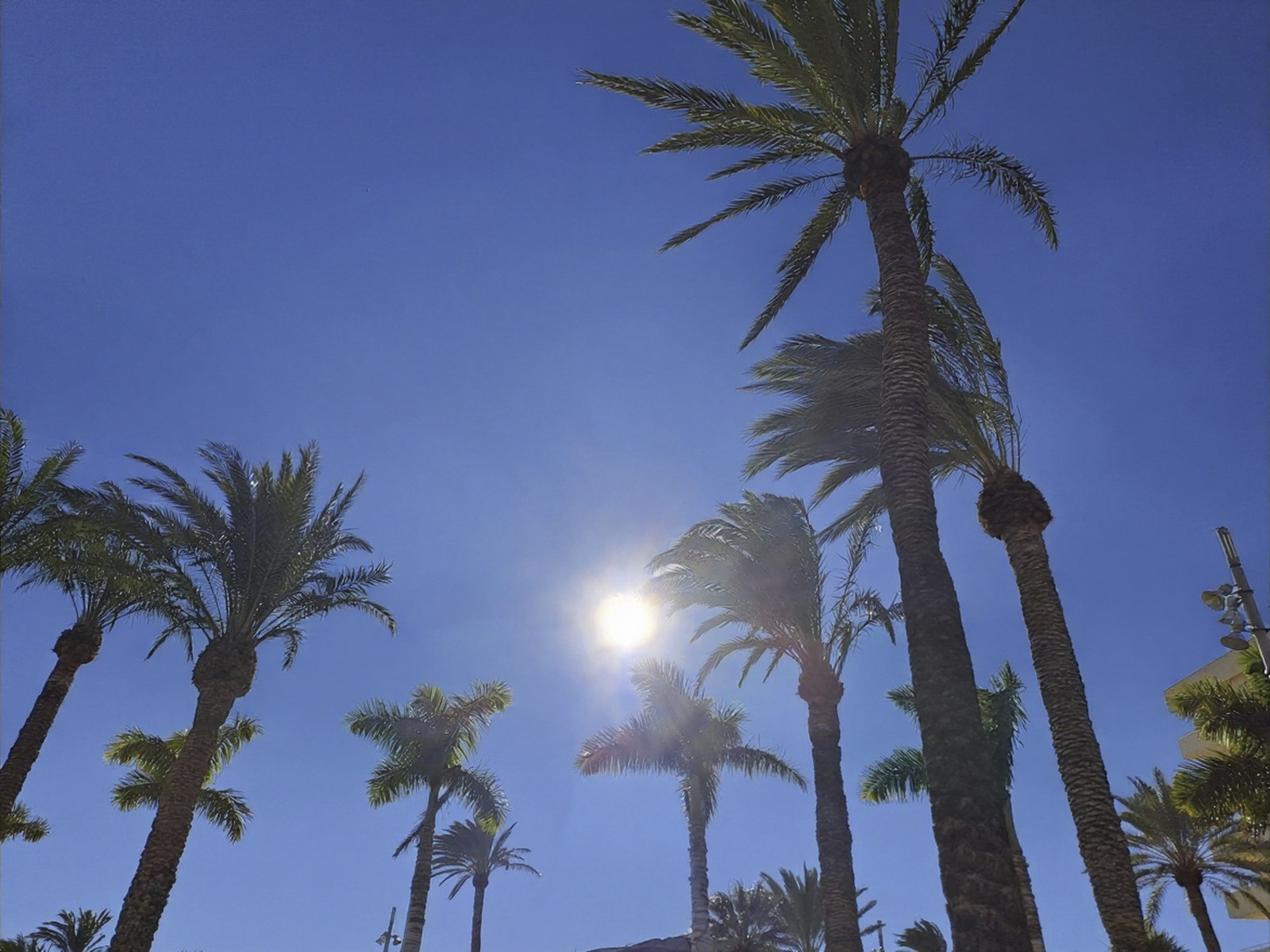
The four islands the Crown holds survive the weather by accident of geology rather than design: a submerged, ring-shaped caldera rim breaks the worst of the deep-ocean storm systems before they reach the archipelago, leaving the islands themselves merely windy — every tree on Vellamar grows leaning, and every colonist's first lesson is which direction to expect the gusts from — rather than annihilated on the same schedule as the rest of the world. The air itself is another matter: Survey Corps atmospheric analysis has confirmed extensive, centuries-old soil and micro-flora engineering across all four islands, layered in so long ago and so thoroughly integrated into the native-seeming ecology that it went undetected until instruments looked specifically for it. The founding colonists did not arrive to a world already breathable. They made it one, generations before the record that should have said so was lost — and the Kingdom's own chronicles, which credit the accomplishment to nothing more specific than "the first settlers' hard work," have never once described it as anything other than ordinary labour.
A Colony Older Than the Record That Should Have Kept It
The Kingdom's own oral chronicles date its founding to a sublight departure from Earth predating even the Currach Fleet's — a detail Solar System archivists have not been able to confirm or rule out, since no departure manifest from the relevant period survives complete. What both sides agree on: this was not a documented Expansion-era colonization effort. It was, like the Fleet's own arks a species deeper into the same anonymous archival gap, a departure that nobody with the authority to record it thought was worth following up on afterward.
Left alone for the length of that gap, the founding population built a civilisation with no outside reference points to correct against — its own language, its own calendar, its own line of monarchs numbered past any count the Archive can independently verify. Survey Corps contact, made only in the last several years, is the first outside confirmation the Kingdom has had in longer than its own court historians can agree on.
The Count in the Name
The Kingdom's name, in its own language, is a count of islands, and the count is not the one the Archive first filed. The delegation's first summary of the Kingdom's government rendered the name as the Four Islands, from the four the Crown holds and the four stewards the Common Council returns, and the rendering stood in the Archive until the Long Accounting had been read far enough back to reach the Sisterhood's charter, whose entries count five, and name them. The court's chronicle, recited at every coronation, counts four and always has. Both records call the realm by its count, so the Kingdom is the Four Islands in the one and the Five Islands in the other, and it has lived with the difference the way it lives with the two records' disagreements on succession: neither side has pressed it. The Archive files under the written count on the rule it applies to every conversion it publishes — the first rendering stands beside the corrected one, dated, under the delegation's name — and not because the written record is the truer one, which the delegation has been careful to say to the court in so many words.
What the fifth name names, the record has not established. It is a name in the Accounting's oldest hand with no island the Crown counts under it, rendered at the lowest confidence the delegation's register admits and not yet published, and the delegation has filed three readings against it and pressed none: an island lost, since the open ocean beyond the caldera rim is unsurvivable and a low island on the rim itself would not be the first thing this world's weather has taken; an island renamed, one of the four under an older name, on which the Krilzat note below would bear; or a place that was never an island, counted for a reason the Accounting does not give. The Sisterhood, asked, answered that the Accounting says five. The court, asked, answered that the Crown holds four. Every report filed on the question ends the way the delegation's reports end.
The Crown Reigns; the Council Rules
The monarchy is not ceremonial. The nobility mostly is — and both facts trace back to the same reform.
The Old Houses hold a peerage five tiers deep, King down to Knight, and by old custom every tier below the Crown carried two paired commissions besides the title itself: a military rank and a civilian office, so that a single house was simultaneously landlord, officer, and administrator over the same stretch of ground. A Duke was also a General and a Chancellor. An Earl was a Colonel and a Governor. A Baron was a Captain and a Mayor. A Knight, at the floor of the hereditary ladder, was a Lieutenant and a Provost. Below Knight the ladder continues on merit alone — a Sergeant or a Steward answers to the Crown and to the office, not to any house, and the Kingdom's court has never pretended the two ladders were the same ladder wearing different names.
Three reigns back, a succession of storm seasons mismanaged badly enough by hereditary landholders to cost Ostrel most of a winter's stores forced a settlement the Crown itself proposed rather than had forced upon it: the Old Houses kept their peerage titles, their precedence at court, and nominal trusteeship over the ancestral parcels their names still carry, but the paired civilian office — the Chancellor's chair, the Governor's, the Mayor's, the Provost's, whichever came with the title — was pulled out from under it and given instead to officials chosen by the people who actually worked the land. No house was stripped of anything it could frame as an insult. Every house lost the one thing that had mattered. The paired military commissions the reform left alone, mostly because there was nothing left in them worth taking: the Kingdom keeps no standing army, and the one hereditary command that still means something on the ground — the Casimor watch-post — was never a noble commission to begin with. Its keepers hold what amounts to the Sergeant tier, filled the way the Sergeant tier has always been filled, on service rather than blood, and are honoured above nearly every other commoner rank for it.
A Lord or Lady of the Old Houses today presides at coronations, storm-season blessings, and formal court audiences, sits nearer the throne than any elected official ever will, and administers nothing. Real governance runs through the Common Council: a steward elected to a fixed term by the landholding freemen and reeves of each island — Vellamar, Casimor, Aduine, and Ostrel each returning one — who together set taxation, coordinate storm response, and hold the day-to-day law of the Kingdom answerable to their electorates rather than to the Crown or to any house. The monarch convenes the Council, can delay its measures, and has vetoed exactly one in the current reign; the monarch does not sit on it, and no noble title carries a seat.
The arrangement leaves the Old Houses with real cultural weight and no real power, which court wits describe as either the safest possible place to put a hereditary aristocracy or the cruellest, depending on which house is complaining that season. The Abbeylands, notably, sit outside the Council system entirely — the Abbess answers to her charter, not to an electorate — which the Sisterhood is quick to point out whenever a Council measure tries to reach the Abbeylands anyway.
Titles cling to a house's relations the way they do everywhere blood still counts for something at court, and the Kingdom never bothered inventing separate words for it: an heir is introduced as [Name], Heir of [Title], a spouse as [Name], Consort of [Title], and any other child or sibling simply as [Name], of [Title] — Selwyn, Heir of Duke Rothmar; Isolde, Consort of Earl Brennac; Tobin, of Baron Ashgrove. None of it carries a vote, a seat, or so much as a courtesy office; it is precedence and nothing else, and it scales to all five tiers without needing a new word invented for each one. In hallway conversation the court shortens it further — "the Duke's heir," "Rothmar's boy," "Ashgrove's lot" — and reaches for the full form only when the room, or the record, requires it.
Vellamar and the Royal Gardens
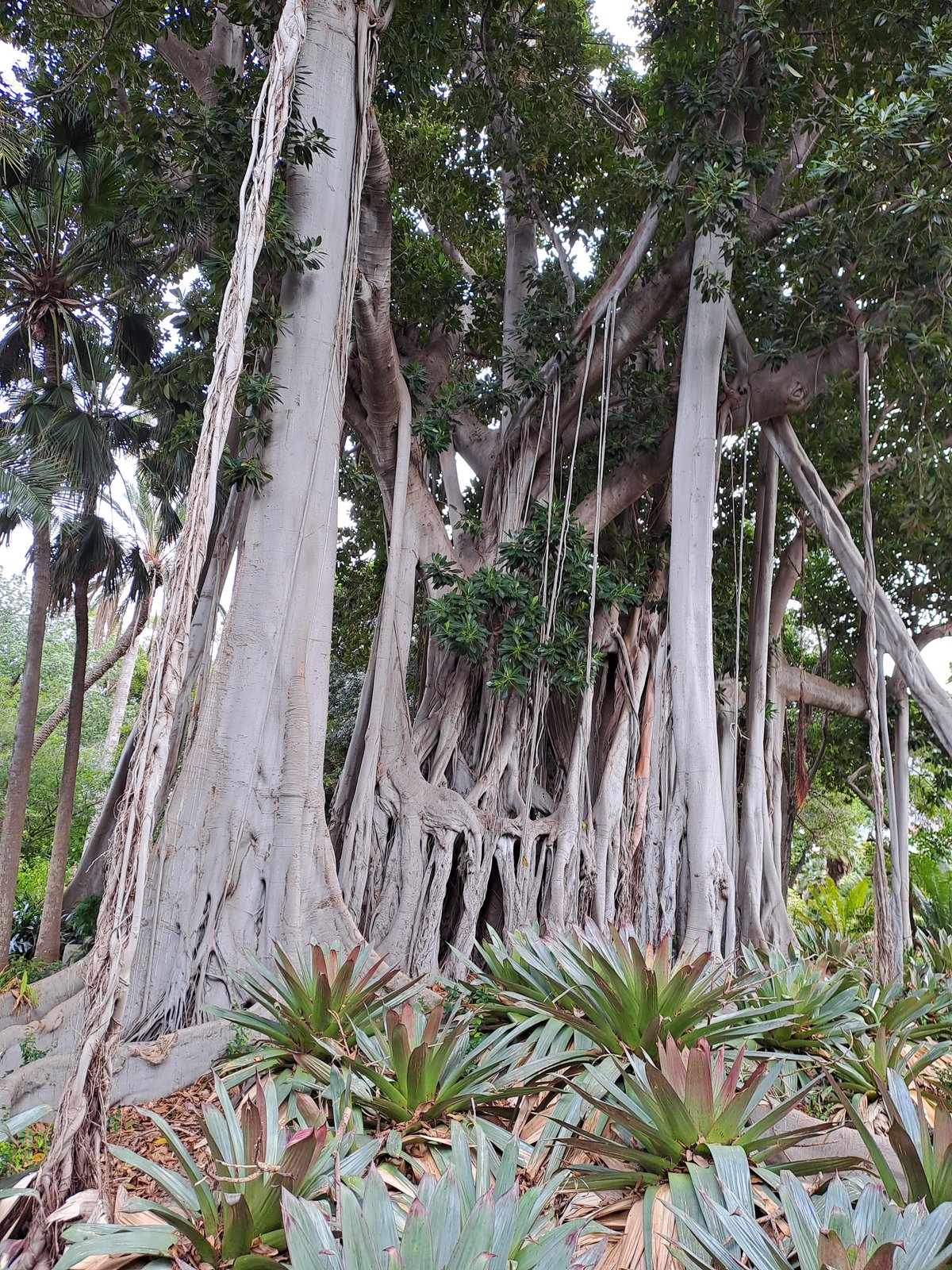
The throne island, Vellamar, holds the Kingdom's capital, its royal court, and gardens old enough that several of the specimen trees predate the current dynasty. Chief among them: a single elder fig whose aerial roots have descended and thickened into secondary trunks across an entire garden quarter, forming what court records simply call the Elder Grove — an unbroken canopy under which three coronations have been held rather than in any built hall, because, as the current monarch's own installation address put it, "nothing we could build would witness it better."
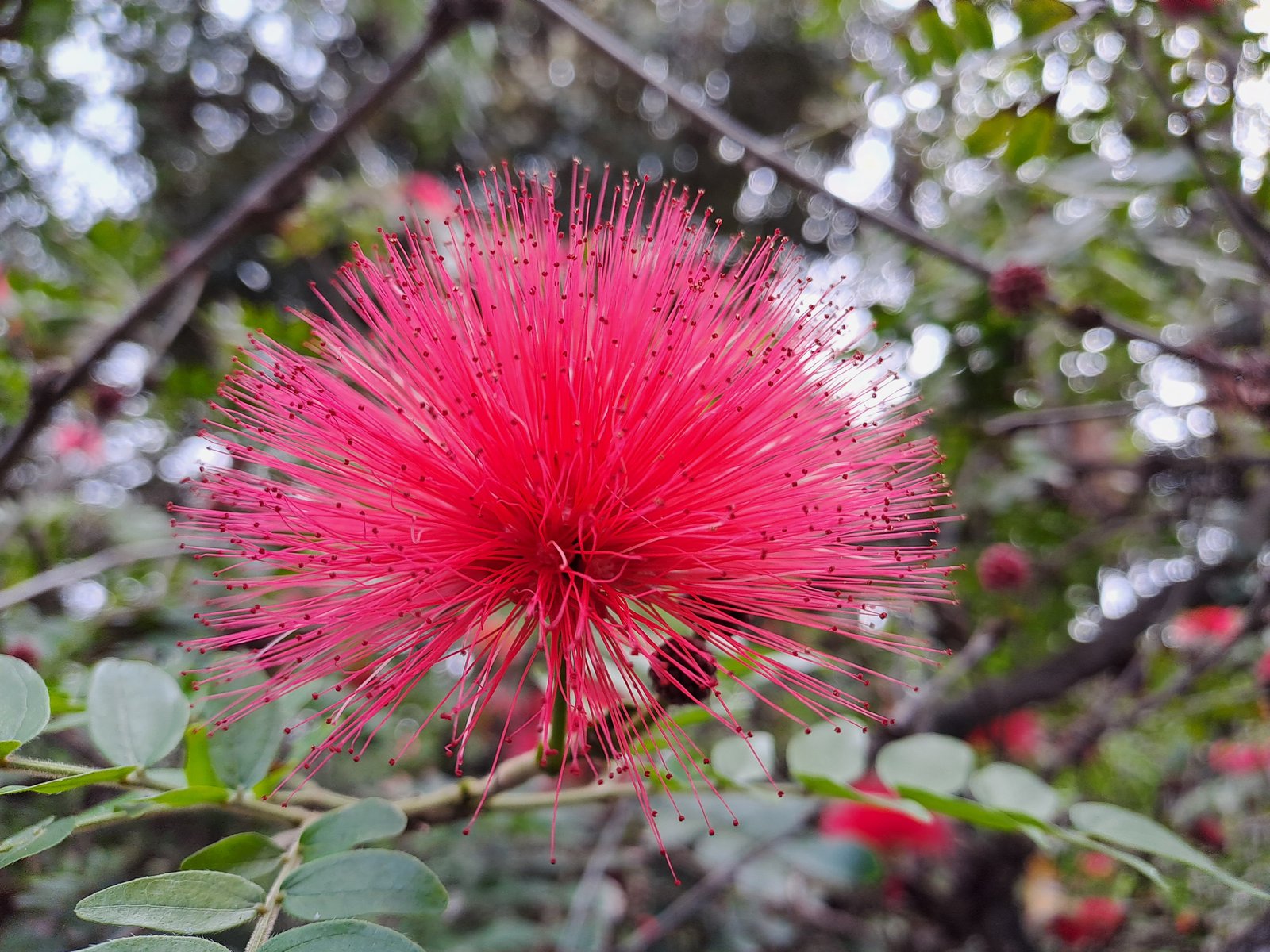
The garden beds beneath the Grove hold cultivated strains found nowhere else surveyed so far — dense, thread-stamened blooms the size of a fist that court gardeners breed for the royal processional routes,
and tall flowering spikes, violet shading to crimson at the bud, grown along the garden's formal walks and cut for the court's own ceremonial use.

The Other Three Islands
Court protocol names Vellamar first and always, but the Kingdom's practical survival runs through the other three: Casimor, the outermost island, absorbs the archipelago's worst weather almost by design and holds little beyond a hereditary watch-post whose keepers are honoured above nearly every other commoner rank; Aduine, terraced from shoreline to ridge, grows most of the Kingdom's food — a wedge of it held as the Abbeylands, described below, rather than royal demesne; and Ostrel, the sheltered-harbour island, holds the fishing fleets and what little inter-island trade the Kingdom conducts. A monarch is crowned on Vellamar, but a Vellamar cut off from the other three, court economists are quick to note, would not outlast a single storm season.
Difenland, Krilzat, and Kalenjar
Below the island is the region, and the Kingdom names three of them. They are not administrative units — the Common Council's steward answers for a whole island and nothing smaller — but they are how anyone actually from here says where they are from, and a reeve will give the region before the island if asked twice.
- Difenland is Aduine's upland terrace country, the ground above the Abbeylands and behind them: the oldest continuously worked land the Kingdom holds that the Sisterhood does not. Difenland's terrace walls are maintained on the same labour-day rhythm as the Abbey's without the Abbey having anything to do with it, which is either convergent practice or a very old borrowing, and the Long Accounting does not say which.
- Krilzat is Casimor's windward side, the ground that takes the storm systems first and is inhabited only by the watch-post and what supports it. Nobody farms Krilzat. The Kingdom's estimate of a bad season is still, in ordinary speech, whatever Krilzat lost.
- Kalenjar is Ostrel's harbour region — the anchorage, the fleet, the sheds and salt-houses along it, and the strip of hinterland that exists to serve them. It is the smallest of the three by ground and holds more people than the other two together.
Vellamar has no region in this sense. The throne island is divided into court quarters and garden precincts instead, named for what stands in them rather than for the land underneath, which court historians treat as evidence of the obvious: Vellamar was laid out by an administration, and the other three were named by people who worked them.
The Survey Corps delegation has noticed that Krilzat does not sit in the same phonological company as Vellamar, Aduine, Ostrel, and Casimor, and has filed the observation as a candidate reading at low confidence — an older stratum of the language, possibly, surviving on the one piece of ground nobody had reason to rename. The Kingdom's own answer, when the question was put to the court, was that Krilzat has always been called Krilzat.
The Abbeylands
Not all of Aduine's terraces are the Crown's to tax. A wedge of the island's oldest and best-kept ground — locals simply call it the Abbeylands — has been held since before the current dynasty's own count of monarchs by the Tideward Sisterhood, a religious order whose founding charter predates every other surviving land grant in the Kingdom's, admittedly contested, written record. Court tradition holds that the founding monarch granted the terraces outright after a Sisterhood elder read a storm pattern the Crown's own weather-wardens had missed, and saved the colony's first harvest from a season that would otherwise have starved it. The charter that followed has never been revoked, redrawn, or — court lawyers admit, when pressed — fully explained.
What resulted is the Kingdom's one deliberate exception to direct royal administration, and about as simple a feudal ladder as three tiers allow:
- The Crown, sovereign over all four islands the Crown holds, administers most of Aduine at second hand through Aduine's Council-elected steward.
- The Abbey, holding the Abbeylands directly from the Crown as a tenant-in-chief rather than as a subject of Aduine's steward, owes Vellamar one obligation only: a fixed annual render of grain and preserved stores, delivered regardless of season or storm damage elsewhere on the island.
- The reeves, free tenant farmers granted working tenure over individual terrace-strips by the Abbess, owe the Abbey a fixed share of each harvest and a set number of labour-days a season — maintaining the terrace walls, the storm-catchments, the shared threshing floors — and owe the Crown nothing directly at all.
No knights, no sub-grants, no chain of lesser lords between reeve and Abbess and Crown. Court historians call the arrangement elegant. Aduine's steward, who administers everything the charter doesn't cover, calls it a boundary dispute that predates his office and will outlast it.
The charter carries one obligation beyond grain: the Sisterhood keeps the Long Accounting, the Kingdom's only continuous written archive, in the Abbey's own hand since a date nobody outside the order can independently confirm. The royal court keeps its own record of descent and deed by oral chronicle, recited and cross-checked at every coronation; the Long Accounting is the sole written check against it, and the two have disagreed on points of succession at least twice in living memory. Neither side has pressed the disagreement to a resolution. Court gossip holds that both prefer it that way.
First Contact and What Happens Next
Diplomatic relations, such as they are, are counted in years of translation work and in almost nothing else. The Kingdom's court has granted the Survey Corps a single standing delegation on Vellamar and nothing beyond it; no trade agreement, defence understanding, or even a settled translation protocol yet exists, since the Kingdom's own language was, until recently, presumed extinct on every Solar System linguistic register. What the Archive can say with confidence is limited to what the delegation has observed directly, and every report filed so far ends with some version of the same recommendation: proceed carefully, and do not assume this is the last surprise this particular gap in the record is holding.
See also: Abbess Ilsabet Marrowtide, Anne de Courtney, Ernesto Strozzi, Emma la Chapelle, The Celtic Union of Planets, Kernowek Reach.
Discussion
Show discussion
Comments are read after they are posted and anything unsuitable is removed. Posting needs a GitHub account; reading needs nothing.