The Celtic Union of Planets
Long before any fold route made the stars a commute, a handful of sublight arks left Earth carrying something the Solar System's institutions had stopped protecting: living Irish, Scottish, Welsh, Breton, Cornish, and Manx as working languages, not museum pieces.
The Celtic Union of Planets is the confederation those arks became. It is not an empire and does not want to be one. It is a loose, treaty-bound association of independently governed worlds that share ancestry, language policy, and mutual-defence obligations — and comparatively little else.
The Currach Fleet
Named for the small, sea-worthy hide boats of the Irish coast, the Currach Fleet departed the Solar System in six generation-ark vessels between approximately 2561 and 2589 UCSD — during the Imperium's outer-settlement crackdown, and roughly a century and a half before Eden's fold route made extrasolar travel practical for anyone else.
The founders were not refugees from war or scarcity in the acute sense. They were cultural custodians — linguists, folklorists, and small agricultural cooperatives from outer stations already living under the Imperium's settlement-policy restrictions — who judged that an institution which treated ambiguity as something to be re-categorised or erased would eventually do the same to minority language communities that didn't fit its administrative categories.
Many of the Fleet's families were Irish by way of North America — Americans and Canadians of Irish descent, heirs of the old emigration centuries, whose communities had lost the language once already and taken it back by choice rather than inheritance before ever leaving Earth for the stations. The Fleet's rolls therefore carry a double emigration: Ireland to America, Earth to the outer stations, and then the stations into the dark — and the founders' custodial intensity reads differently once that is known. A community that has already buried a language and dug it up again does not need persuading that an institution can lose one for you, and the people who guard a tongue hardest have always been the ones whose grandparents had to ask for it back. The Union has never distinguished the homeland lines from the diaspora lines in any record it keeps, on the same reasoning as its position on titles: adjudicating whose Irish is older would require treating the question as the Union's business, and the working language answers it better than any registry could.
Departure was unauthorised and, by design, unconfirmed. The Imperium's standing response to outer-settlement vessels that slipped patrol coverage was retrieval where cheap and closure of the file where not; six generation arks on a decades-long sublight transit, expected to send no return signal for generations, closed as presumed transit losses rather than pursued. That administrative shrug is the reason the Currach Fleet's transit appears nowhere in Solar System record as an extrasolar first — it was never confirmed a success. It was filed as a failure and left there for centuries.
The Language, Lost Twice
The custodians did not get the language across whole. A generation ark is a small place for a living tongue: six hulls, a few thousand speakers divided among them, children raised by the Fleet's working speech as much as by their grandparents', and no shore to go back to for the word nobody aboard could remember. Across the transit generations the spoken Irish thinned, hull by hull, to the households that kept it on purpose, while the written language survived almost entire — the grammars and dictionaries the founders had packed as deliberately as seed, the scriptorium's copied texts, the Fleet's own records kept in the charter language from the first year out. By landfall the Union had a language it could read better than it could speak.
What it did next is why the Union's Irish is what it is. The Union's own linguists rebuilt the spoken language from what had survived and from linguistic principles: the texts and grammars for the forms that were attested, the comparative method against the Fleet's other Celtic languages where the Irish had a gap and its sisters did not, and internal reconstruction and analogy where nothing else reached. The result is Union Irish, and the Union has never pretended it is the old language. It is regular where the old language was irregular, because a reconstruction fills a gap with the rule and not with the exception the rule had worn into; its coinages follow principle, because the people who made them were the people who had just spent a generation learning what the principles were; and a speaker of the arks' century would find it familiar and not identical, which is exactly the relation the Union intends. Which forms are inheritance and which are reconstruction is a question the Union's own register answers, and this Archive does not keep a second copy. The record notes only that it is the second time these families recovered the language, and the first time they had to rebuild rather than remember it.
Arrival and Settlement
The six arks separated during transit and settled independently across a loose cluster of systems — including the Mannán System (Tír na nÓg) and the Avallach System (Ynys Wydrin) — each ship's cooperative choosing its own destination as survey data came in. Contact between the settled worlds was intermittent for nearly two centuries, sustained mostly through slower-than-light relay beacons rather than travel.
The Celtic Union itself was not declared until the settled worlds had grown enough to need shared protocols for trade, defence, and disputed claims — a confederal charter drafted world-by-world over roughly thirty years and ratified in full only once all six settlements had signed.
Structure
The Union is deliberately weak at the centre. There is no Union-wide executive. Each member world retains full sovereignty over internal governance, language policy, and law. The confederal charter covers only:
- mutual defence against external threats,
- shared navigation and trade protocols between member worlds,
- and a rotating council with authority to mediate, but not overrule, inter-world disputes.
Each member world has a head of government of its own, styled in the charter's Irish a Taoiseach or a Príomh-Aire according to what the world's own constitution calls the office, and that is the person who speaks for the world at the rotating council and whom the Union addresses when it addresses a world at all. The Union has no counterpart above them: it has an Uachtarán, who presides over nothing they do. On Aethelrock, which has no planetary executive, the style attaches for Union purposes to whichever clan head holds the world's Union seat under the Ridgemoot rotation, and means nothing at home.
Union members describe this as a feature learned the hard way, watching the Solar System's own governance history from a distance: the USC dissolved from too much required consensus, and the Imperium that followed made the opposite mistake. The Celtic Union's founders read both failures as arguments for a centre too weak to concentrate power, rather than one merely too weak to act.
The Uachtarán, the Seanad, and the Garda an Uachtaráin
The Union has a head of state and an upper house, and both are ceremonial, which is the only way a charter with no Union-wide executive could have either. The Uachtarán — President, in the Irish the charter was drafted in — is where the Union is seen to be one thing: at a signing, a reception, a funeral, a Ranger delegation's arrival. The Seanad — Senate — is the chamber that sits for the same occasions, and for nothing that binds anyone. Neither holds power, neither directs a member world in anything, and the working business of the Union — mediation between worlds, the shared protocols, mutual defence — stays with the rotating council, where the charter put it. A polity that declined to write in a strong centre found it still needed a face and a room, and gave itself both without giving them anything to decide.
The Seanad represents the six charter worlds, each returning the same number of senators whatever its population, and is seated by the Seanad Draw: a world draws its candidates by lot from its own citizens, weighted to carry the world's people in proportion, and then elects its senators from among the drawn, with a sitting senator standing once more unbidden and after that returning to the lot. A candidate's clan stands on the ballot as the registry recorded it, and no clan may nominate, endorse or spend, on the reasoning the Union applies to titles. The Seanad is therefore the one Union-wide body chosen by the Union's people, and the charter made sure it was also the one in which no career can be made. How the office of Uachtarán passes and for how long, and where either sits between sessions, the record has not established.
The Uachtarán's protection is the Garda an Uachtaráin — the President's Guard — the Union's presidential protection unit, and the one standing formation of a military that is otherwise mostly ceremonial. It is small, it goes where the Uachtarán goes, and its work is protection rather than ceremony, which sets it apart from the Highland Guard, the ceremonial military's own body, whose honour escort under Union protocol is ceremony and is meant to be read as such. Where its members are drawn from, and for how long they serve, the record has likewise not established. What the charter rules out is plain enough: the Garda an Uachtaráin is not a Union police, because the charter leaves law to each world, and it never polices anyone — it protects one office and nothing else.
Titles and honours
The charter's weak centre extends to prestige as well as power. The Union confers no titles of nobility or honour — not as a reform it enacted but as a capacity it declined to write in, on the founders' reasoning that an institution which cannot decorate anyone cannot build a court around itself. Toward the old titles that crossed with the Fleet or turned up among the diaspora since — chiefly names, territorial honours, the occasional grant a family carried out of Earth's records and kept — Union law takes a position its founders knew by heart, inherited from the old Irish republic's constitution: neither abolition nor endorsement. Nothing is conferred, nothing is recognised, nothing is taken away. A title appears on no Union document, carries no precedence at any Union table, and is disputed by no Union office, because adjudicating a claim of descent would require the one thing the policy exists to withhold — treating the claim as the Union's business. What survives, survives as a social fact among people who choose to observe it, which is, the founders would have said, all a title ever honestly was. The result can resemble New London's unadjudicated peerage, but by the opposite road again: New London cannot act, and the Union will not.
Reconnection with the Solar System
The Celtic Union worlds remained functionally unknown to Solar System authorities until first contact was re-established within the last generation, when Star Rangers survey operations mapping fold-route branches beyond the Eden Passage located an inhabited system that matched no colonisation record on file.
Diplomatic relations remain new, cautious, and cordial. The Union has so far declined full integration into Solar System Defence Command's jurisdiction, citing the same founding wariness of centralised authority that shaped its charter, but has entered into a standing information-sharing agreement with the Star Rangers' Survey Corps on boundary-zone matters. The Rangers' offer of a non-voting seat on their Oversight Council sits with the Union's rotating council unanswered, in the same file as that refusal, and the Union's diplomats have said when asked that a charter drafted world by world over thirty years does not take a seat on anyone's council in a hurry. The Union keeps a military of its own, and it is mostly ceremonial — the Highland Guard's honour escort, rifles at rest, that Union protocol assigns to a Ranger on leave is its most visible face, and the Garda an Uachtaráin above is its one standing formation — which is of a piece with a charter that declined to write in a strong centre and never needed one to defend.
What that caution looks like in practice
The Union's charter wariness is not rhetoric kept for the council chamber, and the clearest illustration of it is deliberately undramatic. Under the 2723 Charter the Rangers hold no jurisdiction on a planet at all and may act there only by invitation, and only for the matter the invitation covers — so a Line Captain delivering a boundary data exchange to Tír na nÓg under the standing agreement is inside her authority for exactly that errand and outside it the moment the errand ends. Union protocol then does something both scrupulously courteous and entirely unmistakable: it assigns a Highland Guard honour escort — the Guard being the ceremonial military's own — to any Star Ranger on personal leave in Union territory, from the moment she is met until she reaches Ranger-cleared transit off-world.
The escort is a courtesy the Union owes its own charter rather than a comment on the officer, and it is offered as one. It also makes plain, without a word of it needing to be said, whose planet this remains. What the Hill Keeps (S05E02C01) follows that arrangement from both ends — an officer going home to her mother's holding, and the guard detail that walks her back out.
Member Worlds
Six worlds hold Union charter membership. Most remain undocumented outside Union records. The flagship and most populous is Tír na nÓg, the only surveyed world on record naturally compatible with unmodified human atmosphere and gravity — a standing scientific anomaly as much as it is the Union's cultural and diplomatic capital.
The second-settled charter world, Ynys Wydrin, is a dome-and-station world settled deliberately rather than a paradise found. The third documented charter world, Aethelrock, never settled as a single polity at all — five founding clans still hold separate territories under an uneasy shared council, and the world's seat at the Union table rotates between them. The fourth, Kernowek Reach, was known to Solar System records by name only for decades, until a Survey Corps team mapping the Lyonesse approach lanes made first documented contact; its Cornish-speaking founders answered thin, volcanically fouled air not with a dome but with a still-unfinished, planet-scale reclamation effort. The fifth, Drithane, followed the same path out of the by-name-only column: a cold, clear-skied world in the Bríd System whose Irish-speaking founders named it for the silent sparks that cross its sky twice in every orbit. The remaining charter world is known to Solar System records by name only, pending further survey contact.
Earth, for its part, kept going.
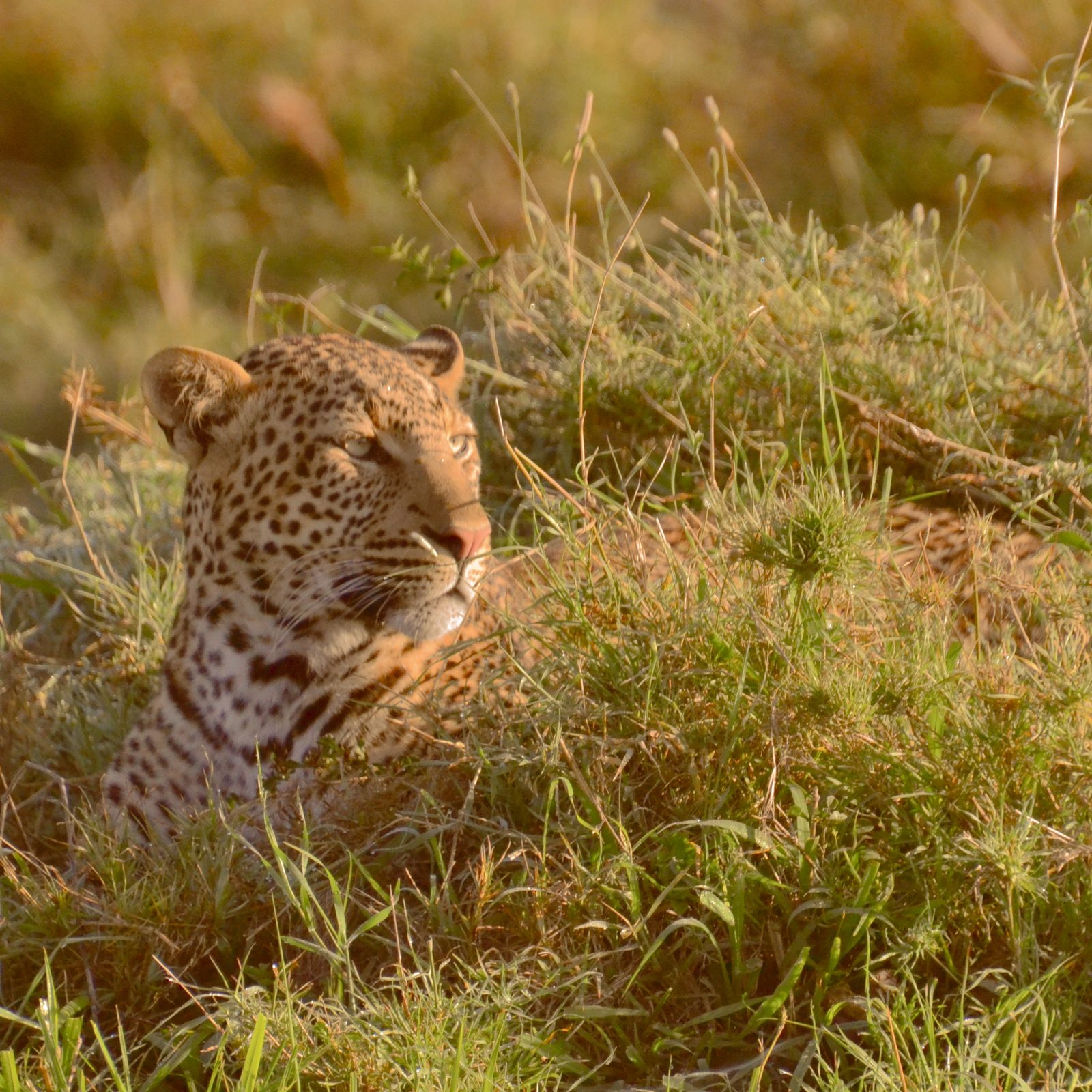
By 2826 UCSD, wildlife preserves across Earth's remaining unmanaged biomes are healthier than at any point since the early industrial era, maintained under Solar System Defence Command environmental protocols rather than allowed to recede. The Currach Fleet's founders left believing they were saving something Earth could not keep. Earth, in its own slower way, has spent the centuries since proving that belief only partly right.
See also: The Generation-Ark Era — the pre-fold sublight crossing the Currach Fleet made, and the odds it beat, Tír na nÓg, United Space Consortium, The Imperium, Eden Space Habitat, Saint Aoife — devotion carried off Earth as living observance rather than archive, What the Hill Keeps (S05E02C01) — the invitation-only jurisdiction and the honour escort, from both ends.
Discussion
Show discussion
Comments are read after they are posted and anything unsuitable is removed. Posting needs a GitHub account; reading needs nothing.