Tír na nÓg
Every other surveyed world in Solar System record asks something of a human first — a habitat dome, a filtration mask, a decade of atmospheric engineering, or at the very gentlest Drithane's weeks of acclimatisation to thin, cold air. No confirmed exception exists anywhere else in the catalogue — no alien people surveyed is natively compatible with Earthlike gravity or atmosphere either, on their own world or anyone else's. Tír na nÓg is the one entry in that catalogue that doesn't fit, and its first colonists stepped off the ark and breathed before anyone had worked out why that should have been possible at all.
Tír na nÓg — named for the Irish otherworld of eternal youth — is the flagship and most populous world of the Celtic Union of Planets, and the only surveyed world on record classified as naturally human-compatible: breathable atmosphere, non-toxic biochemistry, and a carbon-based biosphere stable enough to support unmodified human agriculture within the first settlement generation. It is the third planet of the Mannán System, named by its founders for Manannán mac Lir, the sea-god who was said to guard the way to Tír na nÓg in the first place.
An Anomaly Nobody Has Closed the File On
Tír na nÓg's compatibility has never been explained to any serious institution's satisfaction, and "convergent evolution" — the founding cooperatives' own working explanation, still the one printed in Union tourist literature — has never been more than provisional. Its native biochemistry does converge on carbon-based, oxygen-respiring life patterns close enough to Earth's own that cross-compatibility is possible. What no Union or Solar System biologist has ever produced is a mechanism for why, given that every other biosphere surveyed anywhere — hundreds of worlds, dozens of native peoples, not one other confirmed case — converges on something Earth-incompatible instead. A single naturally compatible world, against that denominator, is not the kind of result "coincidence" comfortably explains, and the Celtic Union's own founding scientists knew it long before any outside institution had the data to say so as bluntly.
The competing explanations are exactly the ones a standing anomaly attracts: deliberate seeding by a precursor civilisation with no other confirmed trace anywhere in the system; an as-yet-undetected Concordant-level mechanism biasing convergence toward Earth-compatible chemistry specifically at this one site; or an actual, vanishingly improbable coincidence that happened once, here, and will presumably never happen again. No evidence has ever been found for the first two, and the third gets less credible every additional world the Survey Corps rules out. The Union's own habitability office has never formally closed the file. Neither has the Survey Corps, since first contact gave it the data to reopen the question at all. Native flora and fauna are not Earth-descended; they simply resemble it closely enough that early colonists mistook entire genera for transplanted species before survey botanists corrected the record — a small, solvable puzzle sitting on top of a much larger one nobody has solved.
By far the most popular opinion, among the Union's own public rather than any institution's habitability desk, is a fourth explanation none of the above quite categorises: Levrilic influence, or divine providence, depending on which founding-cooperative tradition is doing the explaining — a reading with real textual support in the founding cooperative's own First Breath thanksgiving, recited every First Landing anniversary since. It remains, on the Survey Corps' own accounting, one of the least evidenced theories in circulation, not the most dismissed.
A fifth, considerably wilder theory circulates outside any institution's endorsement: an ancient, now-lost fold gate once connected Tír na nÓg directly to a compatible world, seeding or exchanging its atmosphere long before Lagrange-point staging was understood as the only safe way to hold a fold aperture open. A gate operating that deep inside two planetary gravity wells at once would have been running in exactly the regime modern fold doctrine confirms shears an aperture rather than sustaining one — which is either decisive evidence against the theory, or, as its handful of proponents argue, the very reason no wreckage has ever been found.
A sixth theory fares better on physics, if not yet on evidence: during the rare Conjunction, when Cliona's shadow crosses Donn's face, the two moons' combined tidal geometry transiently flattens Tír na nÓg's local gravitational gradient in a way loosely analogous to Lagrange-site conditions — in principle enough, for a brief window, to open a natural fold aperture without any technology at all. Unlike the lost-gate theory, this one doesn't contradict anything modern fold doctrine holds, since Eden Space Habitat's own natural fold route already proves nature can produce a stable aperture unassisted, given the right gradient. What it still lacks is a single instrument reading taken during a confirmed Conjunction — nobody has ever had a fold-detection array running at the right moment, and Union astronomers don't fully agree on when the next one falls. See the joint survey note reviewing all six theories, which recommends funding the instrumentation for exactly that reason. The same instrumentation gap is why nobody has confirmed whether the Conjunction shares a mechanism with, or merely a calendar with, the separately-documented Tír Tairngire crossing window — a related open question, not a seventh theory of compatibility.
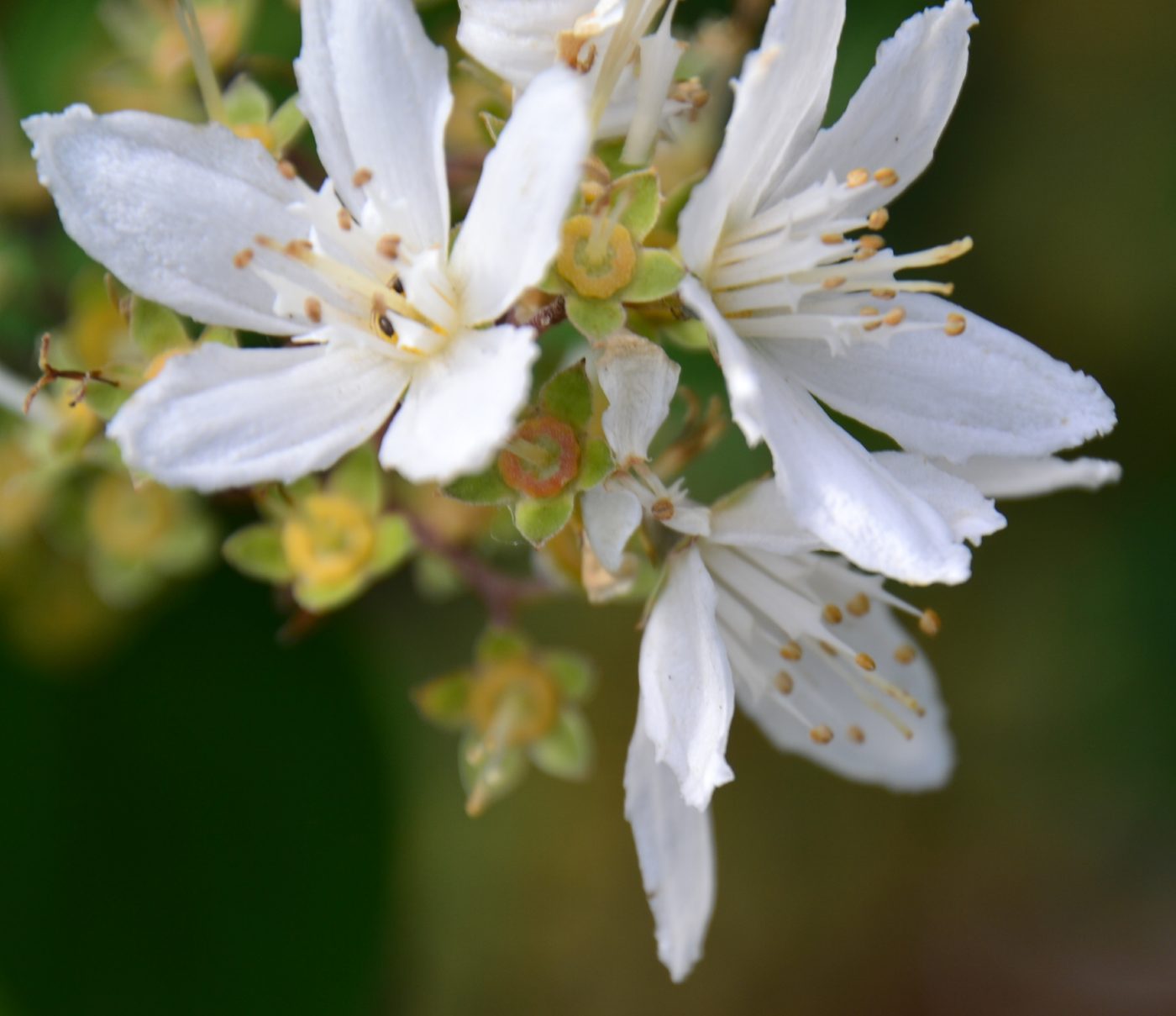
The native flora runs heavily toward pale, wide-petalled flowering plants in the lowlands and wetlands — visually close enough to Earth's own flowering plants that colonists kept their old common names for them rather than inventing new ones.
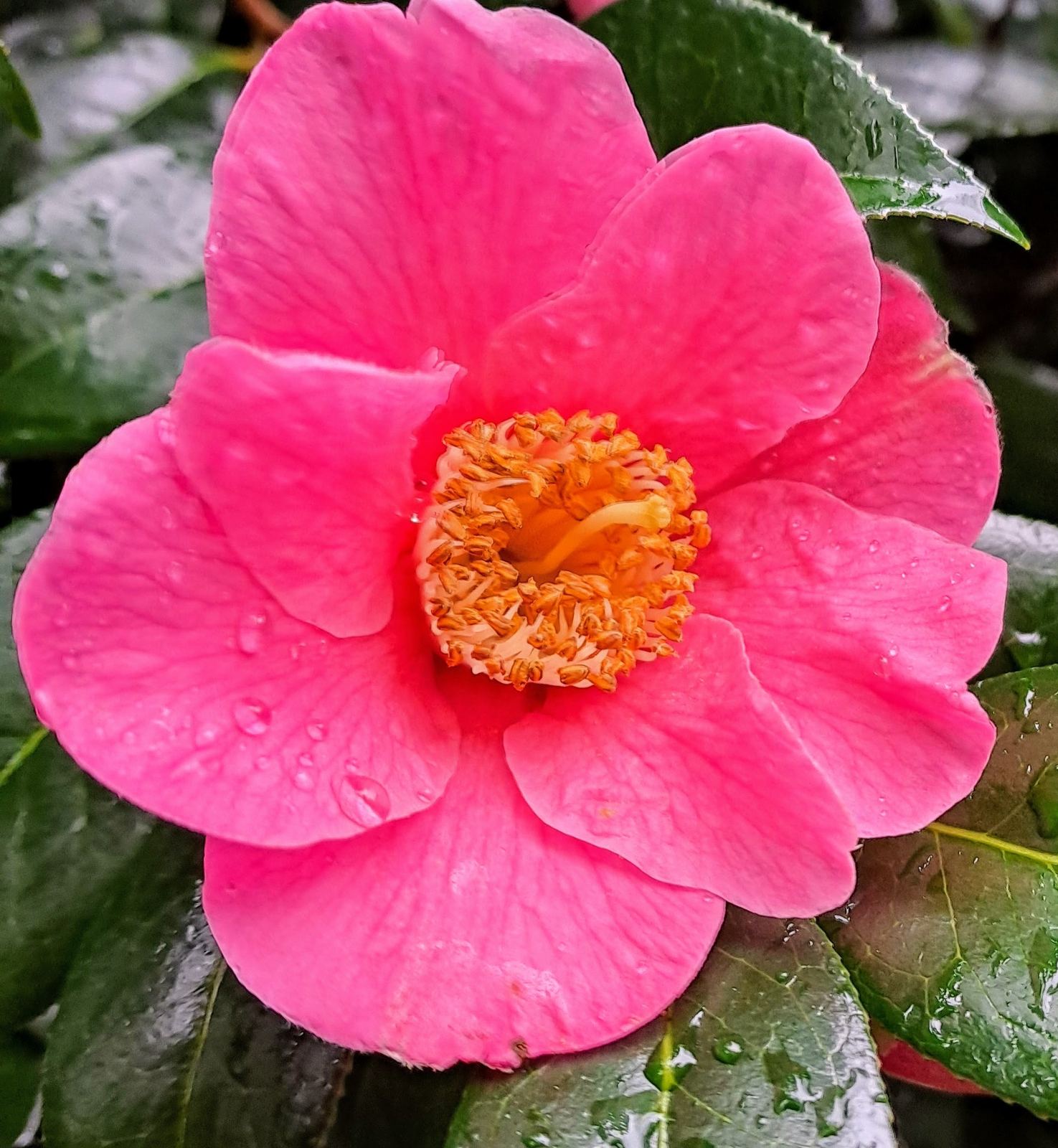
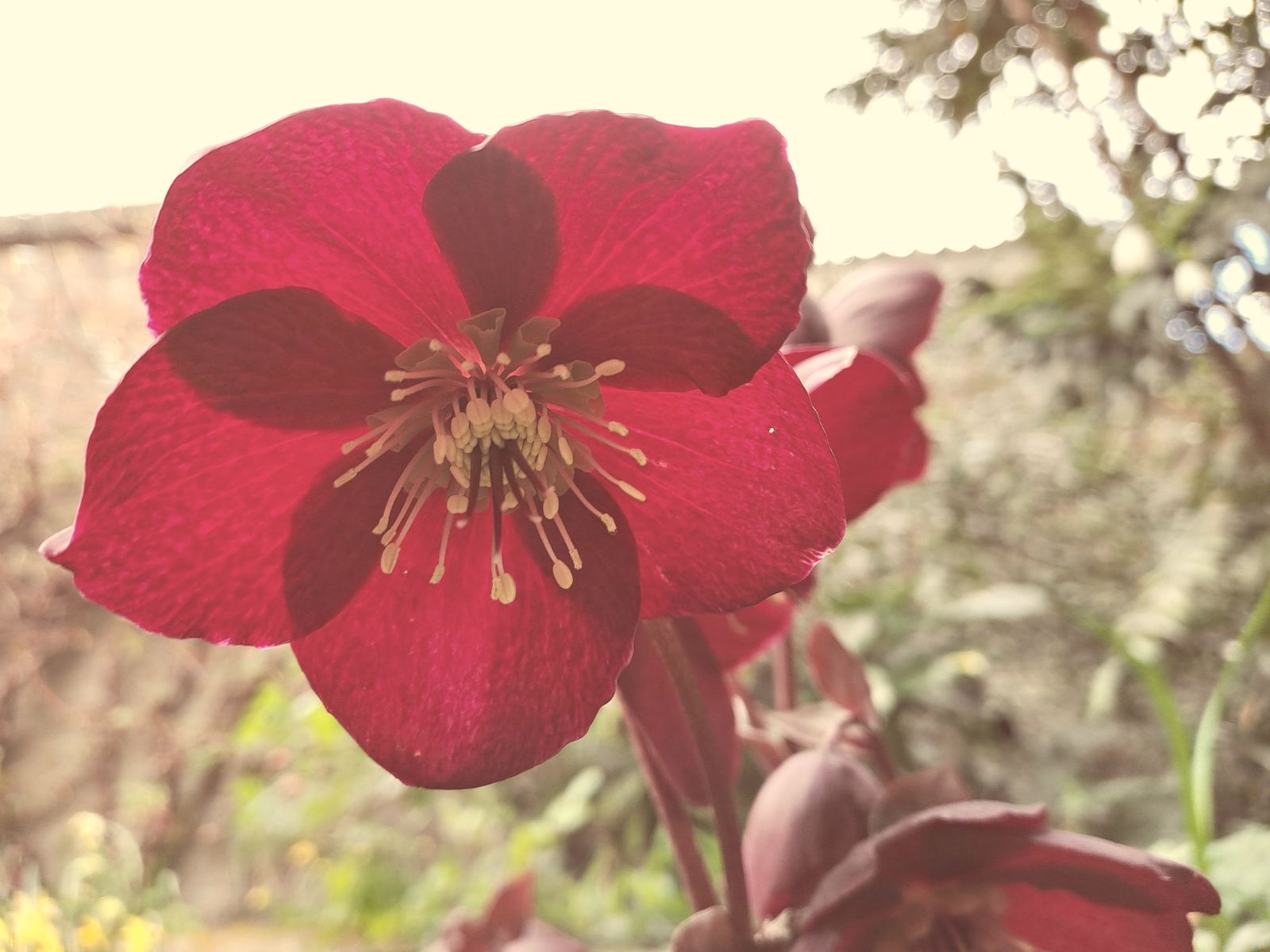
Not every lowland bloom stayed pale. Cultivar strains bred from the same root stock run to deep pink and near-crimson under cultivation, and botanists still argue over how much of the colour shift is selective breeding versus the plant's own latent range finally expressing itself in managed soil.
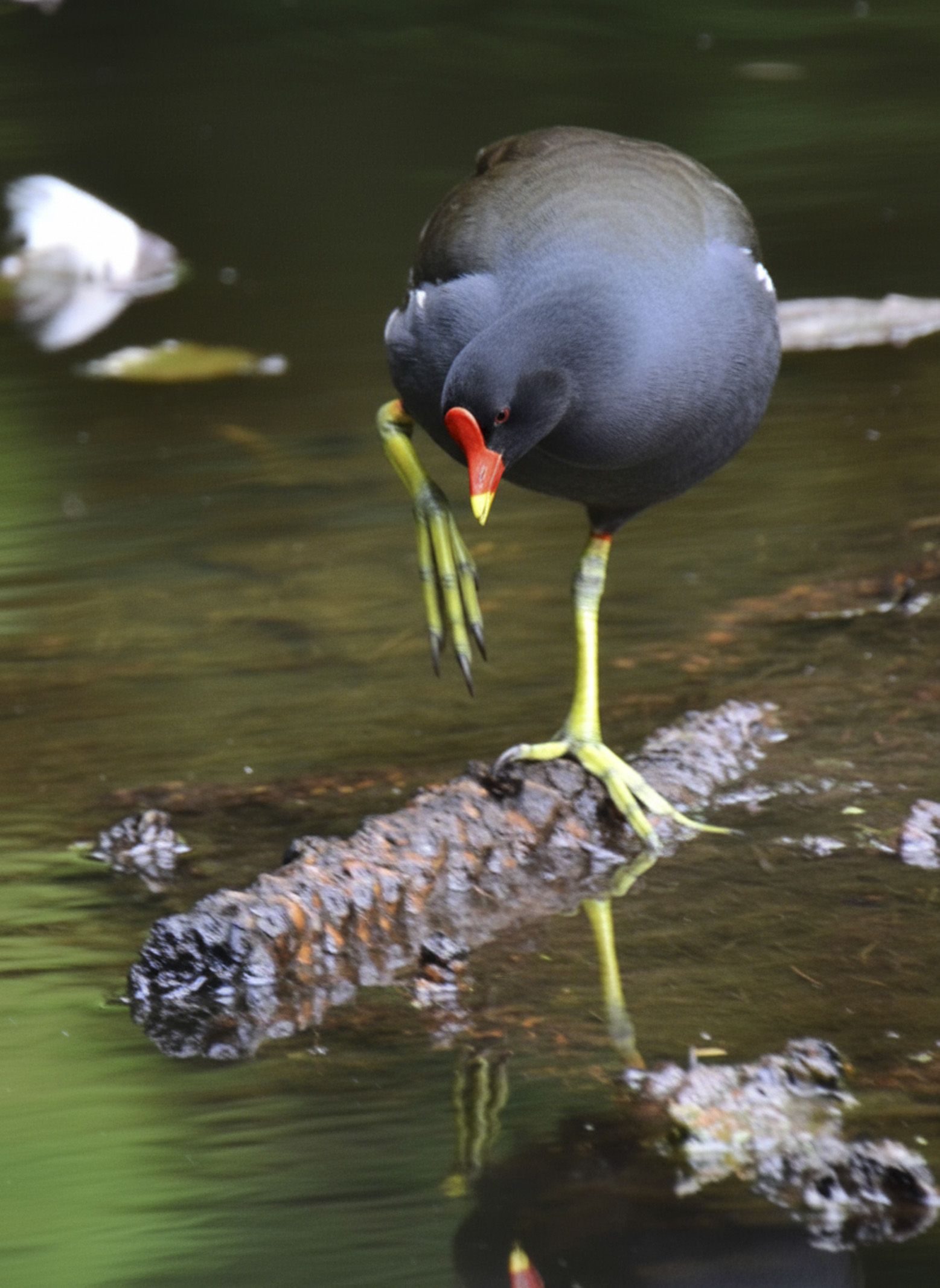
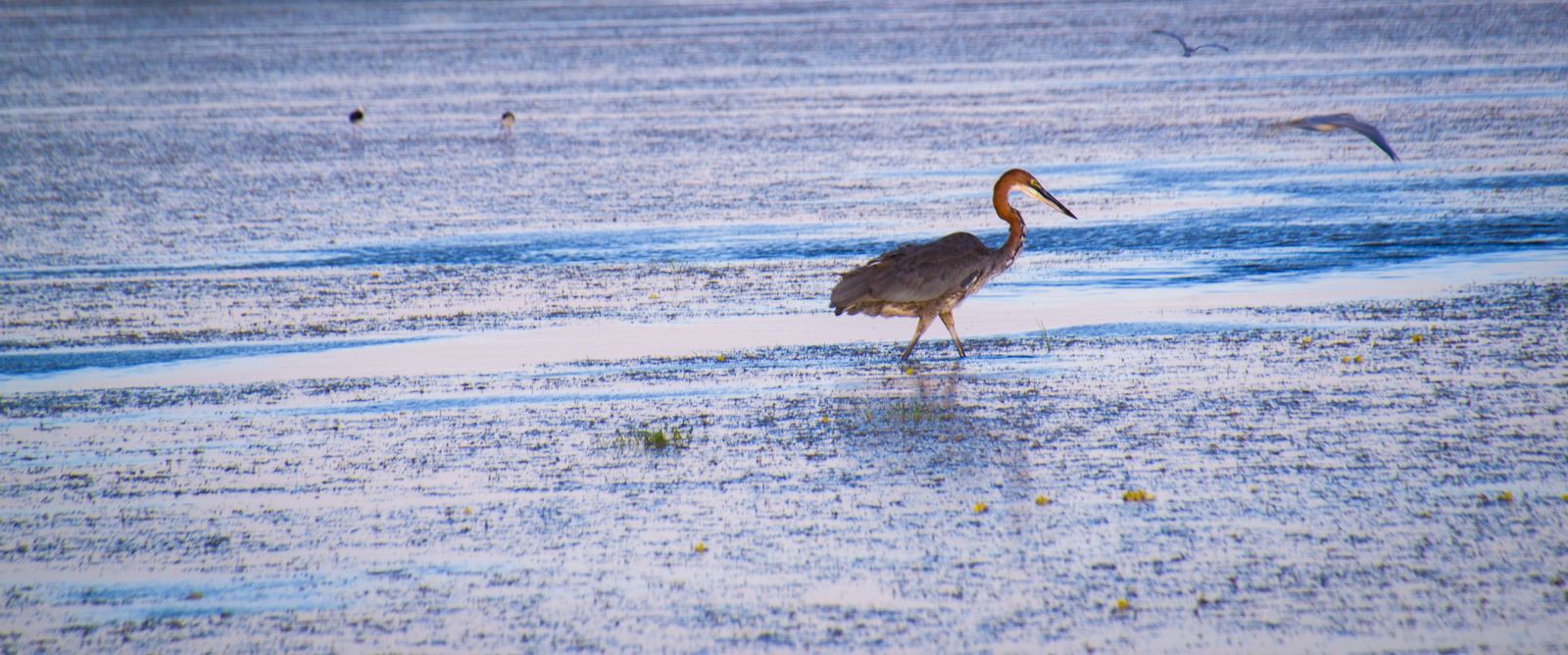
Native wetland fauna converges just as closely: dark-feathered wading birds work the reed margins of every lowland waterway on the planet, preening on driftwood in a manner early colonists described, in their own field notes, as "indistinguishable from home at ten paces, and unmistakably not at three."
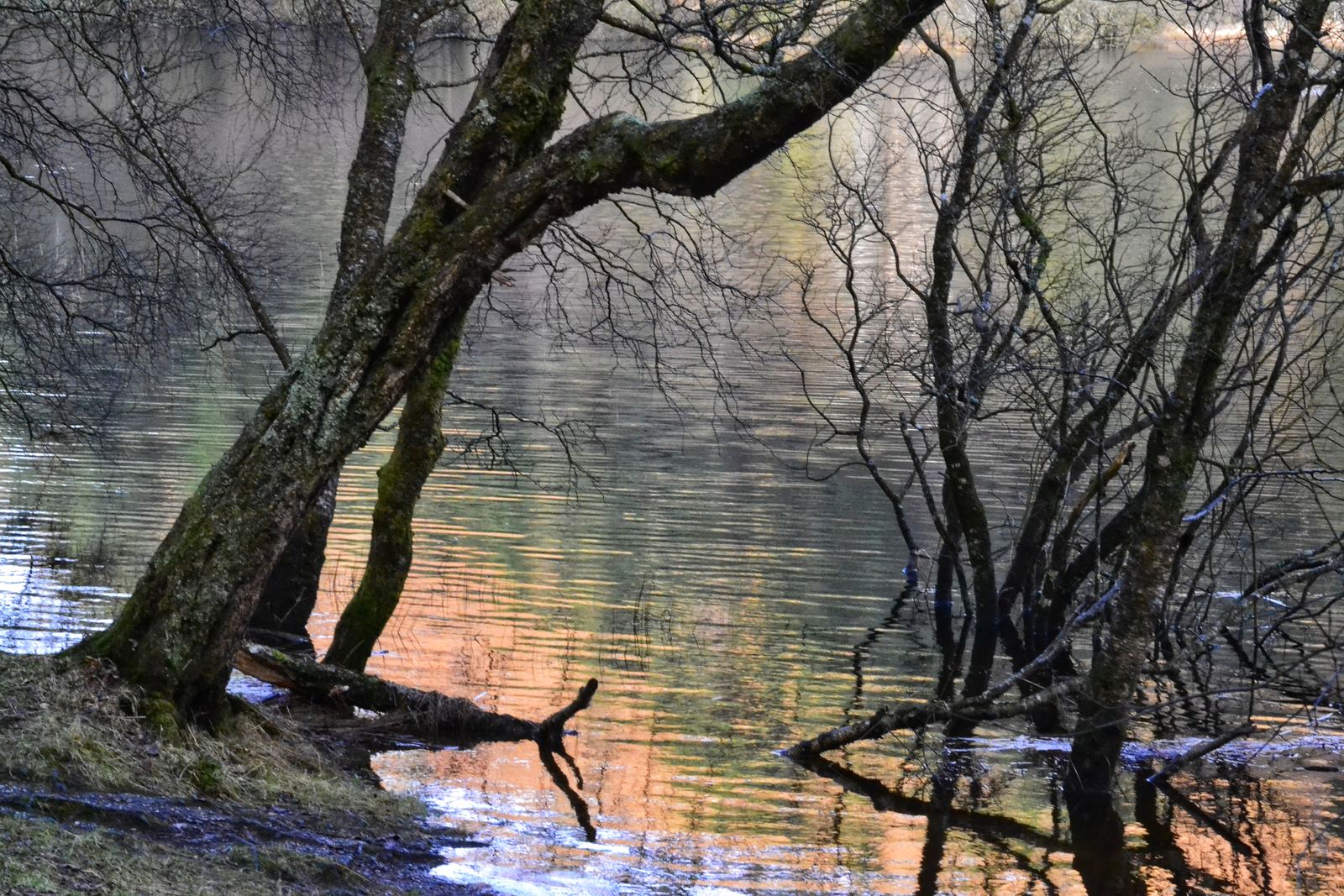
Bare-branched treelines ring most of the planet's lowland waterways for a good third of the local year, their reflections doubling the wetland's already still, mirror-flat light.
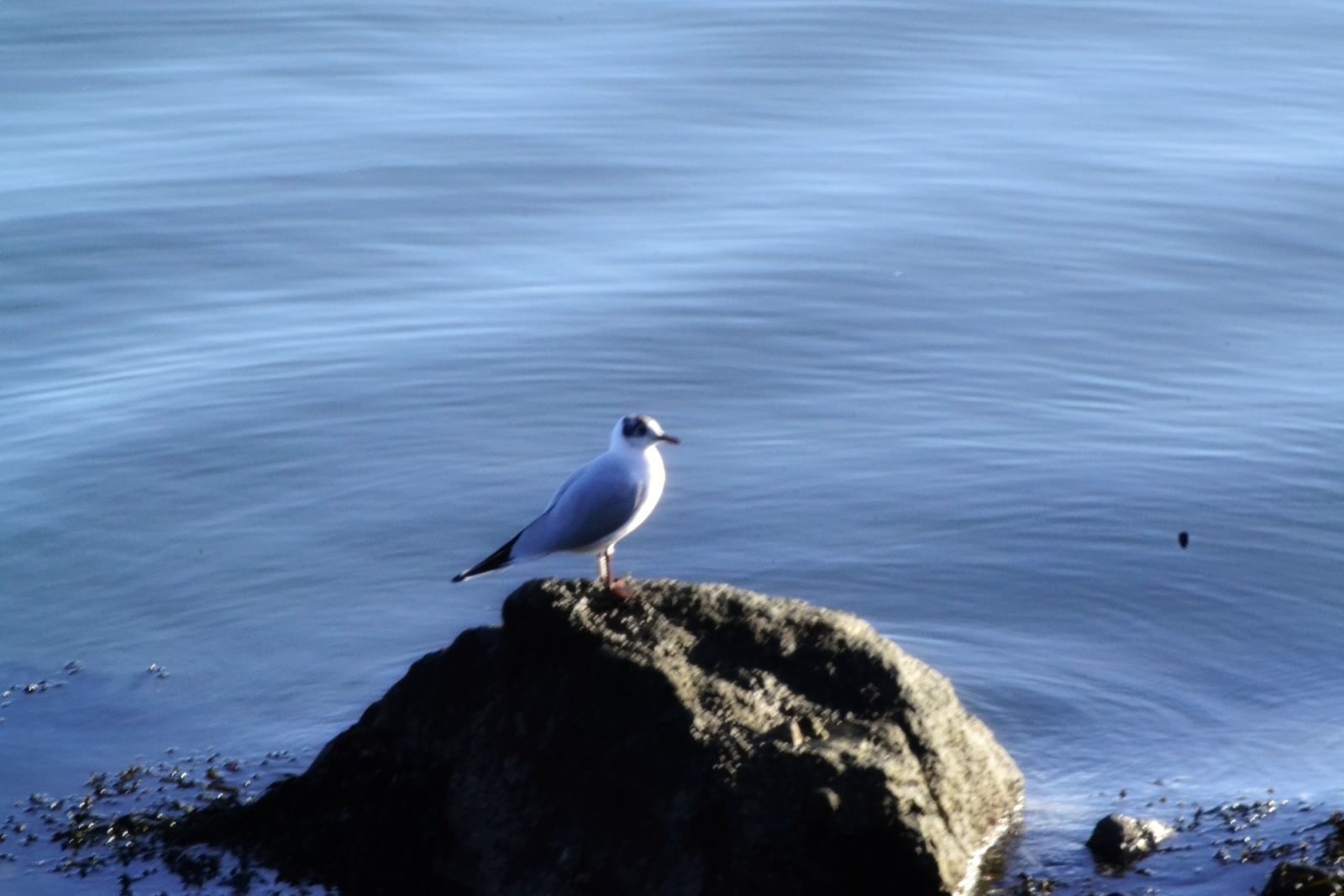
Smaller shorebirds work the tidal flats and standing water alongside the wading species, unbothered by the larger birds hunting nearby.
The tides that work those flats have a raiser: a single large moon, which the founding cooperatives declined to rename for the same reason they kept the four-season calendar — the register lists it as An Ghealach, the moon, which is what Irish already called the one at home.
Coasts and Seasons
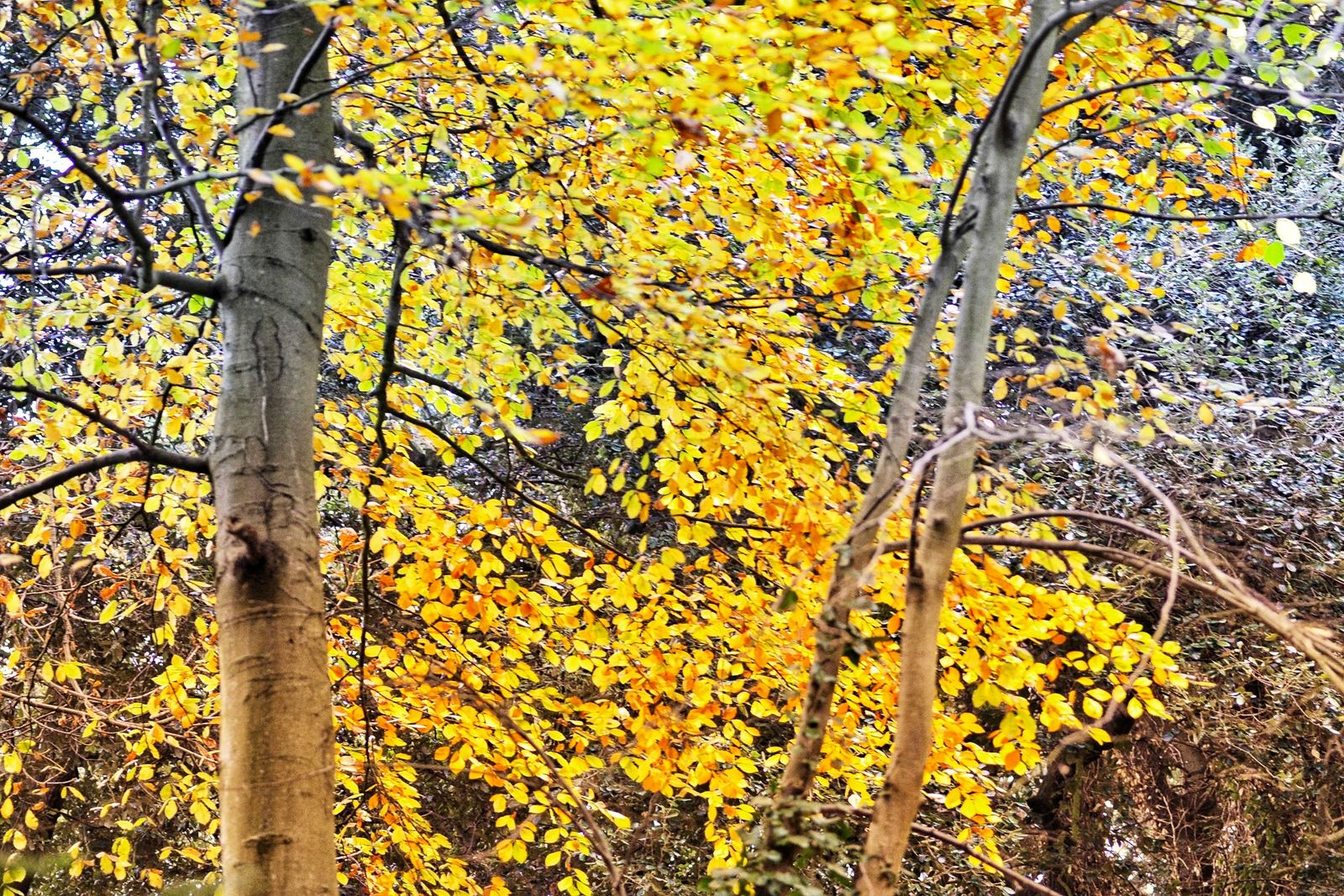
Tír na nÓg's axial tilt runs close enough to Earth's own that the founding cooperatives kept a familiar four-season calendar rather than inventing local terminology for it. Uplands turn to gold and copper canopy in the autumn months, a shift close enough to Earth's own deciduous turn that survey botanists spent an entire field season on the pigment chemistry alone — confirming only that it behaves as though independently evolved, which is exactly the kind of finding the planet's larger anomaly has trained Union science to stop calling settled.
The planet's oceans run warmer and calmer than Earth's on average, a consequence of Mannán's slightly wider habitable-zone margin, and its coastlines are the most visited stretch of the world outside the wetland lowlands — a fact the tourism ministries of every other charter world resent openly and often.

Two moons work the tides between them: Donn, the larger and closer, and Cliona, smaller, farther out, and named — over the founding cooperative's own initial objection that it invited comparison — for the Otherworld queen whose name already anchors the old folklore of a great wave heard before it arrives. The two rarely align. When they do, Cliona's shadow crosses Donn's face for a span of minutes local almanacs still call, without much ceremony, the Conjunction, and coastal communities schedule exactly nothing else for the hour around it.
The Boirinn Uplands
Inland from the coasts, the ground climbs into stony, lichen-hung uplands the settlers named Boirinn — an old word for a rocky place, kept because nothing else fit. Low-canopy native trees, bent and silvered with age, hold the slopes above ground cover that turns rust-red for a good part of the local year; conifer stands run the higher ridgelines, and winter mist sits in the folds between them for days at a stretch.
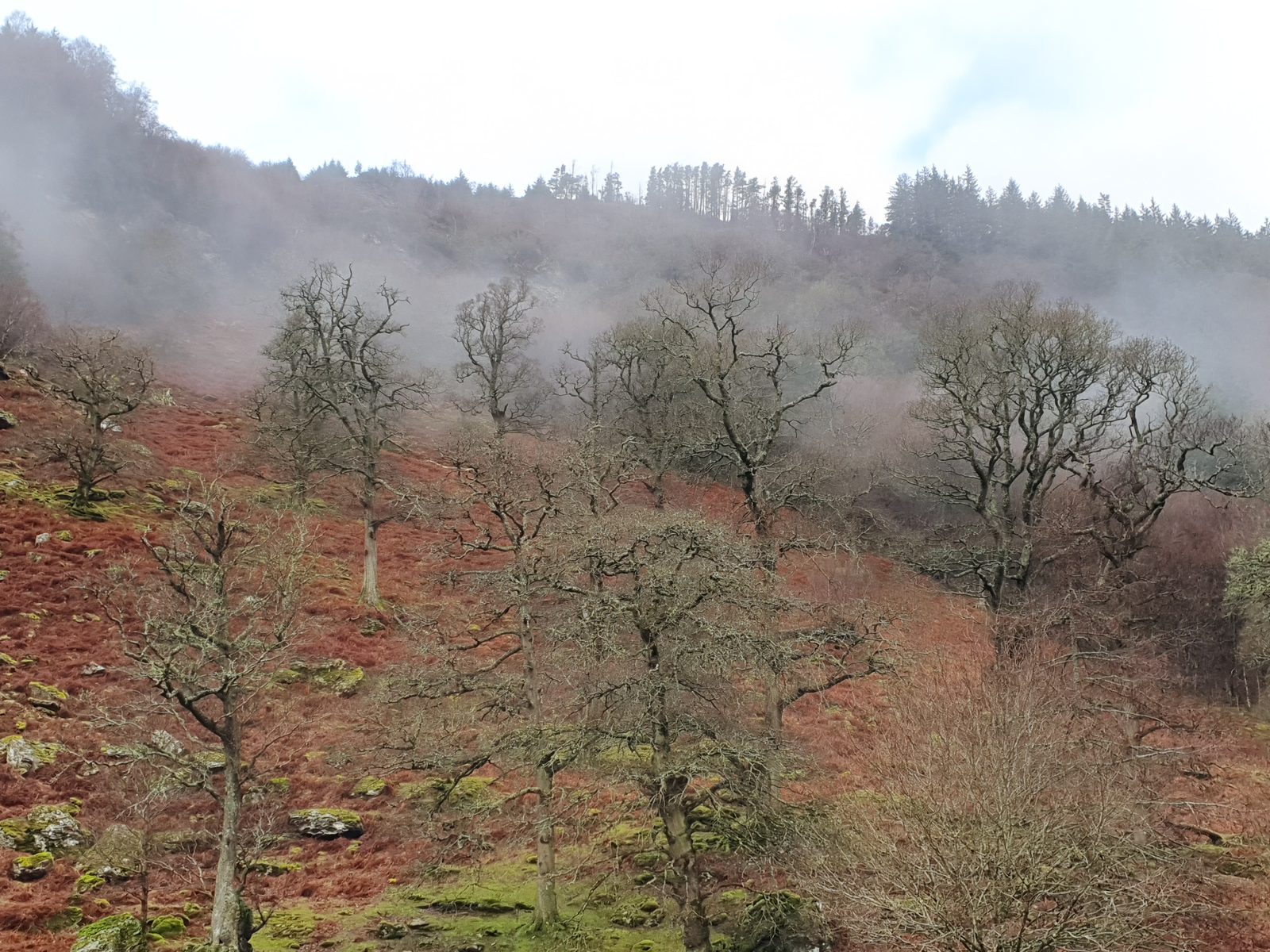
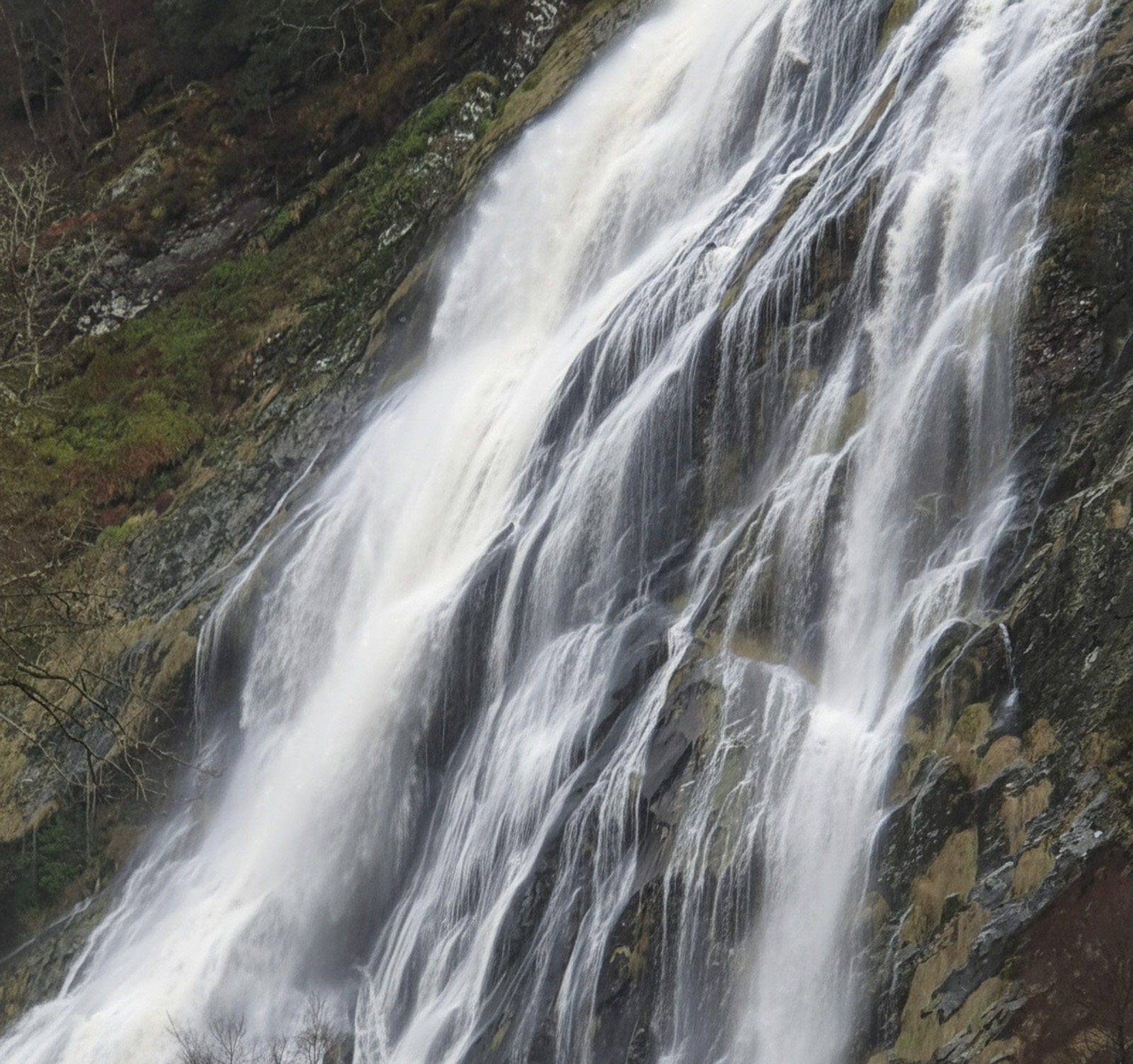
The same weather that keeps the mist standing feeds the escarpment's watercourses. Winter rain off the high ground comes down hard through narrow rock chutes, and the falls run loud enough in spate to be heard from the flock-holdings on the slopes below well before they're seen.
Boirinn is grazing country rather than farmland — cooperative flock-holdings worked by the same handful of families for generations, herding livestock descended from Currach Fleet stock across ground too stony and too wet for row crops. It is not the world's most visited district, and the families who hold it are, on the whole, content to keep it that way.
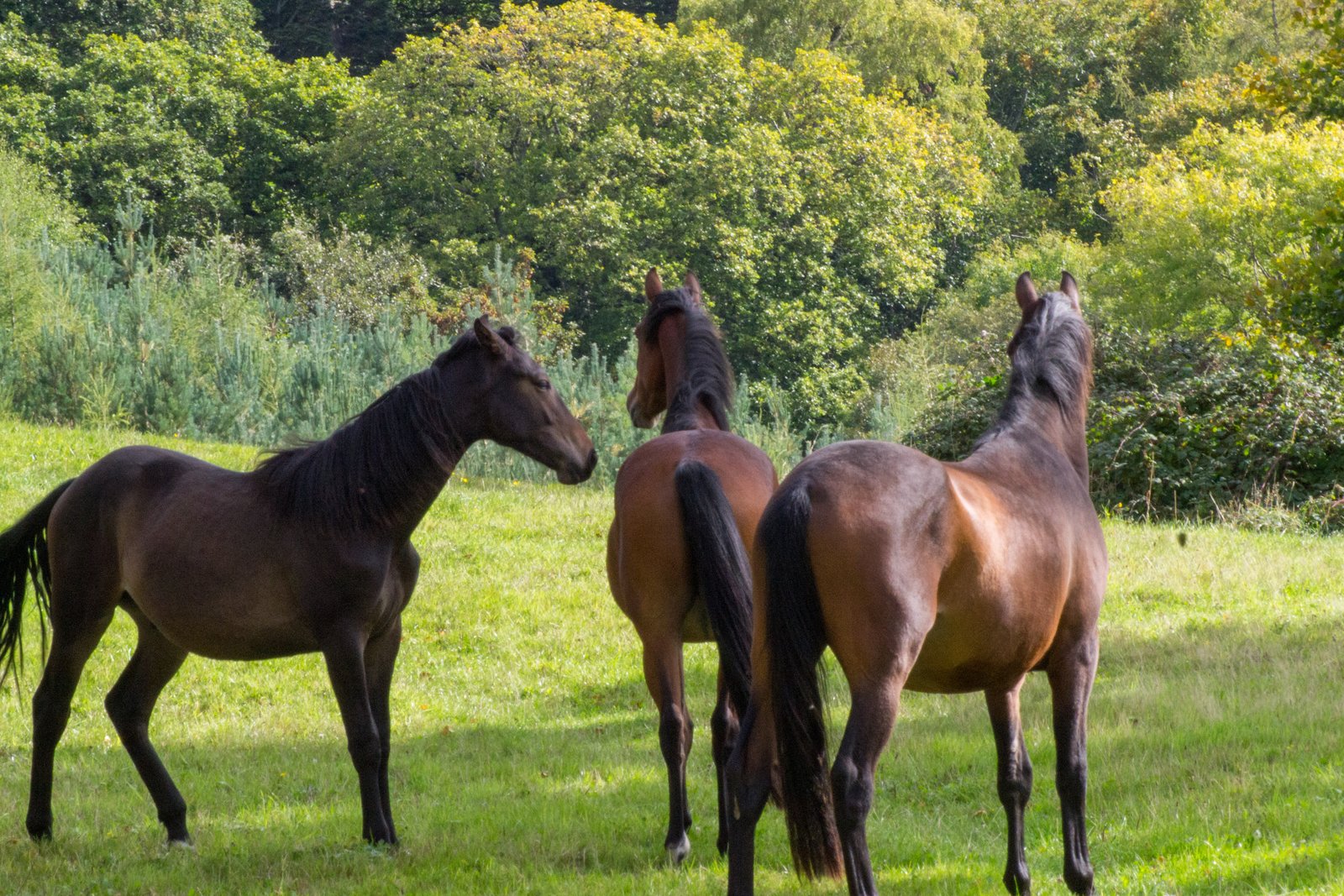
The holdings run horses as often as flock animals — sure-footed stock bred over generations for the wet, uneven ground, worked loose in small bands along the treeline rather than stabled.
The Hollow
At least one Boirinn holding has a back hollow the family works around rather than through, under a house rule kept for longer than anyone living can source: stock are not grazed in it and children are not sent after strays there. Union folk practice would file this as one of the district's ordinary avoidances, of which there are many and most of which mean nothing.
This one is not nothing. The trees in it carry pale bark and a leaf phase-lag of a fraction of a second — the two consistent field markers of a dryadic-type Etheric anchor point wherever one occurs, and the same pair a Ranger survey read at the Marsh Causeway grove. There is no magic in it. It is an Etheric-layer structure expressing lawfully through ordinary trees, on a grazing holding, and it has never been formally surveyed, because the Rangers hold no jurisdiction here and nobody has invited them.
What makes it worth recording in a planetary entry is the convergence rather than the anomaly. A family that arrived at don't go in there over generations, without instruments and without Ranger vocabulary, and a survey doctrine that arrives at a classification are doing the same operational thing from opposite ends — naming a boundary phenomenon precisely enough to act on it. Precision is Ranger doctrine, not sentiment, and a folk practice built around avoiding ambiguity can reach the same conclusion without ever borrowing the word. See What the Hill Keeps (S05E02C01).
Settlement Character
Tír na nÓg follows the design register already documented across the Union's biosphere worlds: technology present but subordinate to the organic setting around it — smart-weave clothing that reads as ordinary cloth, invisible nanite upkeep, drones that hover at the edge of notice rather than announcing themselves. A visitor could mistake the world's larger towns for pre-industrial settlements without looking twice, which is, by design, close to the point. See Environmental Technology Design for the general pattern this world exemplifies.
Irish remains the working language of planetary administration, alongside Scottish and Welsh Gaelic in regional use. Place names, land tenure customs, and the seasonal calendar all trace directly back to the founding cooperatives' own traditions, adapted rather than replaced.
Role in the Union
As the most populous and longest-settled charter world, Tír na nÓg hosts the Celtic Union's rotating mediation council whenever it sits in session, and serves as the Union's point of contact for its new information-sharing agreement with the Star Rangers' Survey Corps. No permanent Solar System presence is established on-world; visiting delegations operate under Union escort by mutual agreement.
The Survey Corps' own interest in the world runs well past diplomacy. A single confirmed exception to an otherwise universal rule is, by the Corps' own habitability doctrine, exactly the kind of data point worth a standing research interest — and the information-sharing agreement's opening clause, by more than one account, was drafted around continued access to Tír na nÓg's biosphere survey data specifically, not the mediation council the public announcement led with.
See also: The Celtic Union of Planets, Environmental Technology Design, Concordant, Frontier Transformation Protocols, First Breath: A Founding Thanksgiving, Survey Note: On the Origins of Tír na nÓg's Compatibility, Eden Space Habitat, Lagrange Points and Fold-Space Transit, The Fires of Tír na nÓg (Aethelrock Recording), Dryadic Trees, What the Hill Keeps (S05E02C01), First Light, Off the Record (S06E01C01).
Discussion
Show discussion
Comments are read after they are posted and anything unsuitable is removed. Posting needs a GitHub account; reading needs nothing.