Dryadic Trees: Etheric-Rooted Organisms and Class II Anchor Points
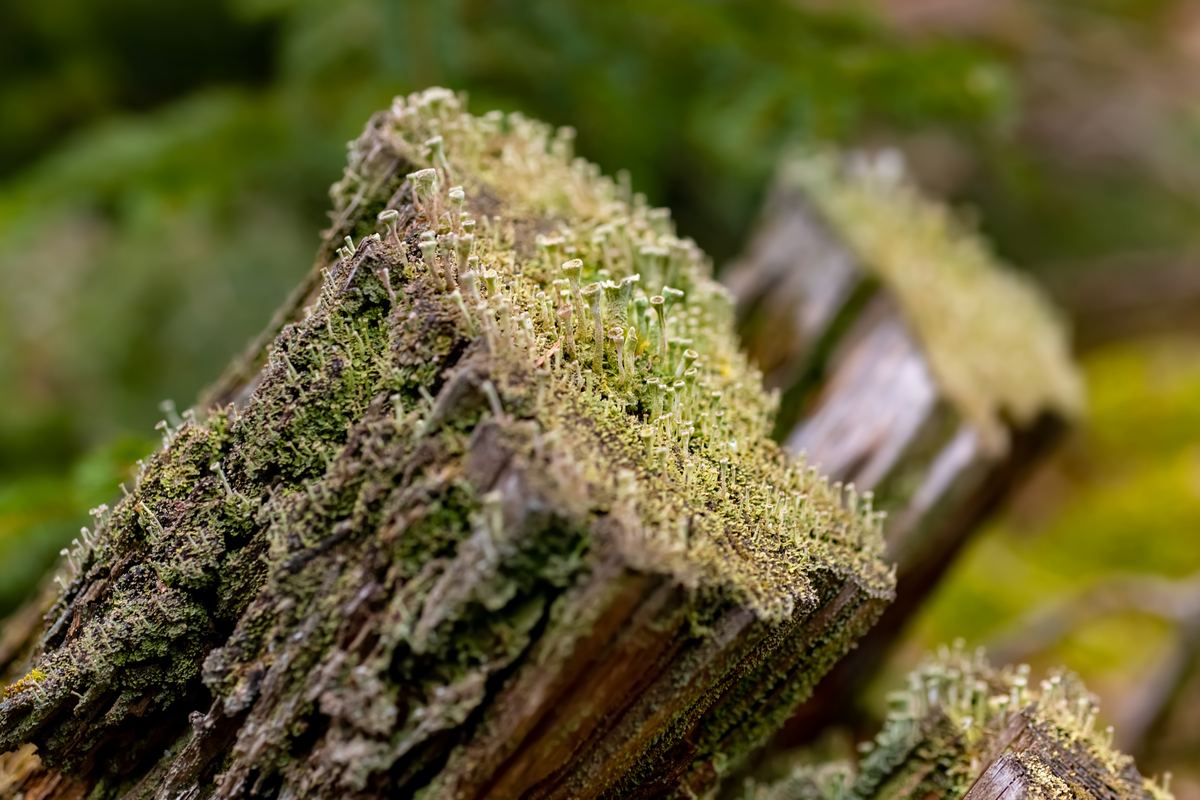
At Marsh Causeway, the wind moves first and the leaves answer a heartbeat later. That slight delay is often the first sign that a dryadic grove is nearby.
Dryadic trees are long-lived plant organisms found where Etheric fault lines intersect physical ground near boundary-proximate sites. Their anomalies are lawful. Over centuries, their roots adapt not only through soil but downward into the Etheric layer.
They were named after old tree-spirit folklore. The name stayed. The explanation changed. What people took for haunting is better understood as a Class II use pattern acting through the tree, not an innate spirit inside it.
The Dryad and the Tree Are Not the Same Entry
The tree is an organism and this page describes it. The Dryad is not the tree, and is not a humanoid being either. Where a figure is seen at a dryadic anchor — and figures are reported, in the field record and in older folk accounts alike — what is present is a projection, in the same category as the Caomhari of Tír Tairngire: a presentation shaped at the boundary and pitched to be met, belonging to something under no obligation to resemble it.
And like the Caomhari, they are found only where the Harmonic Membrane runs close enough. This is the fact that makes the whole category legible rather than mysterious: a projection needs something to project from, and proximity to that membrane is the condition. It explains the distribution directly — why Dryads are reported at some anchor sites and never at others no matter how old or how strongly coupled the grove; why the folk accounts cluster geographically rather than scattering; and why a survey team can predict, from membrane proximity alone and before setting foot on the ground, whether a site is one where figures are likely to be described. Absence of a Dryad at a dryadic grove is therefore not a negative finding about the grove. It is a measurement of how far away something else is.
Parts of Tír na nÓg are close enough, which is the record's clearest worked case and the reason the folk accounts there are the fullest anywhere. Note the wording: parts. The condition is local rather than planetary, so one valley on that world may hold both a grove where figures are described for generations and another, a day's walk off, where nothing has ever been reported and the trees are otherwise identical. Neither settlement is mistaken about its own ground.
The consequence is the one the Levril entry sets out at length. A described Dryad is a fact about the encounter rather than about the thing encountered, witnesses of different species should not be expected to agree on a shape, and the divergence in their accounts is not an error to be reconciled. Both the folk record and the survey record are describing something real; neither is describing a body.
Everything below concerns the tree.
Physical Characteristics
Dryadic trees are identifiable by several consistent features:
- Bark coloration: Typically pale — white, silver-grey, or bleached ochre — due to Etheric-layer mineral uptake interfering with the standard chromophore chemistry of the outer bark.
- Growth geometry: Root systems and canopy structure follow the geometry of local Etheric fault lines rather than standard nutrient gradients. From above, a grove of dryadic trees traces the fault pattern precisely.
- Leaf phase-lag: Leaves move slightly out of phase with local air currents. The lag is small — typically 0.1 to 0.4 seconds — but consistent and measurable. Wind affects the physical layer first; the Etheric coupling of the foliage produces a delayed resonance. This is a reliable field indicator.
- Longevity: Specimens confirmed at over eight hundred years. Ring structure in felled samples shows Etheric-layer coupling strengthens with age, not weakening, which is the inverse of what standard nutrient-limitation models predict.
The Etheric Root Extension
Ordinary roots answer gravity, moisture, and soil chemistry. Dryadic roots do that as well, but trees growing directly over Etheric fault lines develop a second extension that does not track physical gradients.
Survey Corps instruments read this extension as a coherence structure in the Etheric layer—an organized continuation of the tree's growth pattern below the physical band.
The mechanism is not fully solved. Current models treat it as the same lawful growth process expressed into Etheric substrate. The tree is not choosing mystically. It is following the gradients available to it.
The practical consequence is clear: a mature dryadic tree is a stable, Material-anchored structure that also reaches into the Etheric layer. That makes it unlike transient boundary openings, overlap windows, or fold-proximate instabilities.
Dryadic trees are permanent fixtures.
Class II Exploitation of Dryadic Anchor Points
For Class II meta-dimensional beings, Material-space presence is usually unstable. Boundary zones oscillate. Overlap windows close. Fold instabilities are unreliable.
A dryadic grove changes that equation.
A Class II entity feeding through such a grove can anchor itself to the Etheric root extension instead of pushing against a temporary breach. The anchor does not oscillate away. It holds.
This changes the operational profile considerably:
- A standard Class II boundary incursion can be addressed by stabilising or closing the boundary event.
- A Class II entity anchored to a dryadic grove cannot be dislodged by boundary stabilisation alone. The anchor point must be identified and the Etheric coupling disrupted — which requires constraint-literate intervention at the root-extension level, not simply boundary management.
The relationship is not parasitic to the tree. Documented groves in active use show accelerated growth, denser foliage, and deeper root systems. The entity appears to contribute a regularizing Etheric pressure that benefits the tree's lower-layer extension. Functionally, it is mutual, even though the tree has no agency in the arrangement.
Identification of Active Class II Anchoring
A dryadic tree in active Class II use produces measurable indicators beyond the standard physical characteristics:
- Etheric-band disturbance: Coherence asymmetry in the Conceptual↔Etheric band, detectable by constraint-literate practitioners. The signature differs from standard boundary disturbance in that it is localised to the root zone rather than distributed across a boundary gradient.
- Feeding residue: Class II entities using a dryadic anchor leave characteristic residue in the local emotional and social environment. A grove that has been active for years will produce the specific patterns associated with the entity's feeding method — ambiguity accumulation for Obligers, moral debt loops for Gilded Saints.
- Instrument asymmetry: Rook-7 class sensor arrays detect feeding-condition asymmetries that correlate with Class II presence; these read differently near a dryadic anchor than near a standard boundary entry. The signal is cleaner and does not drift with boundary oscillation.
Operational Guidance
- Identifying a Class II entity is necessary but not sufficient when a dryadic anchor is involved. Boundary stabilisation will not end the incursion.
- Constraint-literate disruption of the Etheric root coupling is required. This can be approached via targeted Etheric-layer intervention at the fault-line intersection, or by removing the entity's feeding condition to the point where it voluntarily releases the anchor — though the second approach is substantially more difficult.
- Groves with confirmed prior Class II use remain structurally capable of re-anchoring. Long-term monitoring is recommended.
A worked case, and its limit
The Marsh Causeway intervention is the reference example for both halves of the guidance above, and for the trap between them. Removing the entity's feeding condition — done at the causeway by putting a question that could only be answered unambiguously — broke the loop. It did not release the anchor. The Root and the Rest of It (S01E03C02) is the second visit, made specifically because the first one worked: the team goes back for the root coupling itself, and the lesson it comes away with is that removing one cause from a two-cause problem proves exactly which cause you removed and nothing else. A station's instrument drift did not resolve when the loop broke, and the temptation at that point — to conclude the grove was never the cause — is the error the sequence exists to document.
Known Locations
Several boundary-proximate sites in the survey record contain dryadic trees. The most significant concentration within present Star Rangers range is the Marsh Causeway grove—seven mature specimens, older than the causeway itself by an estimated three centuries, rooted at the Etheric fault-line intersection beneath the anomaly.
That grove is believed to be connected to the ongoing Class II activity documented in Survey Corps incident reports from the site.
Survey Archive cross-referencing (see A Fraction of a Second (S05E02C02)) has since matched the causeway grove's leaf phase-lag marker against two older Union land-survey entries, filed at the time under general flora anomaly and never flagged for follow-up — one of them now escalated to formal survey priority. Neither the extent nor the significance of the pattern across sites has been established; a marker match is not, on its own, evidence of a connected cause.
At least one instance sits outside the survey record entirely. A grazing holding in the Boirinn Uplands on Tír na nÓg carries pale bark and a phase-lag inside the marker range, in a back hollow the family has worked around for generations under a house rule nobody can source — and it has never been formally surveyed, because the Rangers hold no jurisdiction on a Union world and no invitation covering it has been issued. It is worth recording for what it establishes about the organism rather than about that holding: the two field markers are consistent wherever an anchor of this type occurs, and the survey record's coverage is a record of where instruments have been allowed, not of where the trees are. See What the Hill Keeps (S05E02C01).
See: Meta-Dimensional Beings: Classification
See: Predatory Entities: Obligers, Gilded Saints, and Cute Predators
See: Boundary Zones and Concordant Edges
Discussion
Show discussion
Comments are read after they are posted and anything unsuitable is removed. Posting needs a GitHub account; reading needs nothing.