The Fusion Ceiling
Every era dreams about the power source after this one. The Concord's engineers stopped dreaming several centuries ago, not out of resignation, but because they did the arithmetic and went back to work.
Nuclear fusion is the top of the lawful energy ladder. There are no antimatter reactors in the Concord, no zero-point taps, no singularity plants, no exotic-power installations of any kind — not as secrets, not as prototypes, not as suppressed technologies awaiting a braver age. Fusion is the ceiling. The ceiling is sufficient.
Why There Is No Antimatter Economy
Antimatter is proposed again every generation, usually by someone young, and declined again every generation, usually with the same three sentences. First: antimatter is not an energy source but an energy container — every gram must be manufactured, at fusion's expense, with losses that make the whole exercise a way of spending power expensively rather than producing it. Second: the container detonates. A stored reserve of antimatter is a standing explosion with a containment bill, and no certification regime descended from the SSSA's charters has ever been willing to put one next to anything it was chartered to protect. Third, and least negotiable: the Kernel Accords' fourth invariant binds every lawful agentic system to minimise waste and irreversibility — and an antimatter economy is the maximisation of both, adopted on purpose. The proposals fail review before they fail physics.
The same reasoning retires the rest of the exotic shelf. Boundary zones and fold infrastructure are things the Concord crosses, not things it plugs into; tapping them is the energy-sector equivalent of a third FTL method — perennially proposed, never demonstrated, and structurally identical to asking the power grid to outrank the physics it runs on.
Sufficiency
Fusion carries everything on record. Stations, fleets, and fold gates run on it. High-gravity ascent runs on it. Terraforming under the Frontier Transformation Protocols runs on it. The entire settled record contains no documented project abandoned for want of energy density beyond fusion's — a fact the Archive files with some satisfaction, since it means the ceiling has never once functioned as a ceiling in practice.
What it has functioned as is a schedule.
The Frontier Caveat
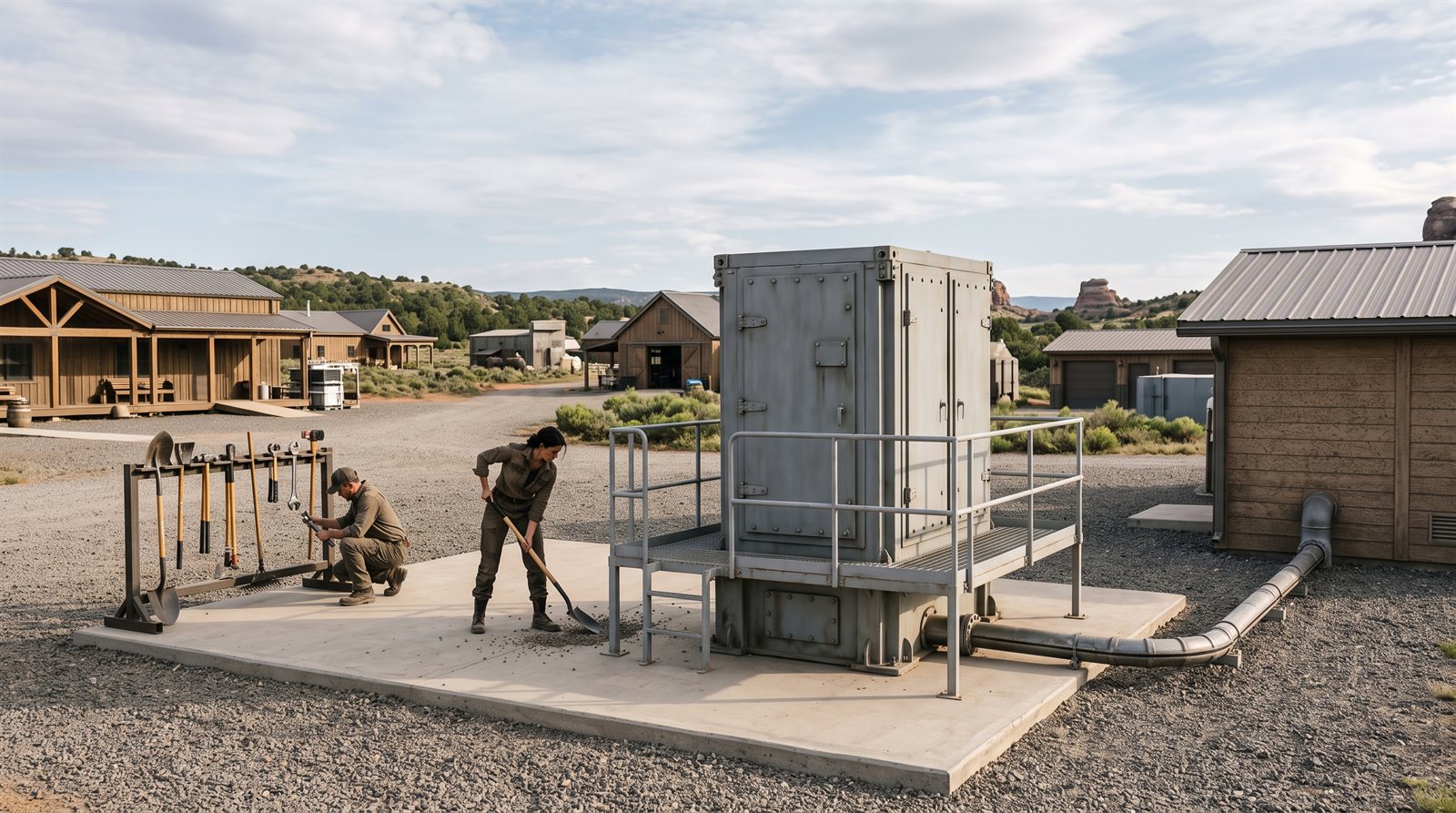
Fusion is sufficient everywhere and immediate nowhere. A fusion plant is heavy industry: containment fabrication, isotope logistics, precision tooling, and certified crews, none of which fit in a colony ship's first manifest. A frontier world's energy base is therefore built the slow way — imported cores rationed across essentials in the first years, local fabrication bootstrapped over a decade or more, full generating capacity arriving a generation after the founding landing.
The Protocols treat this the way they treat everything: slow by design as well as by necessity. A colony that must grow its power base grows its competence with it, and a settlement's fusion buildout is one of the metrics the charter reviews actually watch.
A worked example: what "sufficient but not immediate" buys
Kernowek Reach is the clearest documented case of the ceiling behaving exactly as this page claims it does, and it is worth walking through because it looks, at first glance, like a failure.
The founding cooperative arrived at a volcanic world with air too thin and too fouled to breathe. It declined the dome. Instead it anchored processor stations along the mid-altitude ridgelines to scrub and enrich a defined atmospheric layer wrapped around the highlands — not a sealed habitat but a maintained one, thin air made breathable by machinery that never stops running. Four generations later the band has widened considerably, it has not reached the summit, and the founding charter's own engineering annex assumed at the time of writing that it never fully would.
Read that against the two claims above. Nothing was abandoned for want of energy density — a continuously-run, planet-scale atmospheric process is precisely the sort of undertaking an exotic-power advocate would cite as needing something past fusion, and it has been running on fusion for four generations without the question arising. What the settlement paid instead was time, which is the only currency the ceiling actually charges in. And the annex's admission is the honest form of the constraint: a charter that states plainly which part of the job will not finish inside the founding generations is a charter that has done the arithmetic, not one that has given up on it.
The consequences shape frontier life more than any single technology does. Early settlements look pre-industrial at the surface — hand tools and draft animals beside a rationed fusion core running the water plant — which visiting observers persistently misread as poverty when it is sequencing. And on high-gravity worlds the schedule has teeth: fusion-thermal ascent javelins cannot fly until the ground infrastructure that feeds them exists, which means a heavy frontier world is far easier to land on than to leave for the first decades of its settlement. More than one charter colony has understood, signing, that the gravity well would hold the door shut behind them until they built the key — and signed anyway. The Archive keeps their names.
Constraints
- Fusion is the maximum lawful and practical energy technology; nothing beyond it exists in canon, openly or covertly.
- Antimatter exists as a physics phenomenon, not as an energy sector: no reactors, no stockpiles, no drives.
- Frontier fusion buildout runs years to decades; early colonies operate on imported cores and rationed capacity.
- High-gravity frontier worlds cannot support fusion-thermal ascent operations until ground infrastructure matures — arrival precedes departure capability, sometimes by a generation.
See Also
- Ascent Javelins — the fusion ceiling's most visible application
- Frontier Transformation Protocols — slow by design, powered accordingly
- FTL Mechanics — the same two-lawful-channels discipline, applied to transit
- The AI Safety Kernel — the waste-minimisation invariant that closes the antimatter question
- Kernowek Reach — four generations of continuous fusion-powered atmospheric engineering, unfinished on purpose
Discussion
Show discussion
Comments are read after they are posted and anything unsuitable is removed. Posting needs a GitHub account; reading needs nothing.