Elvira (Person, kind not established)
- Time
- 2826 UCSD, Early Winter, Evening
- Location
- Marsh Causeway, Sub-station Outpost
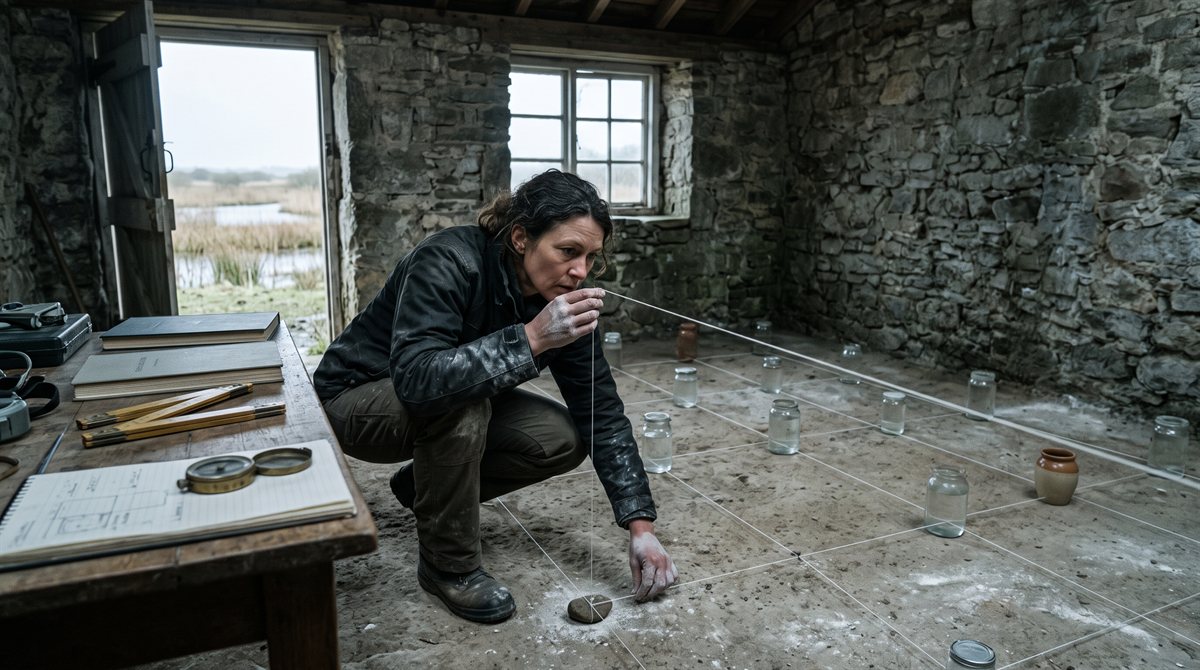
She went back in when he had gone along the stones to wait for the analyst, and stood for a moment by the water vessels, and looked at the four notes beside them saying where each had stood and for how long.
The boy had been real, then. She had not invented the phrase and she had not invented him; the Corps had simply been a long way round to the same step. That was a clean result. She liked clean results and distrusted them in equal measure, and tonight the distrust had somewhere specific to go.
Because there was a fourth thing, and she had not taken it apart with the others, and she knew why.
The sage had given her the phrase. The sage had been careful about lists — which shapes the world kept and which it did not, which words were for people who had decided not to look. He had been the one person at Dún Rí she had trusted with the stones and the glass, on the night the cat left, because he did not dress comfort up as ceremony. And he had been of the house, and the house had lied, for family reasons, in the shape she could recognise across a room and had recognised nowhere on the causeway in three years, not in Thorne, not in the analyst, not in the cat.
She had never known what the lies were about. She had known the shape of them from the inside the way one knows a draught, and had been given a phrase for looking under things, and had been sent to a marsh — had sent herself, she corrected; nobody had sent her — with the phrase and nothing else.
Whether any of it had been about her was a question she had lived inside for long enough to have stopped expecting an answer to. She noted that it had not moved tonight. She noted that she had checked.
She opened the second book, under the date, in the column for observations she had not intended to make, below the correction she had already written, and added one line.
The word by the gate was the kitchen's. The phrase was the sage's. I rebuilt it; I did not make it. What I was taught to look under, and by whom, and why, is not in this book.
Then she went to see what the analyst had found in the fourth volume, because the forty seconds was still forty seconds, and that, at least, was a thing with an instrument.
Discussion
Show discussion
Comments are read after they are posted and anything unsuitable is removed. Posting needs a GitHub account; reading needs nothing.