Stillwater Station
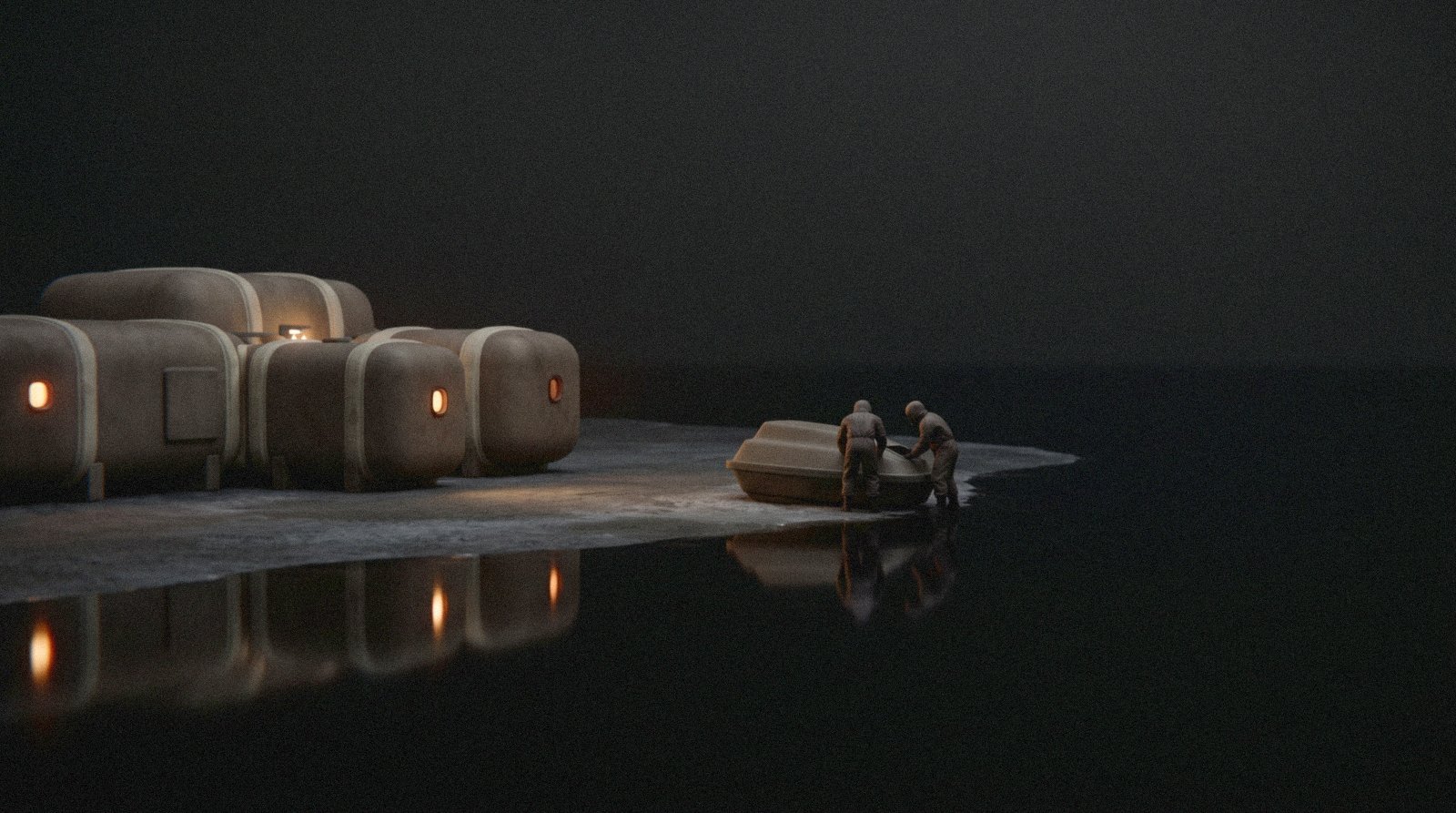
The sea is the reason for the name. It almost never moves.
Stillwater Station is the oldest surface station on Titan, on the shore of Ligeia Mare, the second-largest of the methane seas near the moon's north pole. It was set down in the 2130s CE (2330s UCSD), before the settlement networks that founded the United Space Consortium were complete, and it is where the Titan Settlement Authority was constituted. It is worked by crews who rotate down from Ligeia in orbit, and it has never had a resident population: nobody is born at Stillwater and nobody retires there.
The Sea
Ligeia Mare is a body of liquid methane, with ethane and dissolved nitrogen, several hundred kilometres across and in places more than a hundred and fifty metres deep. The liquid is clear enough that radar sounding from orbit reached the bottom long before anyone landed. What the first crew noticed, and named the station for, is its surface. Titan's surface winds are light, and in most seasons the sea lies flat to within millimetres, mirror-still under the orange sky, for months at a time.
The stillness is not the same as safety. As the northern summer warms the sea by a degree or two, nitrogen comes out of solution and rises through it, and a patch of sea that is fizzing holds a hull up less well than the water around it. Crews working on the sea read the season before they read the weather, and Stillwater keeps a standing chart of where the sea is giving up its nitrogen, updated every Titan day.
The Work
Stillwater draws methane and ethane from the sea for the Authority's chemistry: fuels, polymers, and the feedstock for nearly every plastic used on the ring. It also cuts water ice from the bedrock of the shore, which is where the station's oxygen and hydrogen come from and where some of the ice the 2289 CE dispute was fought over was quarried.
The station is insulated rather than pressurised against vacuum, runs on fusion, and is built around the hazard every Titan station is built around: methane seeping in from the ground into air that will burn. Its oldest sections have been resealed more times than anyone on the current crew could list, and the record of each resealing is kept, which on Titan is what a building's history mostly consists of.
Two Clocks and a Long Dark
A Titan day lasts almost sixteen Earth days, and Stillwater's shifts are set by it. Its seasons are set by Saturn's year of about twenty-nine and a half Earth years, and at Ligeia Mare's latitude the northern winter brings years in which the Sun does not rise. A crew member can rotate down for several tours in a row and never see daylight on the sea. The station keeps both clocks on the same wall: the Titan day, and the season, counted in Earth years until the light comes back. Every record it files is dated in UCSD like any other.
The First Hall
The station's first landed module still stands at the centre of the oldest section, heated and sealed and not used for anything. It is called the First Hall. The Titan Settlement Authority's founding charter was signed in it, and the charter's original enrolment is kept there, in the form the enrolled text of settled space keeps a founding: whole, unedited, with every later amendment enrolled beside it rather than over it. Among those first clauses is the one that has never been amended: no boring through Titan's crust into the ocean below.
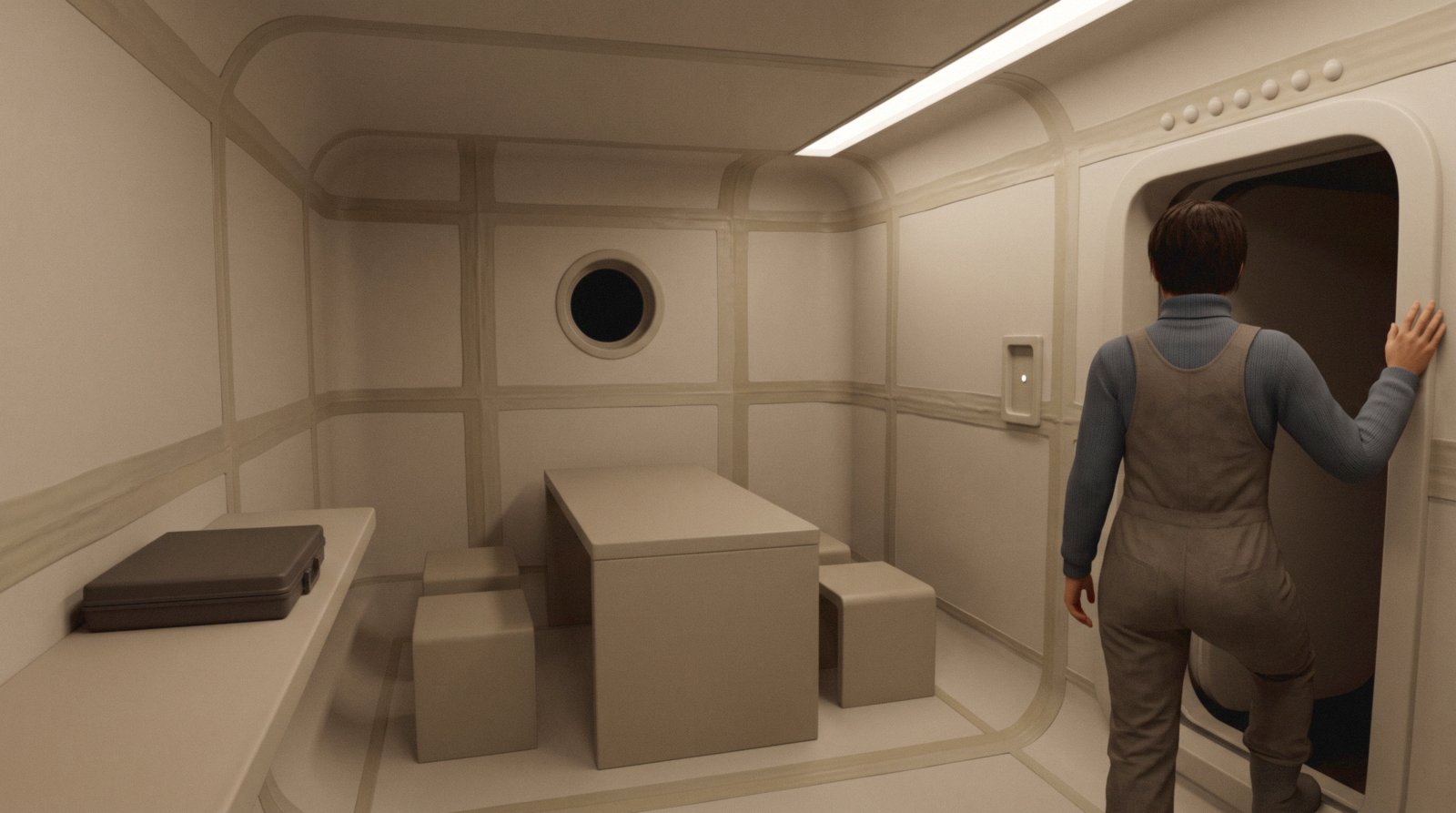
The Hall is not a shrine, and the Authority's register is careful not to describe it as one. It is the place where the law Titan lives under can be read as it was first written. New crews are walked through it on their first rotation down, and shown the clauses that were later struck as well as the ones that stand.
See also: Titan, Ligeia Habitat, The Enrolled Text, The United Space Consortium, The Fusion Ceiling.
Discussion
Show discussion
Comments are read after they are posted and anything unsuitable is removed. Posting needs a GitHub account; reading needs nothing.