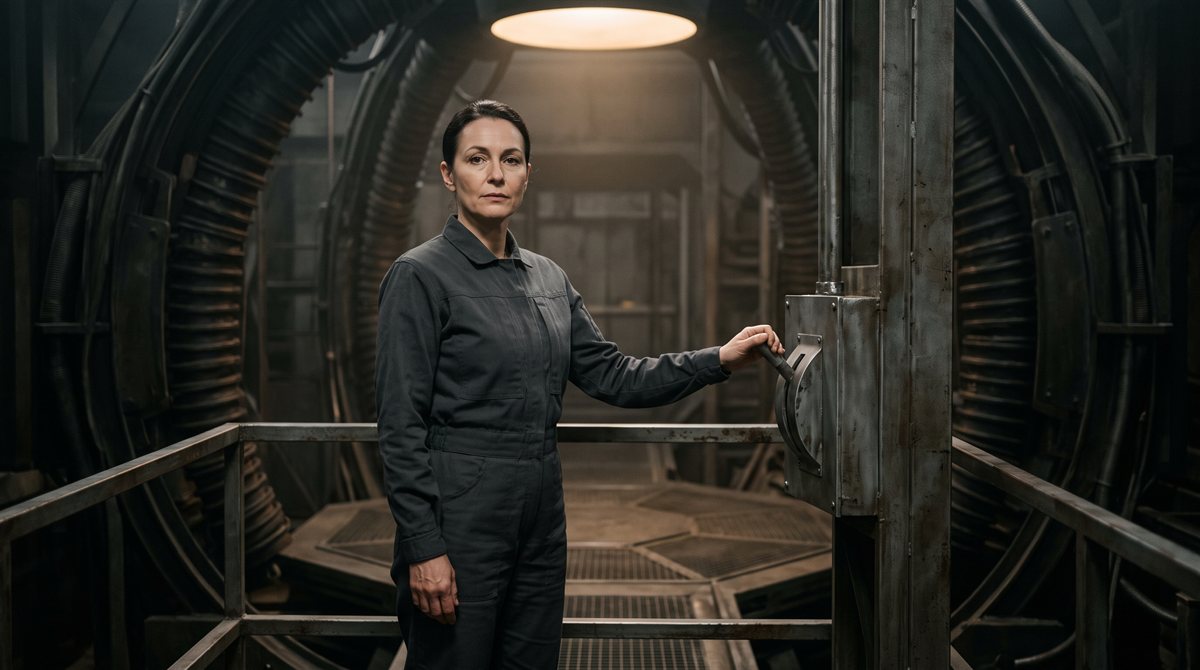
Dr. Iona Vale (Human)
- Time
- 2826 UCSD, Early Winter, Dawn
- Location
- Pelagos Minor, Equatorial Evacuation Basin
By the third day, Iona had stopped asking people who they had lost. The question presumed a singular noun, and almost every answer she got back was a list.
The clinic tents had no room left for philosophy, only bodies and the nervous systems attached to them. She treated crush injuries first, then smoke lungs, then sleep collapse and dehydration, working the obvious damage before the quieter kind had even finished arriving. The quieter kind arrived anyway, on its own schedule: panic spikes triggered by the boarding tones replaying in someone's memory uninvited, dissociation at the mere sound of the words priority order, children who would not leave a doorway because leaving, in the last four days of their short lives, had come to mean never seeing someone again.
A woman in her thirties sat on the edge of a cot one evening and said, very calmly, in the voice of someone who had already run out of the version of this sentence that broke down crying, "My son keeps asking when his father and brothers are on the next shuttle."
There had been no next shuttle. There would not be one now.
Iona wrote referral after referral, knowing full well the counsellors on this rotation were already past capacity and would be for months. The surviving older men moved through the camp like people carrying twice their own weight in something nobody could see. The surviving young women moved like people who had been handed an impossible arithmetic problem and told, gently, that the answer was due tomorrow regardless of whether they'd finished it.
At night, command wanted metrics — injury totals, infection projections, medicine burn rates. Necessary numbers, and she gave them all of it without complaint. Then she added one field of her own, typed slowly enough that she couldn't later claim she hadn't meant every word of it:
Secondary impact: demographic trauma following strict priority compliance.
One officer asked her, not unkindly, to rephrase it as something less charged. Something more operational.
"It is operational," she said, and looked at him steadily enough that he was the one who looked away first. "If we only measure the people who made it onto a shuttle, we will write this exact policy again someday, somewhere else, and call the wound it leaves behind unavoidable. It was not unavoidable. It was simply not measured."
On the sixth day, she stood at the edge of the basin with Galahad and Syra, watching the water settle into a false calm over what had been, four days ago, somebody's neighbourhood.
"Did the policy save lives?" Galahad asked, quietly, in the tone of a man who already knew the answer and needed to hear it said aloud anyway.
"Yes," Iona said.
"Did it break this place?"
She watched a boy nearby teaching his younger sister how to tie a thermal blanket into a sling, because there were no adult hands free to do it for either of them.
"Also yes," she said.
Nobody spoke again for a while. The answer did not get any easier to hold simply because it happened to be accurate.
Discussion
Show discussion
Comments are read after they are posted and anything unsuitable is removed. Posting needs a GitHub account; reading needs nothing.