Mairéad Ní Dhálaigh
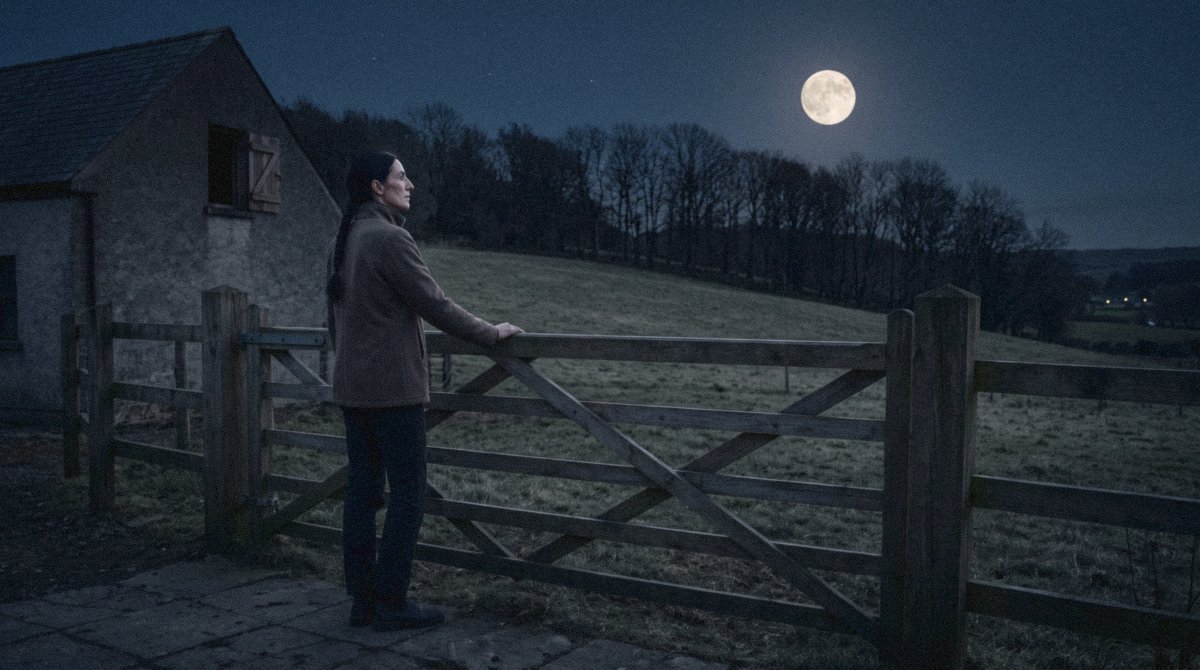
Mairéad Ní Dhálaigh keeps a holding below the tree line at one of Tír na nÓg's two Conjunction sites, in the Celtic Union, in a district the record does not name. The holding was her mother's, and the almanac hangs on the nail by the door where her mother hung hers. She has ewes on the top field, a dog, a daughter, Úna, and a gate at the top of the yard where the yard becomes the top field and the top field goes up to the trees. The record meets her once, in the autumn of 2826 UCSD, on a Conjunction night it does not date: she brought the ewes down, put the lamp out before the dark came, sent the child to bed with the shutter left the width of a hand, and went out and put her hand on the gate's top bar for the span of the minutes the almanac gives. In the morning the margin on the almanac's autumn page was clean, in the third hand to leave it so. The record renders her as she.
Known History
- Keeper of the holding in 2826 UCSD, the one season the record holds her at. It was her mother's before her, and her mother stood at the gate on these nights; the almanac's margins are blank in three hands' time, so a hand before her mother's kept it too. When the holding came to her, the record does not say.
- As a child she took her mother's standing at the gate for watching, and saw the window's light on a ceiling once, and at about the age Úna is now worked out why the shutter was left a hand's width and did not say. Her mother said one thing about the Good People on the one occasion she said anything: nothing had been brought and nothing had been asked for. Mairéad took it then for a small thing to say about anybody.
- Once, in a year the record does not give, a Survey form came round the holdings under the Union's arrangement with the Rangers, with a line for the dates. She gave it the almanac's page, which anyone in the town could have given it, and nothing of her own; the man thanked her and went on to the next holding, and nobody came back to ask twice.
- Autumn 2826 UCSD: the ewes down off the top field in the afternoon, the lamp out before dark, the house shut, the child's shutter left a hand's width, bed, a stór, and the gate. Donn lost his edge on the one side. The light began among the trees, low, between the trunks, level, a lamp's worth; a long held note that was not the wind, and when it rose the light rose; at the tree line, something tall, standing, correct in every part, in a light that was its own. She did not look at it long. Nothing came down the field, nothing was called, nothing was set down or lifted. Then it was among the trees and not at them, then there was the light and not it, then less; Donn's edge came back and the trees were the trees. She went in by the front, said at the door what her mother had said, and did not look at the almanac. See Before the Close (S01E00C13).
- The morning after: Were they there? over the bowl, and the answer she had been given, The moon was. The ewes back up at the hour they go up any morning, the top wall walked after them, counting, and the trees not gone into, as on any day of the year. Nothing on the ground at the tree line, and she was not looking for anything on the ground.
The Work
The holding is ewes, a top field, a top wall walked every day of the year, a yard, a gate and a river below the house, and the custom is kept the way the wall is walked. Its parts are few. The ewes come down that afternoon. The lamp goes out before the dark and not after. The shutter on the child's room is left a hand's width. The gate is stood at, with a hand on the top bar, for the minutes, and it is not watching: it is standing where the house ends, so that nobody from the house goes past it, and the only body in the house that might is her own. Words are said at the door, going in, quietly, to nobody. And nothing is written in the almanac's margin, which is the only record the holding keeps and the whole of it.
The almanac is printed in the town and is right about the moons, two circles and a line of small print giving the minutes, more or less, because the town has never quite agreed with itself about the night. The holding has never written to tell it. The Union's practice, as the record files it, is three things not done: don't follow, don't detain, don't publish the timing. The holding keeps all three and has no word for any of them, and the one time the Corps came asking, under the Union's agreement, it was given the town's page and nothing of the holding's, and thought no worse of the Union for asking or of the Rangers for not asking twice.
Character Notes
She does what the night requires and makes nothing of what she sees. She heard the note before she had decided she was hearing anything, and when it rose the light rose, and she did not make anything of that; her mother had not. She did not look long at what stood at the tree line, and the record is exact about why: not because the custom said so, since the custom says nothing about looking, but because the thing was correct, every part of it where a part should be, and the correctness was what her eye kept going back to and could not settle on, and the gate under her hand was enough to be going on with. She looked at Donn instead, and at her own hand on the bar.
What she declines is the custom. She does not go into the trees on that day or any day. She does not look for anything on the ground. She does not write in the margin, and she does not give a form a date of her own. She answers the child with the answer she was given and no more, The moon was, and then, to I saw the ceiling, So did I, once, and that is the whole of it between them, and it will do for a year. Her Irish is a word at a time, to her own: a stór to the child at bedtime. The Good People was her mother's phrase, and the record has her use it only in remembering her mother using it. The record has her in one posture: at the gate with her hand on the top bar, looking at the moon and not at the trees.
What the Record Does Not Hold
Her age, her birth year and what she looks like. Úna's father, and whether anyone else lives in the house; the chapter names nobody but the child and the dog and does not say there is nobody. Whether her mother is living, since the chapter speaks of her in the past and says no more. The words she says at the door, which the chapter withholds. The name of the district and of the holding, kept unnamed on purpose, so that no townland acquires the site. Whether she had seen a figure at the tree line before that night, or only the ceiling as a child. The year the Survey form came round and who the man was. Whether the holding has ever told the town, or the town ever asked. Any chapter after the morning the ewes went back up.
See also
- Before the Close (S01E00C13), the gate, the light, the tree line and the morning after, in her viewpoint and the child's
- Úna Ní Dhálaigh, her daughter, who watched the ceiling
- Tír Tairngire: The Harmonic Membrane, the window, the rhythm and the Union's practice the holding keeps
- Caomhari, the record's name for the Good People
- Luminescent Ethereal Beings, a lamp's worth, rising and dying with the window
- Tír na nÓg, Donn and Cliona, and the minutes the almanacs call the Conjunction
- The Celtic Union of Planets, the arrangement under which a form once came round
Discussion
Show discussion
Comments are read after they are posted and anything unsuitable is removed. Posting needs a GitHub account; reading needs nothing.