Thalassa
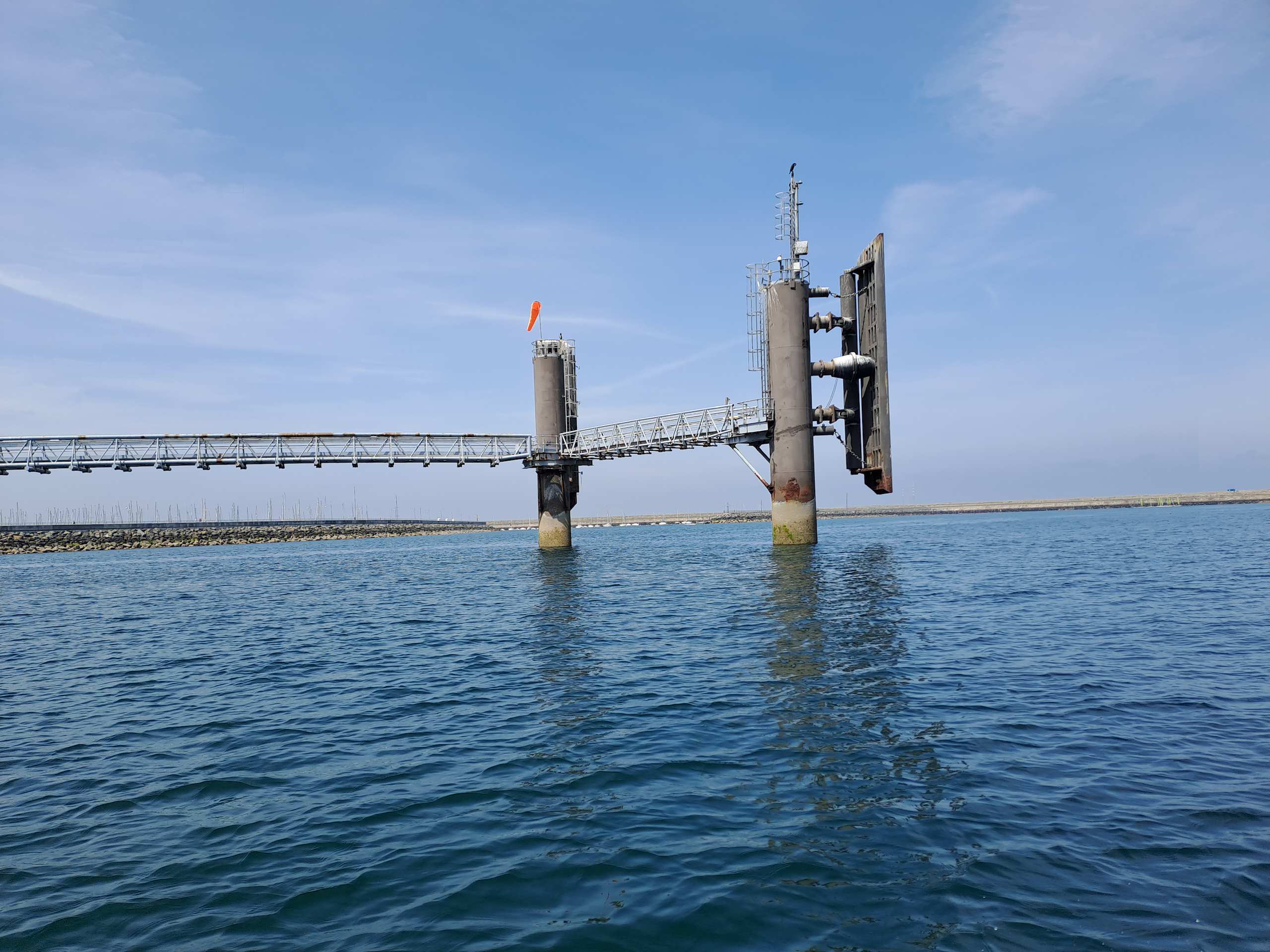
Survey Corps first logged Thalassa as an unremarkable ocean world — ninety-six percent open water, the rest scattered seamount shoals too small and too submerged to build on by any conventional method — and nearly filed it as another world with nothing to offer a landless colony charter. What changed the filing was who read the survey report next: engineers who had just finished proving, on Earth's own Venice, that a foundation could be rebuilt out from under a city that never stopped living on top of it. Thalassa did not need land. It needed people who had already stopped needing it.
Two Cities, One Argument
Thalassa's charter authorised a single colony effort, and that colony effort split, within its first decade, into two cities that have never fully agreed on how to be a floating settlement. New Venice went first, built by engineers and heritage families with direct professional lineage to Earth's own Venetian retrofit — and it shows. Its platform hulls carry campaniles, coloured facades, and the same narrow calli-width walkways surveyed off the historic city's own tolerances, reproduced here from nothing rather than preserved from something. New Venice's founding argument was continuity: if the technique could keep an eight-hundred-year-old city recognisably itself, it could give a brand-new colony an identity that didn't read as improvised.
New Atlantis answered with the opposite argument, a generation later and three hundred kilometres north across open water. Its founders — a second wave, less interested in heritage than in what the platform-hull technology could do once nobody was constraining it to match a historic footprint — built low, wide, structurally honest platforms with no inherited geometry to honour. Where New Venice hides its mooring towers under stonework, New Atlantis's stand exposed, load paths visible, in the same register documented generally for remote stations rather than the biosphere-world subtlety New Venice reaches for instead. The name is deliberately double-edged: every settler knows the myth of a city the sea swallowed for its pride, and New Atlantis's own civic motto — built to bend, not to boast — reads as the founders' answer to it. This city isn't betting it won't flood. It's built on the assumption that every part of it eventually will, briefly, and engineered to shrug that off rather than be shamed by it.
An Old Trade Learning to Travel
Neither city's founders reinvented the platform-hull-and-mooring-tower method itself — that work belongs to Saltmere, whose four centuries of continuous engineering practice on an ocean world with no land at all remains the deepest well of documented expertise anyone building on water has to draw from, and to Venice, the first Earth city to prove the same construction could be threaded in underneath a community that had nowhere else to go. Thalassa's contribution was neither — it was the first colony built on open water from the ground up, by people who had a choice of foundation and chose this one anyway, without an ancestral flood record or a landless planet forcing the decision. Saltmere's aquabots and Venice's retrofit crews maintain what already exists. Thalassa's engineers are still finding out what the same techniques do when nothing is holding them back except each other's competing opinions about what a floating city should look like.
Governance and Standing
Thalassa remains a Solar System Defence Command charter world, its civil administration modelled on the same environmental-stewardship authority documented for Earth's own coastal recovery, with New Venice and New Atlantis each running independent municipal councils under it rather than a single planetary government — a split that tracks the cities' founding disagreement more than any formal jurisdictional logic. Neither city has petitioned for full self-governance, and SSDC liaison staff on-planet describe the two councils' standing rivalry over dock-priority scheduling as the single most reliable source of paperwork on their desk.
The one thing the two councils have ever pooled is the seafloor, and they were careful about how. Above the waterline there is one ocean and two cities; below it there is one ocean and no way to hold half of a tether field. In 2822 UCSD the councils jointly ceded the powers neither could exercise alone — seabed tenure, the mooring-tower tether fields, current loading across the shared shoals, the state of the water column — to a single office elected by the whole planet, and gave it nothing else: no legislature, no revenue, no enforcement, and no authority over any person. The instrument's first clause states that Thalassa has no planetary government and that this is not one, which is the condition on which both cities signed it. Everyone calls its holder the President of Thalassa anyway. See Sofia Santos, the first.
A note on the name. Thalassa Vexar, an Assistant Deputy Viceroy in the Imperium's Belt Settlements Directorate, carried this as a personal name and died in 2619 UCSD, generations before this world was chartered. Nothing in the record connects her to the Nerea System, and the world is not named for her: a sea-name on a planet that is ninety-six percent open water requires no commemoration to explain it.
See also: Venice, Saltmere, Thalassa Vexar, Environmental Technology Design, The Crisis Centuries: Terran Wildlife from Collapse to Stewardship.
Discussion
Show discussion
Comments are read after they are posted and anything unsuitable is removed. Posting needs a GitHub account; reading needs nothing.