Saltmere
Every survey of Saltmere opens with the same instrument check, because the first reading always looks like sensor failure: zero percent landmass, at any resolution, on any pass. It isn't an error. There is no land on Saltmere. There never was.
Saltmere is the second planet of the Annwyn System, and — outside a scatter of submerged seamounts too deep to break the surface at any tide — a single unbroken global ocean from pole to pole. Whoever settled it did not have the option of building on ground, because Saltmere never offered any. They built on the water instead, and four centuries later are still doing it.
A World With Nowhere to Stand
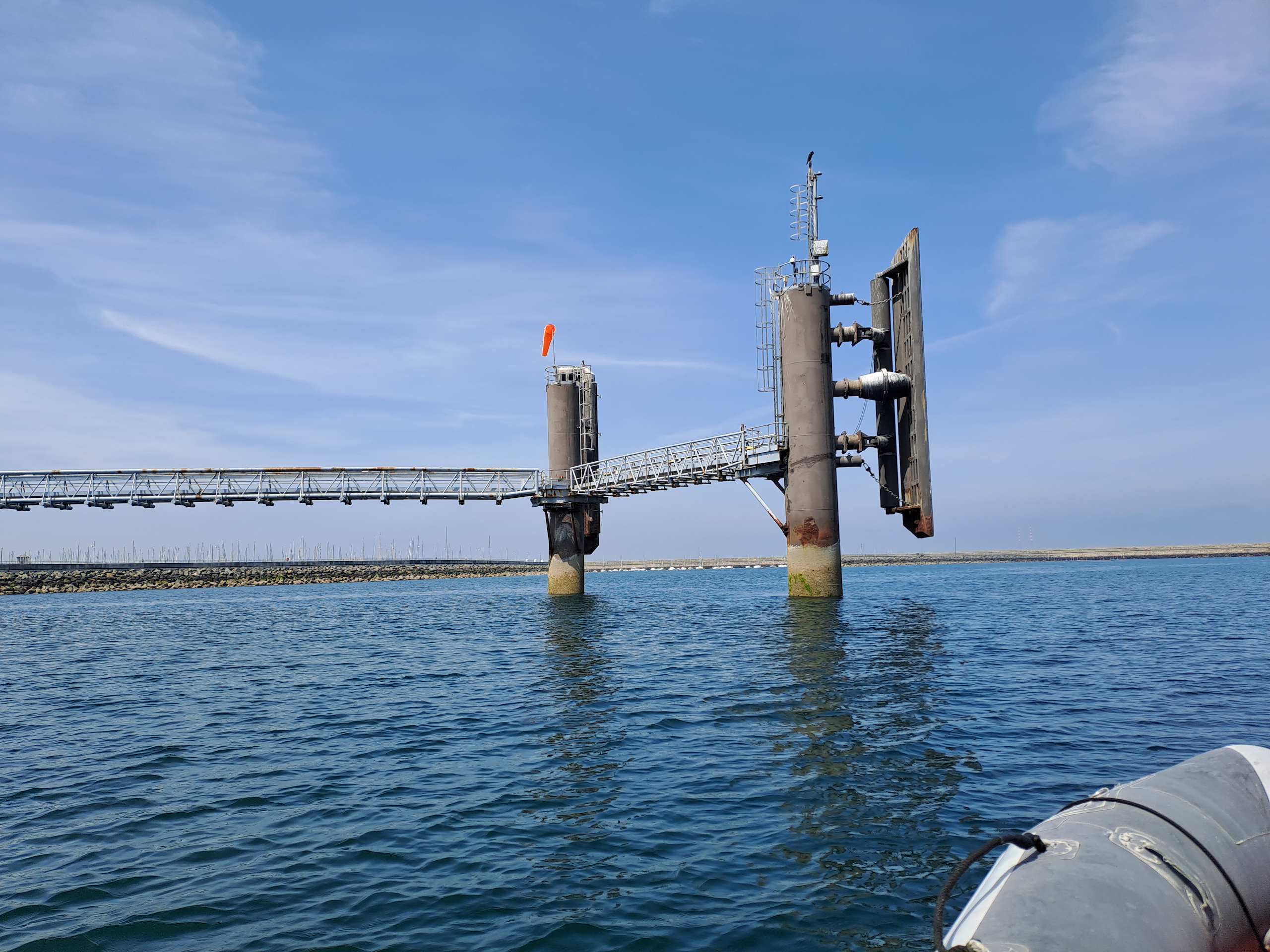
Saltmere's original colony manifest has never been recovered, and the founding generation's own record of why here did not survive whatever event scattered the rest of their archive — a gap current residents discuss with more shrugging than curiosity, on the reasoning that four hundred years of successfully not drowning has answered the practical half of the question even if the historical half stays open. What survives is the engineering they left behind: platform hulls, city-scale floating structures anchored to the seabed by cabled mooring towers, clustered into loose city-groups that drift, rotate, and are continuously re-tensioned against Saltmere's currents rather than held rigidly in place.
The mooring towers are not decoration and not optional infrastructure in the way a bridge or a seawall might be elsewhere. They are the habitat, in the same sense Kernowek Reach's processor stations are the habitat: running continuously, monitored constantly, and the entire difference between a city segment staying where its residents left it that morning and a city segment two kilometres off station by evening.
Platform Hulls and the Drift Cycle
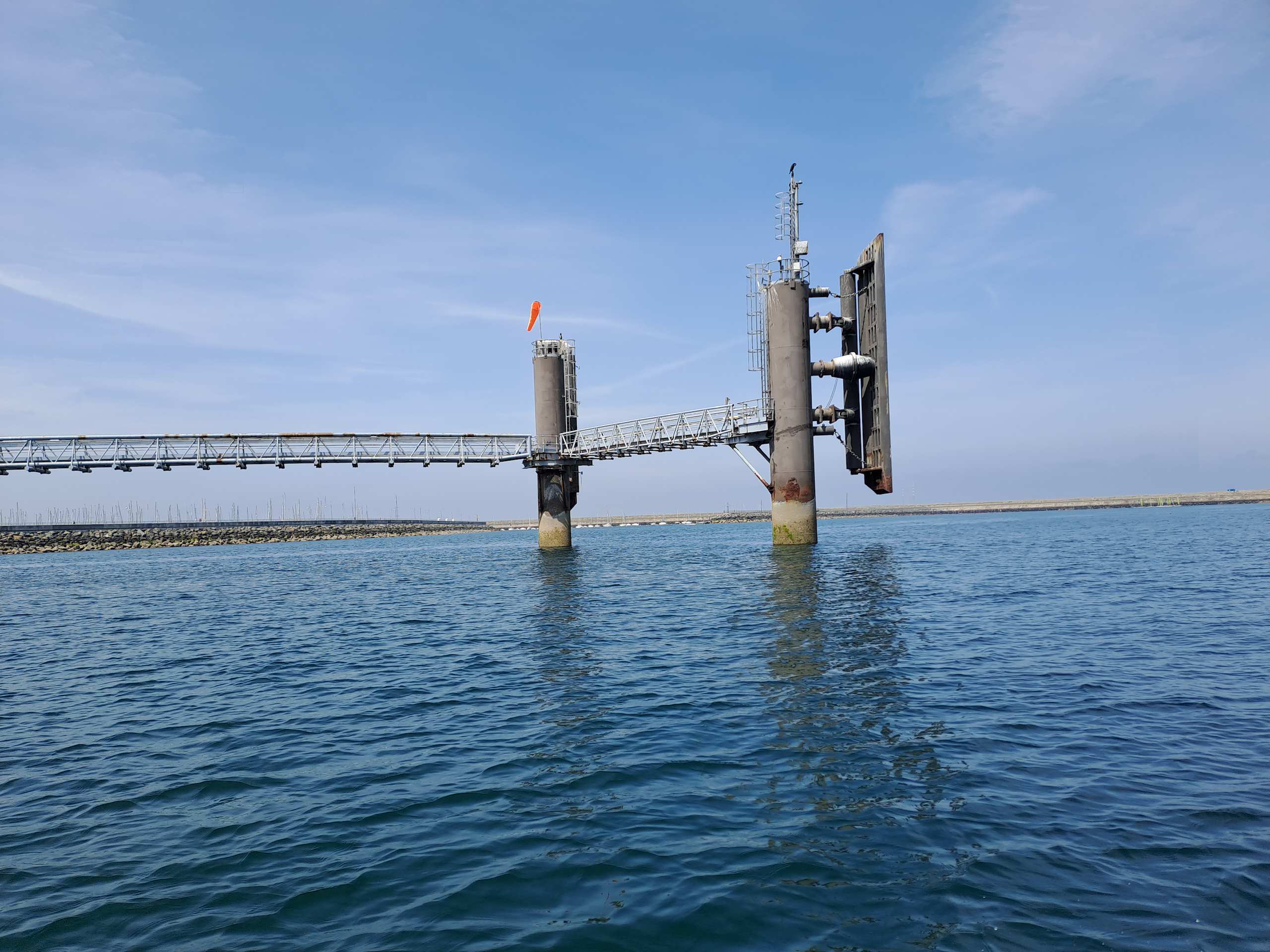
A platform hull is not a ship, though it is built and inspected like one. Each hull carries a city segment — housing, a market concourse, a water-reclamation plant, whatever a given segment specializes in — and stays coupled to one or more mooring towers by cable rather than by any fixed foundation, because Saltmere has no seabed shallow enough anywhere to found one on. The coupling is deliberately not rigid: a hull rides the swell and drifts on its tether through a full drift cycle measured in days rather than hours, re-centering against the tower's own tension rather than fighting the ocean outright.
Residents plan around the cycle the way a tidal-coast settlement elsewhere might plan around actual tides: market segments dock closest to the tower at cycle midpoint, when the platform's own motion is slowest and cargo transfer safest; the outer edge of the cycle is when a segment's residents are least likely to attempt the gantry crossing to a neighbouring hull at all. Nobody who has lived on Saltmere longer than a season needs the schedule posted. Newcomers are given one anyway, and told, without much sympathy, that everyone learns the hard way exactly once.
Storms and the Reason Nobody Builds Rigid
Saltmere's storm systems are not survivable by outrunning them — there is nowhere to run to — and are not survivable by holding rigid against them either, which the founding generation apparently learned at a cost the surviving record does not detail. Every platform hull and every mooring tower on Saltmere is built to give: cables that pay out and re-tension rather than snap taut, hull couplings that decouple automatically past a stress threshold rather than tear the tower down with them. A city segment that rides a storm loose on its cable and re-couples afterward is the design's entire point. A city segment that doesn't move is the failure mode the design exists to prevent.
Aquabots
Nobody dives to inspect a mooring cable eight hundred metres down, and nobody has needed to in living memory. That work belongs to aquabots — small, long-endurance autonomous underwater vehicles that patrol the tower foundations, cable runs, and hull couplings continuously, surfacing only to dock, resupply, or escalate a finding no onboard repair routine can resolve on its own. Every aquabot is Kernel-compliant, like every other lawful agentic system in the Concord: it will flag a stress reading it cannot account for rather than quietly recalibrate around it, and it will not certify a coupling safe on a confidence level it cannot show its work for.
A visiting Survey Corps archivist, cross-referencing Saltmere's first-contact report against the Archive's own holdings, flagged the resemblance immediately: long-endurance, acoustically quiet, built to work months at depth without surfacing, invisible to the residents whose safety depends on it — the same design philosophy Earth's classified Subsea Cable Warden Programme settled on centuries earlier and half a galaxy away, for exactly the same reason. Saltmere had no contact with Solar System record before the Star Rangers found it, so the resemblance cannot be descent. It is convergence: two civilizations, generations apart and never in contact, independently concluding that critical underwater infrastructure is best protected by something small, patient, and rarely seen. The archivist's note on the report is a single line: some problems only have one good answer, and it doesn't care who finds it first.
Settlement Character
Saltmere shares almost nothing with the Kingdom of the Five Islands' register, despite both worlds being read, from orbit, as mostly water. The Five Islands is a storm-scoured planet with one narrow strip of land its people can stand on without engineering underneath them. Saltmere has no such strip anywhere, at any scale — which means there is no coastline to retreat to, no shore to call solid ground, and no resident under four hundred years of continuous settlement who has ever stood on bedrock. Ask a Saltmere native what "ground" means and the answer that comes back is usually about tension and tether cables, not dirt.
Contact Status
Saltmere holds no Solar System charter, no membership in the Celtic Union of Planets or the Federation of Sentient Beings, and no provisional survey number older than the Star Rangers expedition that logged first contact — a routine fold-adjacent mapping pass that expected an empty system and instead found four centuries of continuous, entirely self-sufficient civilization riding on cable and platform hull. Formal relations remain in the earliest stage the charter recognises: an open invitation, extended, and neither accepted nor declined.
See also: The Kingdom of the Five Islands, Kernowek Reach, Environmental Technology Design, Venice, Thalassa.
Discussion
Show discussion
Comments are read after they are posted and anything unsuitable is removed. Posting needs a GitHub account; reading needs nothing.