Prismeri
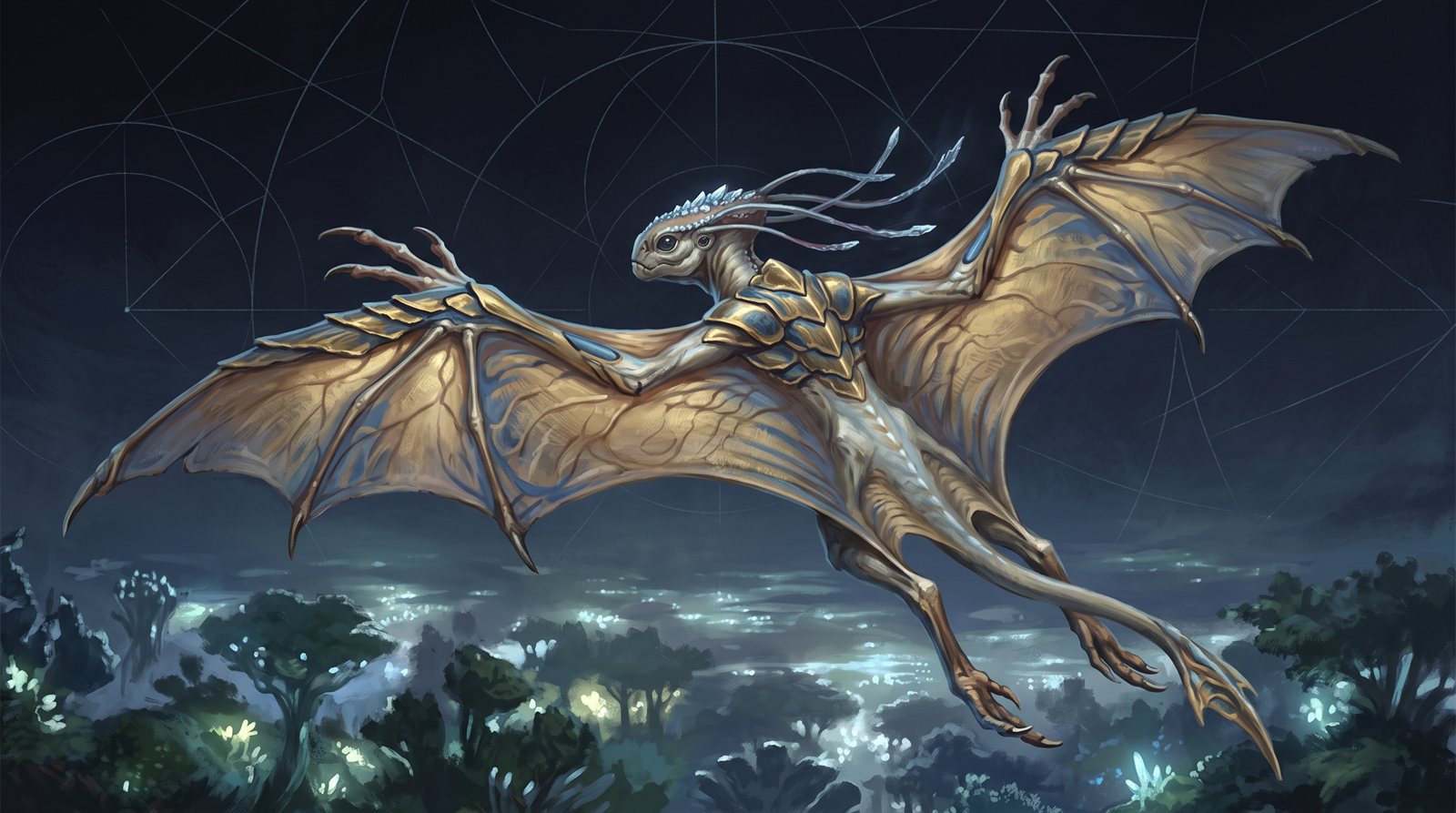
Federation contact teams filed two separate preliminary species reports on their first survey of Prismere, a full local year apart, before a frustrated field xenobiologist cross-referenced kinship records and proved both reports described the same person at two points in one life.
The Prismeri are a sapient people native to Prismere, built from the same silicate-carbon biochemistry that gives their homeworld's forests their glow. They are distinguished from every other catalogued Federation species by an unusually dramatic single metamorphosis: every Prismeri is born, grows, and lives for decades in one body plan, then undergoes an irreversible physical transformation into a second, structurally distinct adult form — a single life stage change so severe that early survey teams reasonably mistook it for two related species sharing one world.
A Body for Thin Ground and Thick Air
Prismere's gravity is low and its air is dense and full of suspended crystal, which is why the world has an aerial ecosystem rather than merely a flying one, and the Prismeri are built for that air before they are built for anything else. The frame is a flier's: the spine carried level in flight and near-level on the ground, the body light and long, the wings not an addition to the limbs but the forelimbs themselves. Each wing is a membrane stretched from an elongated outer digit back to the hind leg, and at the wing's leading edge three long fingers stand free of the membrane, clawed and jointed, which are a Prismeri's hands. On the ground a Prismeri moves on all four limbs, folded wings walking on their knuckles, and launches the way the umbral ray does, from four points at once; in thick air and low gravity this costs almost nothing, and standing upright would gain nothing, so they do not. There is no human silhouette in it and no reason for one. Survey teams who describe the Prismeri as "winged humanoids" have, on the Federation's own record, mistaken a resting posture for a body plan.
At rest a Prismeri hangs. Settlements are built into lumenspire stands because a spire is a thing to hang from, and a hanging Prismeri is a workshop: the hind feet, long-toed and prehensile, take the whole weight, and both wing-hands are free. This is how fine work is done, held by the feet and worked by the fingers, and it is the reason their engineering has always been overhead. A Prismeri addressed on the ground is at a disadvantage and knows it. A Prismeri addressed from a spire is at home, and will answer from above, head down, and mean nothing by it.
The eyes are set for a world lit from below and threatened from above. Two large forward eyes low on the head carry the flier's depth of field; above them, along the skull ridge, runs a band of crystalline facets that does not form images at all. It reads change in the light overhead, and on Prismere the light overhead is the glowing forest reflected off the haze, so the band's whole purpose is to catch a silent shape crossing it. The dusk curfew is written into the body: an umbral ray's shadow on the ridge-band is a sensation every Prismeri has had, and none has had twice from the same ray. The mouth is a mineral-feeder's, a rasping plate behind a hard lip rather than anything that could be called lips, because a Prismeri eats silicate as well as tissue and the Second Emergence is fed by it.
The two adult forms are the same body at two hardnesses. First Wings carry the soft, still-hardening exoskeleton and the gossamer membrane, and fly the forest: short flights between spires, gliding in thick air, scouting under the canopy where the glow is brightest and the rays do not hunt. Full Wings have hardened into gold-and-blue plate and a membrane that will bear sustained flight into the haze layer itself, where the Lattice is densest, and from the same ridge that carries the facet band grow the sensory tendrils, crystalline and motile, that read the corridor geometry directly rather than by its refraction. The Emergence adds a sense, not a rank. What it takes is the forest: a Full Wings body is too heavy for the short flights and the close spaces that First Wings live in, which is why the two forms do different work, and why neither would trade.
What They Are Structurally Bad At
Weight. On a standard-gravity station a Prismeri can neither fly nor hang, and a body built to be held by its feet spends the posting on four knuckles in corridors with nothing overhead to take it. Every off-world Prismeri contract carries the light-spectrum and, for Full Wings, the corridor-geometry accommodations the record already notes; what no contract can supply is a ceiling worth hanging from, and Prismeri postings are short by their own preference for exactly this reason. Fire is the other thing. Glasswood does not burn, and a silicate-carbon world offers little that does, so the Prismeri came to high-energy work late and by a different road: the same lens foliage that lights their forests taught them to concentrate light, and their glass is fused by focused sun rather than by flame. Metallurgy they never needed to invent, and the Federation's alloy comes from Aspenar, not Prismere. Prismere's contribution to the compact is expertise because expertise is what the world made cheap.
The Thing Outsiders Get Wrong
Not the two forms; the record has corrected that. The posture. A Prismeri hanging above a conversation is not looming, a Prismeri on the ground is not cowering, and a Prismeri who startles at a drone passing overhead is not nervous. Each is a body doing what Prismere built it to do, on a world that did not build it, and the courtesy the Federation's contact teams learned first was to hold meetings somewhere with a beam.
First Wings
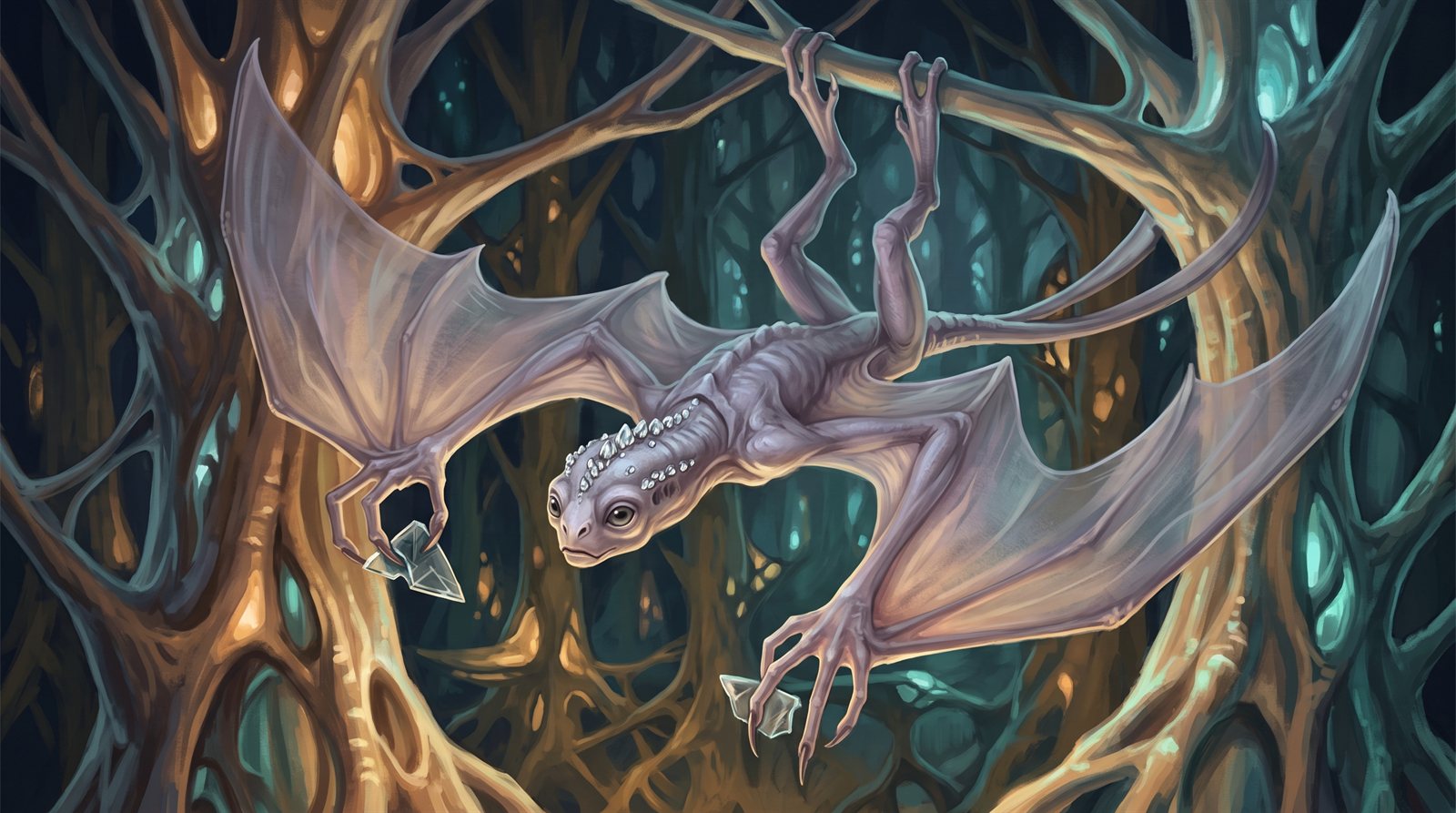
A Prismeri is born and spends the first several decades of life in what is called the First Wings form: slender, light-boned, with translucent gossamer wing membranes and a soft, still-hardening exoskeleton in grey-violet tones. First Wings Prismeri are fully sapient and legally adult by their own culture's reckoning well before metamorphosis — the form is not a childhood stage in the way it first appeared to outside observers, only an early adult one. First Wings individuals fill most of Prismeri society's exploratory, apprentice, and scouting roles: their lighter frame and lower stall speed make them better suited to close-quarters glasswood-grove navigation than the form they will eventually grow into.
The Second Emergence
At a point in adulthood that varies by individual — triggered, current Federation xenobiology holds, by a combination of accumulated silicate-mineral intake and prolonged exposure to concentrated Lattice geometry — a Prismeri enters the Second Emergence: a molt-like transformation, taking place over several local weeks inside a self-secreted mineral shell, from which the individual emerges in Full Wings form.
Full Wings Prismeri are structurally distinct enough from First Wings that the mistaken two-species classification persisted through two Federation survey passes: hardened, gold-and-blue chitin plating replaces the soft grey-violet exoskeleton, the gossamer wing membranes are replaced with stronger, load-bearing wings capable of sustained high-altitude flight, and a set of long, motile sensory tendrils grow from the skull ridge, dense with the same crystalline-mineral structures that make the Lattice visible in Prismere's sky. Those tendrils give Full Wings Prismeri a biological sensitivity to ambient harmonic-corridor geometry that no First Wings individual — and no known instrument — can match, which is why Full Wings adults, not First Wings apprentices, crew Prismeri astrogation guilds.
The Second Emergence is irreversible and, by Prismeri account, not universal: a meaningful fraction of Prismeri live a full natural lifespan in First Wings form without ever undergoing it, and Prismeri culture accords no lesser standing to those who don't. Federation medical missions have logged interest in the trigger mechanism for decades; Prismeri astrogation guilds, whose institutional value rests entirely on Full Wings sensory capability, have been consistently, politely unhelpful to that research.
Society and the Lattice
Prismeri social structure follows the practical difference between the two forms rather than any formal caste system: First Wings individuals scout, apprentice, and tend lumenspire settlements, while Full Wings individuals — who account for a minority of the adult population — crew the astrogation guilds that read Prismere's sky for the Federation and, through the standing Federation-Ranger material compact, for Survey Corps fold-route confirmation work.
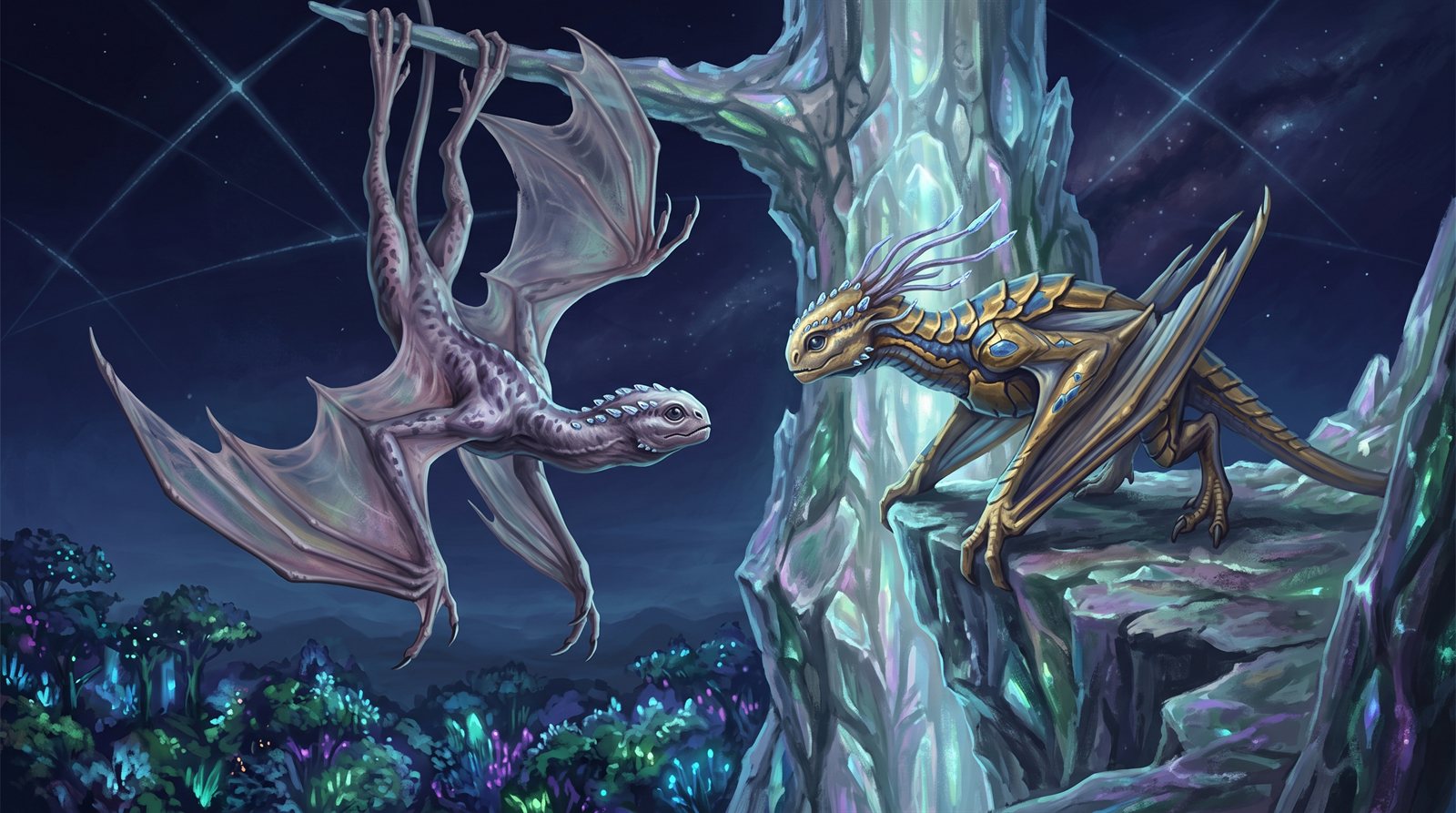
Guild status is not hereditary and cannot be, since no Prismeri chooses or predicts whether the Second Emergence will ever come for them; a First Wings individual who never transforms simply never qualifies for guild work, regardless of standing or ambition, and Prismeri institutions treat that outcome as a fact of biology rather than a verdict on the person. That structural humility — no one earns the transformation, no one is denied it by any authority — is, Prismeri cultural historians argue, the reason guild status never hardened into the kind of resented hereditary privilege it might have elsewhere.
Interspecies Notes
Prismeri cannot interbreed with humans or any other known Federation species, and the silicate-mineral component of their physiology cannot be transplanted or replicated in a non-Prismeri host, despite recurring Federation medical interest paralleling the standing interest in Verdani thallenwort symbiosis. Prismeri tolerate standard Federation humanoid life-support and atmospheric conditions without difficulty, but require periodic return to Prismere-equivalent ambient light spectrum and, for Full Wings individuals specifically, some exposure to genuine harmonic-corridor geometry — a standing accommodation written into every off-world Prismeri posting contract, Ranger liaison postings included, since prolonged deprivation of either is documented to cause a measurable decline in Full Wings sensory acuity.
See also: Prismere, The Federation of Sentient Beings, Quantum Space Harmonics, Verdani, Cerebraun, Mnemari.
Discussion
Show discussion
Comments are read after they are posted and anything unsuitable is removed. Posting needs a GitHub account; reading needs nothing.