Rivers Old, Lakes Young
A survey team can age a landscape from orbit before anyone lands, and the quickest instrument is a count of its lakes.
The Two Ages of Fresh Water
A river is the oldest infrastructure on any habitable world, and the only kind nobody built. A drainage network is the integral of climate over topography over time — every rainfall the high ground has taken since the high ground rose, summed and signed — so a river valley is a climate record you can walk along, and the network's shape outlasts every institution that ever drew water from it.
A lake is news. Water standing in a hollow is water that has not yet finished either filling the hollow with sediment or cutting the outlet that drains it, and on geological clocks it does one or the other quickly. So every lake is evidence of something recent — ice that gouged, a fault that dropped, a flow that dammed — or of something ongoing: a tended reservoir is a lake with staff. A landscape dense with lakes had a violent recent past; a landscape of slow rivers and no lakes has been left alone a long time, and the difference is legible from orbit.
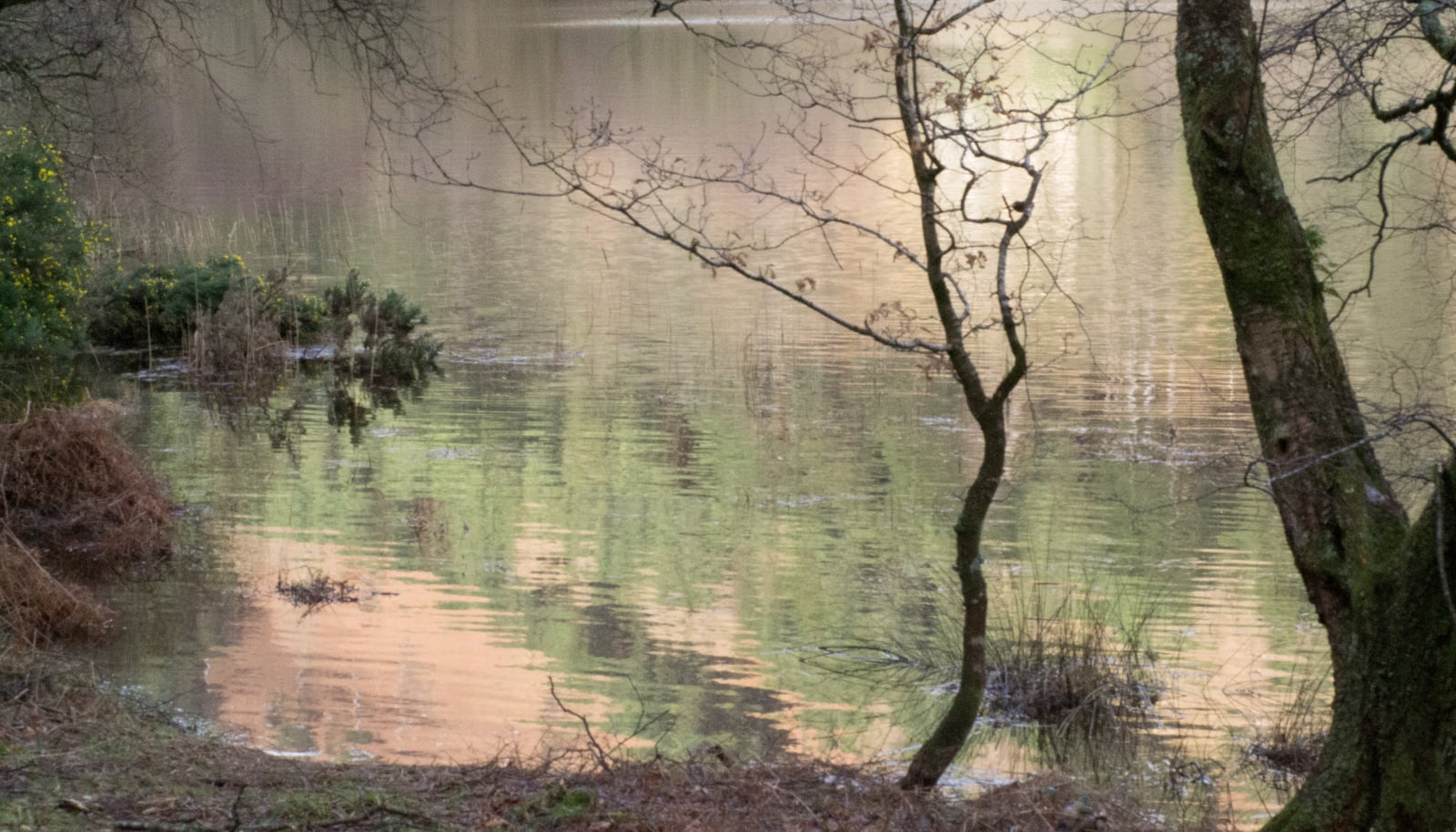
Tír na nÓg reads as the second kind, and its temperament is in the reading. The lowlands are mature drainage at its most patient — reed margins, mirror-flat wetland, bare-branched treelines ringing waterways that have long since stopped hurrying — while the escarpment keeps the young half of the cycle running above them, winter rain off the high ground coming down hard through narrow rock chutes. One world, both ages, stacked by altitude; the founding cooperatives kept Earth's four-season calendar, and the rivers keep it with them. Trígrian is the counter-temperament: under a climate that can deliver a decade of generosity and follow it with worse, its rivers plan nothing, and Winterbourne's run for half the year and are dry gravel the rest — a world named for exactly that habit.
The Water You Cannot See
Most of a habitable world's fresh water is underground, and the surface features people actually live beside are its edges. A spring is where the hidden water outcrops; a well is a settlement's handshake with it; and Winterbourne's whole human geography — a village on every spring, parishes striped from wet meadow to high grazing — is what happens when the handshake is offered in a line.
Fliade is the limit case: a world whose biosphere is underground, cavern systems honeycombing the crust, warmed geothermally — a hydrology with no surface chapter at all, rivers included. The record files it as a reminder that the visible drainage is a special case, not the rule: on most worlds the underground water serves the surface, and on Fliade the arrangement simply declined to invert.
Well culture travels. The well-water blessing of Saint Aoife's devotion crossed to Tír na nÓg not as archived text but as living observance, kept continuously in transit — a thirteenth-century relationship with groundwater arriving on a new world before the new world's own wells were dug.
Where Water Loses Its Hurry
A marsh is what happens when gradient runs out before the water does: supply meeting flat ground, drainage undecided, the river's forward motion dissolved into standing patience. Tír na nÓg's lowlands do this at scale, and the Marsh Causeway sits in exactly such country — flat, wet, slow, and hosting one of the record's two great boundary sites.
The wetlands there offer one diagnostic worth stating, because it can be read from the air. Ordinary treelines follow the water: the bare-branched margins that ring the lowland waterways trace the drainage, as riparian growth does everywhere. Dryadic groves do not — their roots and canopies follow the geometry of local Etheric fault lines rather than nutrient gradients, which means a grove that ignores the valley is announcing what it grew along. On Tír na nÓg, whether a line of trees follows the river is the difference between botany and boundary cartography.
Warm Wells
Groundwater temperature is set by rock, depth, and heat source, and for any warm spring the only question is which source. Geothermal is the common answer, and Fliade is a whole world of it. Where a flexure runs close, boundary physics is a lawful answer too — which is the frame the record keeps for its two famous wells. The thorn well at Cill Aoife ran warm for three days, in an account set down in 1216 AD; another well, in a clearing the record reached fourteen centuries later, ran warm again. The warmth in both cases is instrument-grade fact, on file. What the warmth meant is filed where meanings are filed — the Warm-Edge Correlation holds the joint reading, its two authors drawing different conclusions from one dataset — and the hydrology entry's own scope ends where it should: a warm well has a heat source, the record's job is to name it, and no well anywhere runs warm at anyone.
See also: Weather on Other Worlds, Tides Without Shores, Tír na nÓg, Winterbourne, Fliade, Dryadic Trees, Saint Aoife.
Discussion
Show discussion
Comments are read after they are posted and anything unsuitable is removed. Posting needs a GitHub account; reading needs nothing.