Weather on Other Worlds
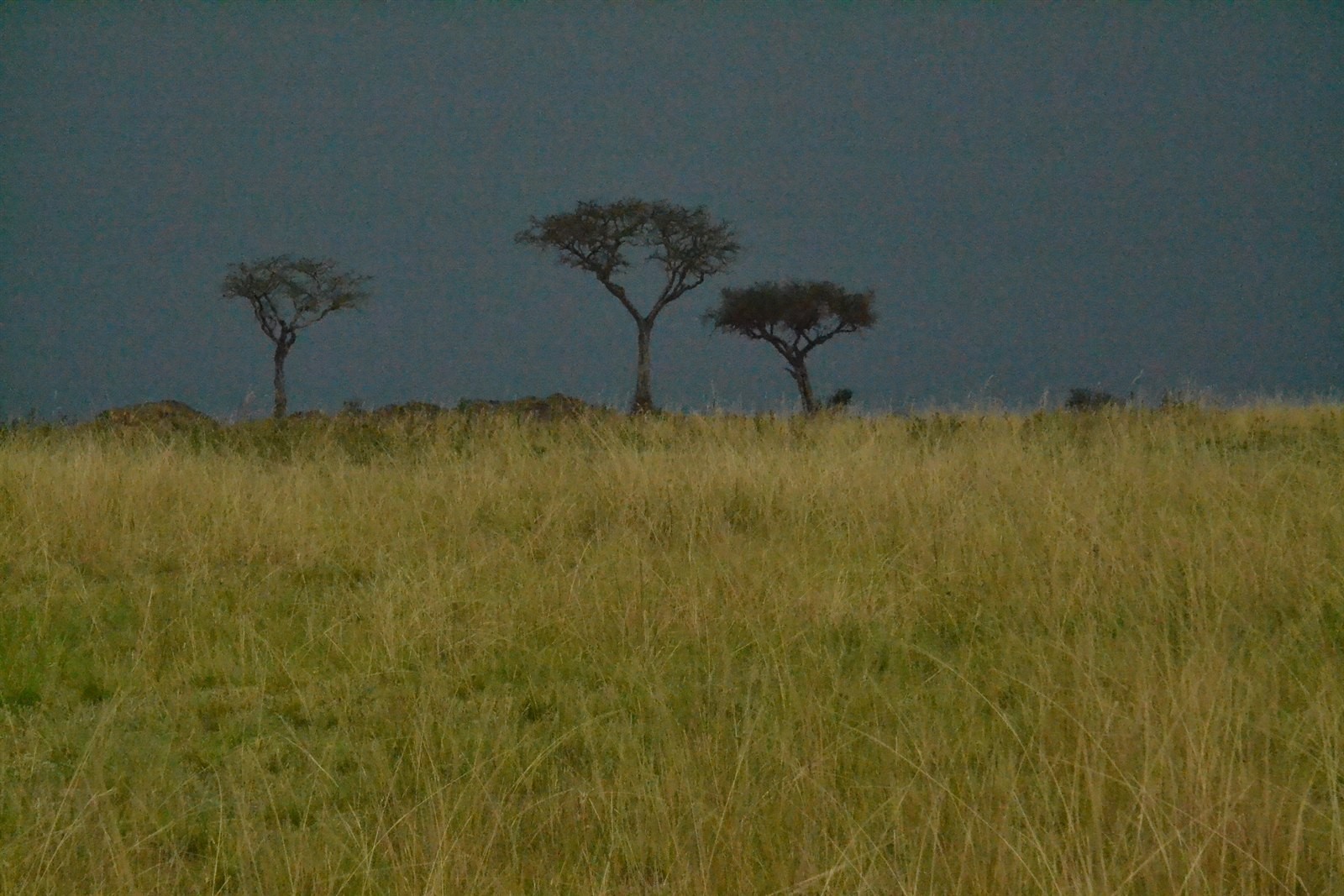
The Survey Corps does not invent new storm-severity classifications happily, and the Kingdom of the Five Islands made it do so anyway. The scales the survey arrived with were calibrated on Terran hurricanes; the archipelago's permanent storm belts sat above the top of them, and a scale a world's ordinary weather exceeds is not a scale. The new classification was filed with a covering note whose first sentence survey meteorologists still quote: the sky was not being dramatic; our instrument was being provincial.
That sentence is the whole doctrine, and the rest of this entry is its consequences.
Same Physics, Different Numbers
Weather is not local colour. It is what an atmosphere must do, given the numbers a world actually has — rotation, insolation, axial tilt, atmospheric mass and composition, ocean fraction, topography — and every distinctive sky in the record derives from its numbers rather than decorating them.
- The Five Islands run fast rotation, a wide ocean, and a greenhouse-heavy atmosphere; the storm-lock over ninety-eight percent of the surface is those three facts compounding, and the one temperate archipelago is no exception to them — a submerged caldera rim breaks the deep-ocean storm systems before they arrive, which is to say the exception is bathymetry, and it obeys the same arithmetic as the rule.
- Saltmere has no landmass, so its storms never make landfall and never die of it: weather there is read in mooring loads, because the moorings are the only fixed thing the wind can push against.
- Trígrian answers to three suns, and its burning seasons are calendar entries — the violence of the cycle being also the engine of the soil.
- Drithane is cold and dry, which is why it is clear-skied, which is why the drithle can be seen at all: a cultural event resting, two steps down, on a humidity figure.
- Winterbourne's villages sit in a line because rain percolates through chalk to a clay floor and comes out at the spring line — a settlement pattern that is weather, given four hundred metres of rock and enough time.
The test for new prose follows: a sky may be as strange as its numbers make it, and no stranger. Where a survey report reads like scenery, it has not been finished.
The Sky Is Local
There is no faster-than-light communication, and weather is the fact that discipline bites hardest. Forecasting is initial conditions plus computation under a deadline the atmosphere sets — a forecast that arrives after the weather is a record — so there is not, and structurally cannot be, an interstellar weather service. Every inhabited world forecasts its own sky with whatever instruments, records, and continuity it locally keeps, and a colony's meteorological competence is one of the more honest measures of its age: the models want long local records, and long local records cannot be imported. They can only have been kept.
A survey file's climate section is transit-lagged like everything else in the record, sometimes by decades. Corps arrival doctrine is accordingly one line: the local record outranks the file. A world that has kept its own sky under observation for three centuries knows things about it that no visiting instrument learns in a season — which is Prismere taken to its limit, where the resident tradition of reading a permanently hazed sky does work the Federation's own sensor arrays cannot, and the sky-reading is treated as instrumentation because it is.
Where the Numbers Themselves Are Scoped
Between worlds, the parameters vary; between Mediarch realms, the lawful ranges of the parameters can. The record already carries the worked case: a dense-atmosphere, low-gravity Concordant may honestly fly something a reader would call a dragon, and its weather is the same honesty applied to air — thicker convection, slower fall, rain that a Terran meteorologist would misread not because the physics is different in kind but because every constant they would reach for has a different value. Weather in another realm is not exotic weather. It is ordinary weather, run on numbers no Terran textbook tabulates.
What no realm anywhere supplies is exemption. There is no lawful sky in which weather happens to someone — see below.
What the Record Refuses About Weather
No storm is sent. Nothing in any surveyed atmosphere responds to persons, conduct, or merit; the pathetic fallacy is a figure of speech in every jurisdiction and a mechanism in none. A drought is not a judgement, a clear sky is not a blessing, and the Cascade's no-moral-cosmology rule holds at every altitude. Devotional traditions read weather as meaningful, and the record files those readings where it files all attributed readings — in the Codex, in the author's own voice. The Warm-Edge Correlation is the standing example: a real instrument signature, a real fourteen-century-old match, and a joint filing whose two authors draw different conclusions from one dataset. The record's own position is unchanged by the filing's existence: the correlation is on file, and no weather anywhere is aimed.
Managed weather is still weather. Kernowek Reach's engineered habitable band does not suspend meteorology; it narrows the numbers until the ordinary physics yields a breathable answer, and it must go on being maintained precisely because the atmosphere never stops computing. Frontier transformation budgets for weather the way shipwrights budget for water — as the medium the work happens in, not an obstacle the work removes.
See also: The Scope of Physical Law, FTL Mechanics, The Kingdom of the Five Islands, Saltmere, Trígrian, Prismere, What the Record Refuses.
Discussion
Show discussion
Comments are read after they are posted and anything unsuitable is removed. Posting needs a GitHub account; reading needs nothing.