Stone, Fire, and Ice
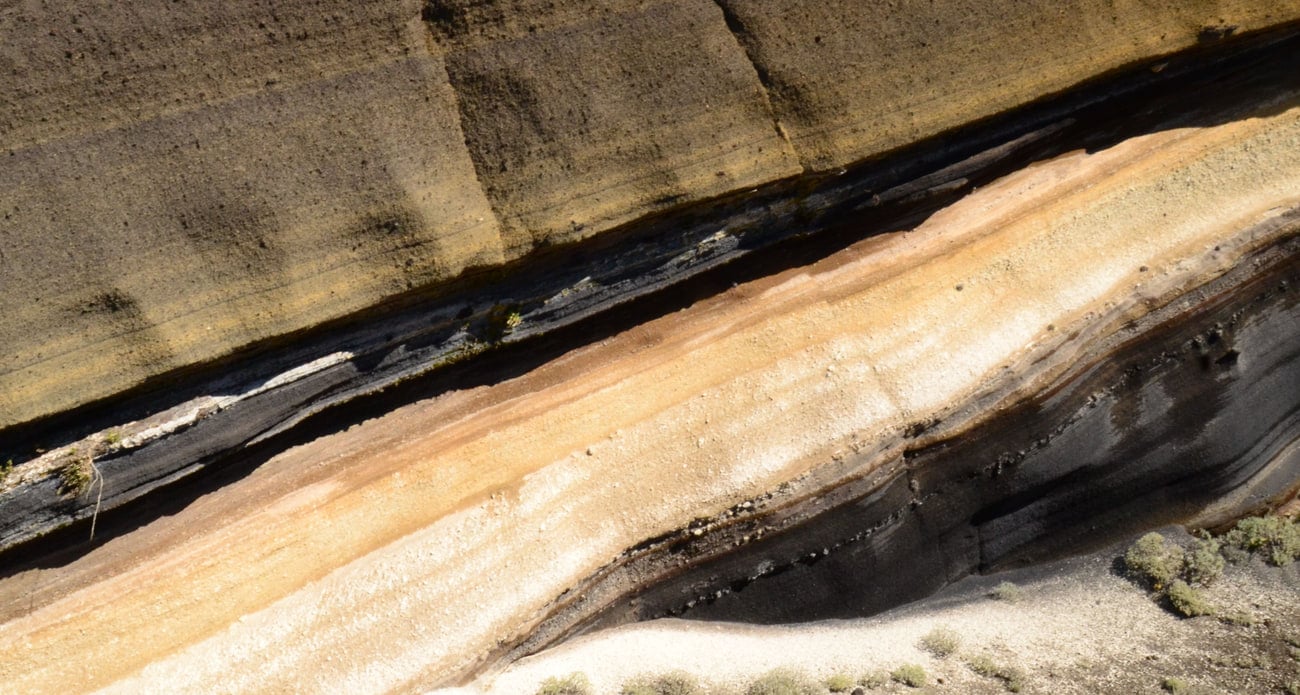
The survey vocabulary treats terrain as a noun, and the survey doctrine treats it as three verbs caught mid-sentence. A mountain is rising or wearing down; a volcano is a planet's interior still speaking; a glacier is weather that acquired momentum. Nothing about a habitable world's high country is finished, and reading it correctly means reading the tense.
A Mountain Is a Rate
A range's height is not a possession but a balance: uplift against erosion, the interior's push against the weather's patience, and the profile tells you instantly which is winning. Young mountains are sharp because the push is ahead; old mountains are low and round because the weather always gets the last word; and the oldest are not mountains at all any more but their exposed foundations. Aethelrock is the worked case — a granite highland world, and granite is deep rock, formed far under a range and revealed only when the range above it has been carried entirely away. The clans hold glens and highlands that are the roots of mountains nobody will ever see, which is an old world's kind of solidity, and suits them.
Mountains also make their own weather, which is the weather doctrine's vertical case: high ground wrings moisture out of any wind that crosses it and casts a dry shadow behind, so a range is a climate boundary standing up. Tír na nÓg's escarpment runs the whole sequence in one view — mist held on the high ground, winter rain coming down the rock chutes in spate, patient wetland at the bottom — and Winterbourne's tilted platform is the same machinery at its gentlest, an uplift so mild its principal export is a spring line.
A Volcano Is the Interior Still Speaking
Volcanism is a world's heat budget made visible: a volcano proves a live interior, and a live interior is a planet still spending. What settlement makes of that is the record's most varied answer to any single hazard.
Kernowek Reach settled on its volcano, because altitude was the resource: the engineered breathable band wraps the volcanic highlands, processor stations anchored along the ridgelines, the Cloud Line below marking where the tended air ends. The Kingdom of the Five Islands lives inside a volcano's afterlife — the submerged caldera rim that breaks the storm ocean is volcanic architecture outliving its volcano, shelter as a legacy of violence. Fliade takes the quiet register: geothermal warmth feeding a cavern biosphere, the interior's heat as landlord rather than hazard. And the Veyr Basaltborn were shaped by the loud one — a high-gravity volcanic world that handed them metallurgy for nothing, so that their whole history became a fight for precision instead of for fire.
One terminology note, kept here because this is where the collision would happen: the record uses fault line in two registers. A geological fault is a break in stone, and belongs to this entry; the Etheric fault lines that dryadic groves trace belong to the boundary layer. The two are never interchangeable, and a survey that writes one where it means the other has mis-filed a layer, not a rock.
A Glacier Is the Archive Nobody Kept
Ice is the slowest river — the same gravity-driven flow as the drainage doctrine's, run on a clock so slow the water forgets it is moving — and it does two things nothing else in a landscape does. It carves at a scale water never matches, which is why the drainage doctrine could say every lake is recent violence and mean, most often, ice: the gouged lake is the glacier's receipt, presented long after the glacier has gone. And it records. Ice lays down annual layers and seals a sample of the year's own air into each one, so an ice sheet is a climate archive no institution kept — begun before any founding charter, maintained without staff, readable by core. It is the one record on any world that the Archive can only read and never keep, and survey climatology leans on it accordingly wherever a world has ice to lean on.
Which makes the exception eloquent. Trígrian has no polar caps — the record's own line — and Trígrian is also the world whose climate most needs remembering: no year resembling the one before, a decade of generosity followed by a continental burn. The world with the most erratic weather in the settled record keeps no ice memory of it at all, and its climatology must be reconstructed the hard way, from lakebeds and river terraces — the receipts, without the ledger. A survey team that wants to know what a world's climate has been doing checks the poles first, and on Trígrian the poles have nothing to say.
See also: Weather on Other Worlds, Rivers Old, Lakes Young, Aethelrock, Kernowek Reach, The Veyr Basaltborn, Fliade.
Discussion
Show discussion
Comments are read after they are posted and anything unsuitable is removed. Posting needs a GitHub account; reading needs nothing.