The Forest Is Waiting
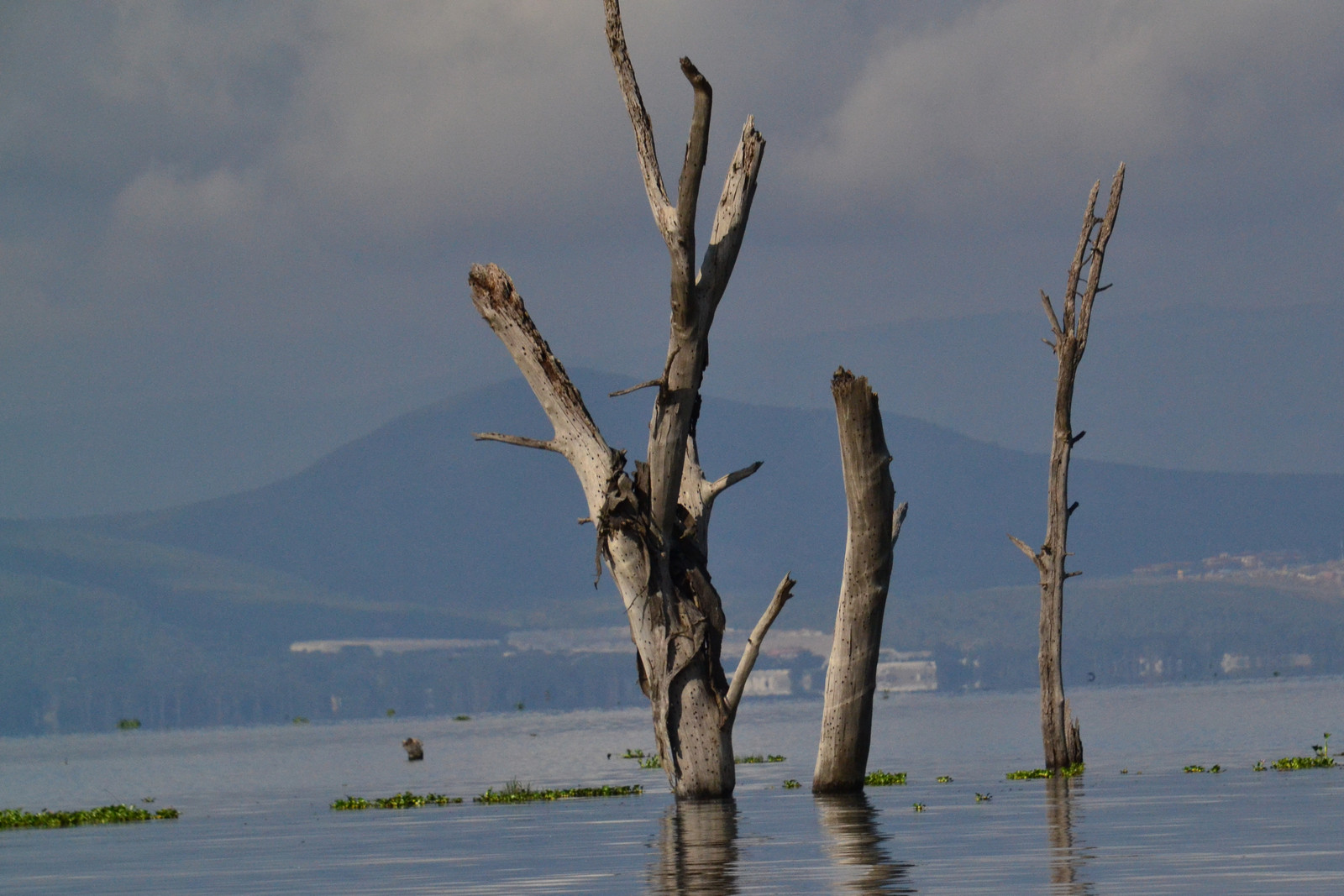
Twice in Winterbourne's parish records, a stretch of downland lost its flock — and went to scrub within a decade and toward woodland inside a century, both times, until the sheep came back. Nothing planted it. Nothing needed to. On every watered world in the record, the forest is not one possible outcome among several; it is what the land does when everyone else stops.
The Default and the Bet
Those two facts sit in tension, and the tension is the whole ecology of trees. A forest is the default cover of any ground wet enough to afford it — the state the land returns to whenever the grassland's enforcers lapse, which is why that entry could call the truce a truce. But a tree is also a bet: a structure that takes decades to pay for itself, wagered on the claim that the next century will resemble this one closely enough for the investment to mature.
Trígrian is the world that refuses the wager, and its page says so in the record's own economy: no forests, no year that resembles the one before. Grass bets a season and loses gracefully; a tree bets a century, and on a world whose climate can follow a decade of generosity with a continental burn, the bet never survives to maturity. The absence of forests on Trígrian is not a poverty. It is a correct price.
A Forest Makes Its Own Weather
A canopy is the one biome that builds its own building, and inside it the weather doctrine runs at local scale: shade against the insolation, stillness against the wind, humidity held and re-spent as transpiration until a large enough forest is partly watering itself. Verdance's canopy belt is the record's full expression — a multi-layered rainforest whose upper storeys form a nearly continuous living roof, dense enough in endemic species to lead the catalogue for every surveyed world — and its politics have the same architecture as its ecology: the Canopy Concord governs from cities built into the forest structure rather than cleared from it, a polity that treats the roof as load-bearing because it is.
The working end of the same fact is small and canonical. Winnow Hanger's hillside wood combs water out of passing mist — condensation on the canopy, dripping clear of the leaves into the dew pond below — which is why the wood is not cut, and why a settlement four kilometres from any spring exists at all. A wood can be a water instrument, and the oldest forestry decision on any world is the one Winterbourne made without writing it down: some trees earn their ground by standing still.
A Wood Is a Clock
Trees keep the living half of the archive the glaciers keep frozen. The bookkeeping is the same — one layer per year, sealed in order, readable by core — but a tree's version stays alive while it records, which makes old trees the survey's favourite kind of witness: present for centuries, silent, and datable to the ring. On Vellamar the Kingdom's garden quarter holds specimen trees that predate the current dynasty — a court that can, in principle, check its own history against a fig — and the record's regard for such trees is the same regard it holds for any long, continuous, locally kept record: they cannot be imported, only have been kept.
The Strange Woods
Two of the record's named woods are not woodland in the ordinary sense, and each is worth holding apart from it.
Prismere's glasswood is a forest by structure and a lens by function — slow-growing, crystalline-barked, its translucent foliage catching Lattice light and starlight and re-emitting them softened — a canopy that participates in the sky-reading its world is known for. It is genuinely flora, genuinely a wood, and doing a second job.
Dryadic groves are the sharper case, and the drainage doctrine's diagnostic bears repeating from this side: an ordinary treeline follows the water, and a dryadic grove follows the Etheric fault lines instead. This entry is about the woods that follow the water. A dryadic grove is boundary apparatus wearing woodland's shape, and a surveyor who files one as forestry has mis-filed a layer — the botanical equivalent of the mistake the record refuses over fault lines themselves.
What every true wood in the record shares, strange or plain, is the thing this entry opened on: patience as a strategy. The forest does not compete for ground the way grass and fire do, loudly and annually. It waits for the enforcement to lapse — and on every watered world the survey has ever closed the file on, it was still waiting.
See also: The Ledger and the Truce, Weather on Other Worlds, Rivers Old, Lakes Young, Stone, Fire, and Ice, Dryadic Trees, Verdance, Prismere.
Discussion
Show discussion
Comments are read after they are posted and anything unsuitable is removed. Posting needs a GitHub account; reading needs nothing.