The Cost of the Crossing
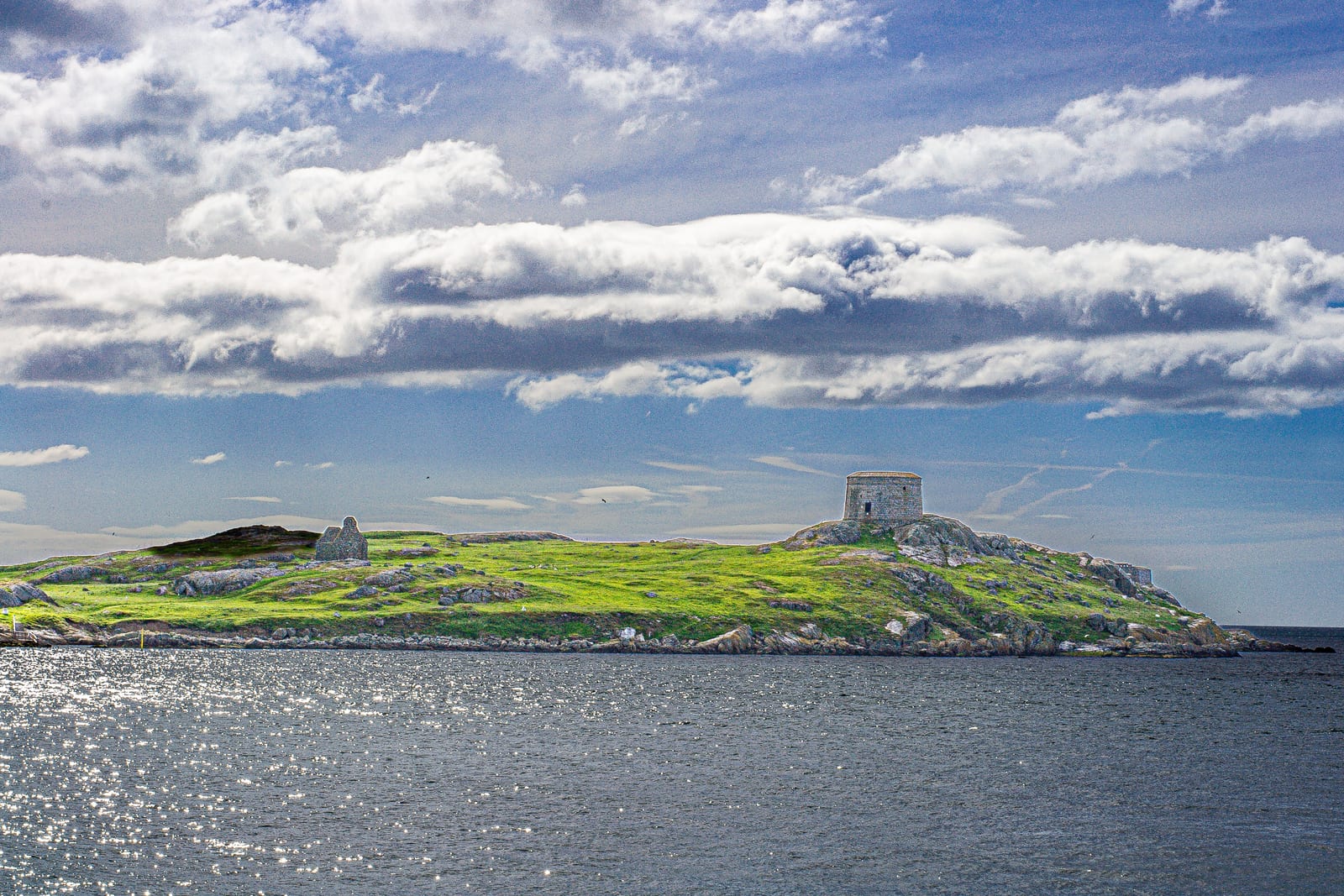
What makes an island is not the water. It is the crossing — and the survey measures insularity in crossing-cost, not kilometres, because the same strait can be a suburb's ferry ride on one world and a season's gamble on another. On the Five Islands' storm ocean, distance is nearly the least of what stands between any two shores, and the Kingdom's whole shape follows from what the water charges to cross it.
An Archipelago Is a Range That Lost the Argument
Mountains are rates — uplift against erosion — and an archipelago is what the argument looks like when the sea is allowed to join in. Drown a range and its summits become islands; the chain's curve on a chart is the ridge line it used to be; and sea level sits as the judge, promoting and demoting ground as the water ledger shifts. An island, read strictly, is a summit the water has not finished with.
The record's water worlds hold the full docket. The Five Islands are a caldera rim's surviving summits — volcanic architecture whose submerged remainder still breaks the storms, so the drowned part of the structure protects the standing part. Thalassa's seamount shoals are islands that failed by metres, too small and too submerged to build on, which is why its cities float instead. And Saltmere is the completed judgement: a scatter of seamounts too deep to break the surface at any tide, a world where every candidate island lost — which is the geological reading of why Saltmere's civilisation had to bring its own ground.
Isolation Is a Laboratory
Cut a population off and it stops averaging with everyone else: what crosses rarely, diverges surely, and an island keeps what a continent overwrites. The record's great worked case is human. The Five Islands were settled by a departure older than any Solar System record, and the isolation that hid them also preserved them — a founder population left alone long enough to become its own civilisation, with its own crown, its own Old Houses, its own order standing tideward. Nothing on a connected world stays that distinct for that long. The Kingdom is not a survival despite isolation; it is what isolation is for, seen from the far side.
Crossing-cost also writes an archipelago's politics, because when the strait is expensive each island must commit to being something. The Five Islands govern as a set of specialisations — Vellamar the throne and its gardens, Casimor absorbing the archipelago's worst weather at the rim, Aduine terraced under the Abbeylands, Ostrel run through Kalenjar's anchorage and salt-houses — a division of labour enforced by water, the grassland's truce with a coastline.
Islands Without Water
The record's driest islands never touch a sea. Ynys Wydrin says so in its name — a dome-and-station world called the Isle of Glass, settled precisely because it was not a paradise: every dome an island whose sea is the sky, every airlock a harbour, insularity engineered instead of inherited. Kernowek Reach's settled band is an island of breathable air moored on a volcano, its Cloud Line the shore. Fliade's warm caverns are an archipelago in cold rock. And the settled void runs the pattern at its purest: a habitat is an island whose crossing-cost is a berth and whose founder effects are cultural — New London holding a heritage intact at L5 for five centuries is the island preservation effect with a station-keeping budget, and the Orbital Habitats Compact is archipelago politics without a drop of water involved.
Which leaves the record's most important island, and it is a planet. Tír na nÓg is the only world in the catalogue classified as naturally human-compatible — the one ground that asks nothing of a human who steps onto it, where even Drithane, the gentlest case elsewhere, asks weeks of acclimatisation to thin, cold air — an island of compatibility whose sea is everything else in the sky. It is named, fittingly, for an island out of myth, and the survey's island doctrine applies to it entire: rare, bounded, irreplaceable, and reached only by paying what the crossing costs.
The instincts transfer, which is why this entry closes the set's arc rather than adding a case to it. Isolation preserves; bounds specialise; the crossing prices everything — and wherever the survey meets a bounded pocket of habitability, on water or off it, it reads the pocket with island eyes and files the crossing-cost first.
See also: Coasts, and Other Edges, Tides Without Shores, Stone, Fire, and Ice, The Kingdom of the Five Islands, Ynys Wydrin, Tír na nÓg.
Discussion
Show discussion
Comments are read after they are posted and anything unsuitable is removed. Posting needs a GitHub account; reading needs nothing.